Get all your news in one place.
100's of premium titles.
One app.
Start reading
The Times of India
The Times of India
World
Vishant V Agarwala and Pathikrit Chakraborty

Nepal floods: Morgues overflow along 200km river trail as grief crosses border

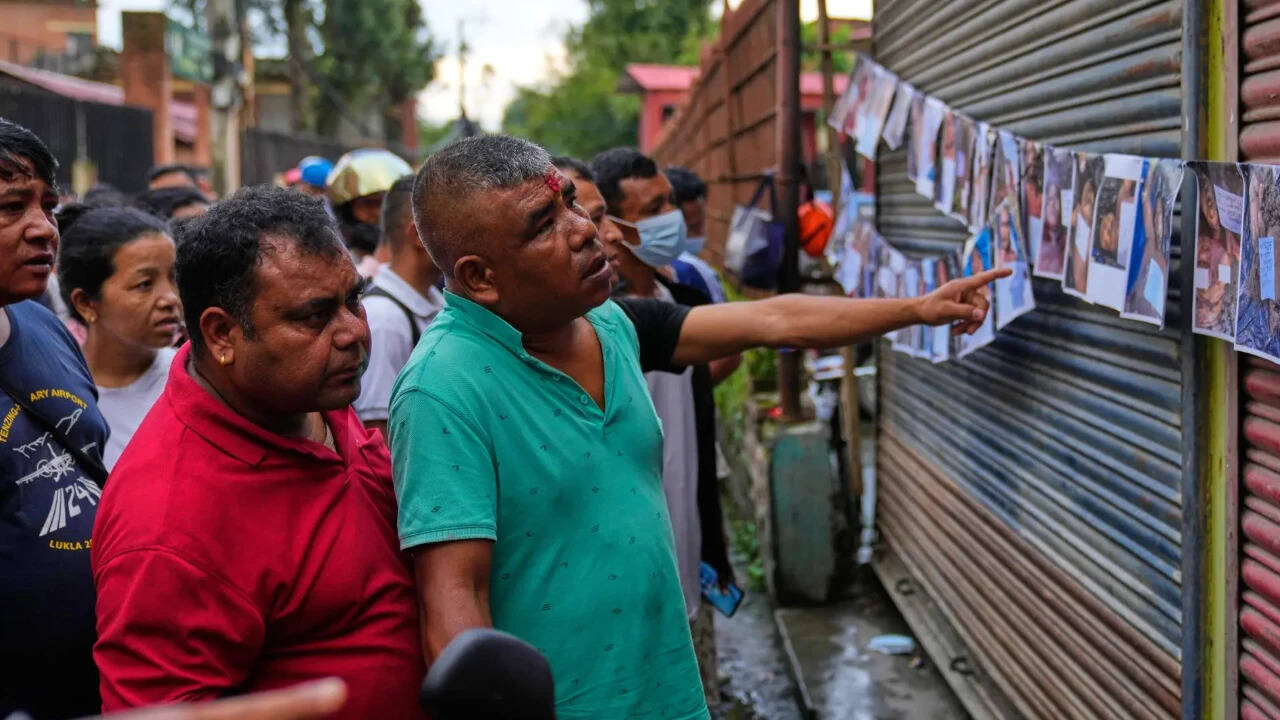
Morgues on the 200km Bhote Koshi-Trishuli-Narayani river trail in central and southern Nepal are at capacity and overflowing as bodies swept away by Wednesday’s flash flood surfaced downstream, forcing authorities to move remains between districts and convert govt buildings and community halls into temporary mortuaries.

Get breaking news anytime, anywhere. Download the TOI app now!
By Friday morning, seven unidentified bodies were found in Gandak river in Maharajganj and Kushinagar districts of UP.

Nepal has deployed hundreds of security personnel along the riverbanks from Rasuwa to Chitwan on the Indian border and at other possible recovery locations. Nepal home ministry also coordinated with Rasuwa, Nuwakot, Dhading, Gorkha, Chitwan and Nawalparasi on where bodies could be preserved and identified as district facilities ran out of space.

“Wherever bodies have been found and need to be managed, coordination is underway on how to manage them,” home ministry joint spokesperson Rama Acharya Subedi said. “There is talk of speeding up the management in any case.”

Chitwan, on Narayani river along the Indian border, emerged as the biggest pressure point, with 221 bodies recovered in the district by Friday, the highest number anywhere along the flood corridor.

Existing hospital morgues across Chitwan could together hold only around 30-50 bodies, forcing authorities to convert an unused govt building in Bharatpur into a temporary body-management and identification centre with capacity for around 250.

Officials arranged airconditioners and dry ice to slow decomposition, while Devghat electric crematorium was identified as another option if the temporary facility also ran out of space.

Chitwan chief district officer Ganesh Aryal said managing the remains had become increasingly difficult as searches continued. “Most of the bodies found were in a state of decomposition, which adds to the challenge of how to manage the bodies,” he said.

The pressure spread across districts as more remains were recovered downstream. Dhading and Gorkha sent bodies to Kathmandu and Pokhara, while Nawalparasi East shifted remains to Pokhara, Palpa, Butwal and Bhairahawa and converted Ankur Community Forest hall in Kawasoti into temporary cold storage. By Friday, 102 bodies recovered in Dhading, Gorkha, Tanahun and Nawalparasi East had been moved to Pokhara for forensic examination.

Kaski chief district officer Kuman Singh Gurung said morgues in Pokhara could together hold only around 88 bodies. “By the numbers, we are already above capacity,” he said. Pokhara Academy of Health Sciences officials said remains kept between 2 and 6 Celsius could generally be preserved for only 10 days to two weeks. Longer storage required sub-zero facilities that were not available there.

The river trail eventually extended across Nepal’s border with India. In Maharajganj, a UP district adjoining Nepal, Sashastra Seema Bal personnel used a motorboat to retrieve bodies of three women and a man. Another three bodies were recovered along Chhitauni embankment of Gandak in neighbouring Kushinagar.

Sign up to read this article
Read news from 100's of titles, curated specifically for you.
Already a member? Sign in here
Related Stories
Top stories on inkl right now
One subscription that gives you access to news from hundreds of sites
Already a member? Sign in here
Our Picks
Fourteen days free
Download the app
One app. One membership.
100+ trusted global sources.