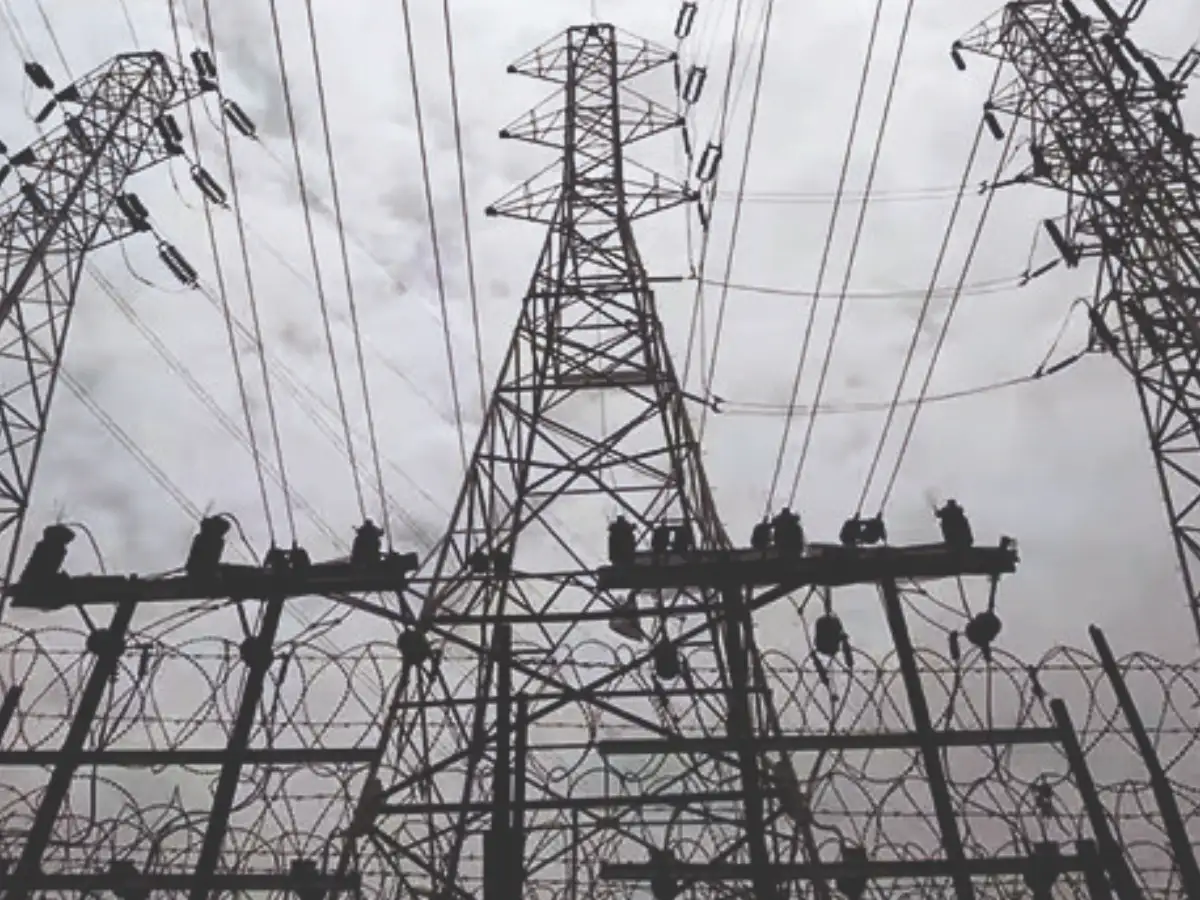
Transmission lines are the new pathways of political power for India in the neighbourhood, and the most effective counter, so far, to China's BRI thrust. Bhutan is emerging as a poster child on this score, forcing Nepal to rethink after 300-400 MW were washed off its grid by the collapse of the China-funded Upper Trishuli power project in the catastrophic Himalayan floods in August.
The economics favour India. It's the only country that can import power in large quantities in the subcontinent. China constructs, but doesn't buy. In the case of Nepal, which has taken BRI funding, India has let it be known over the past few years that it will not import power from China-funded generation facilities. So, Beijing may have set up many projects in Nepal but it can't make them profitable for Kathmandu. This could render these projects unviable in the long run, besides adding to Kathmandu's financial woes, like the $149.4 mn sovereign loan for the Upper Trishuli project.

In contrast, India is Nepal's biggest importer of electricity, accounting for $130.8 mn revenue for Nepal in 2025-26, up about $40 mn from last year. Yet, 6 Indian projects, plus the 5040 MW mega Pancheshwar project in Uttarakhand remain stuck, often caught in Kathmandu's political quagmire that has valued maintaining a balance with Beijing despite making little economic sense.
The floods have forced Nepal to ask for power from India to fill the shortage caused by loss in generation capacity, serving another reminder of not just ecological costs of making projects on the China-Nepal border, but also the financial burden attached to China-funded power entities if they cannot be used for generating revenue through exports to India.
Bhutan, though smaller than Nepal, has figured this out better. It has no formal diplomatic relations with China. That means fewer compulsions. But, more importantly, it has framed a forward-looking policy on tapping hydel power that has opened doors for Indian private entities to invest in big power projects there.
As a result, Thimphu earned about $250 mn in 2025 from exports to India, which is a $120 mn more than Nepal. Last year's earnings were over $190 mn, indicating that the trend has been holding for the past few years. And the gap is set to widen, since both Tata and Adani groups are working to generate 5,000 MW each through separate JVs with the Bhutan government.
Unlike Nepal, most government-to-government India-Bhutan projects have been completed. With the future now pegged on private sector investment, the need for GoI grants and soft loans to Bhutan for hydel power will be less. The pressure is now on Nepal to catch up with Bhutan if it wants to benefit from growing Indian electricity demand, rather than try for an unprofitable political balancing act between India and China.
By all accounts, setting up hydel power entities in India is a mounting challenge for political and economic reasons. Which is why Bhutan is also working out as a good option for Indian private players, one that also can help offer grid connectivity to the northeast and beyond.
Grid power can translate into political power when needed. While India has never overplayed this card, in the case of both the new governments in Nepal and Bangladesh, the first requirement was additional electricity, and India was the only country they could turn to.
While the spotlight often falls on big power-generating projects, it's transmission capacity that holds the key to unlocking economic and strategic value. Just like road and rail connectivity to and from ports raises the strategic potential of any project, to have a transmission system to evacuate large quantities of power is becoming a major political leverage in the subcontinent.
Sri Lanka is not yet on the Indian grid but is very much on the radar. The 500 MW transmission line to connect New Madurai with Mannar in Sri Lanka is a massive effort that will take significant investment. But, in due course, it would make it possible for India to access Sri Lanka's solar and wind energy potential. At present, electricity rates are quite high there, with furnace oil still used to meet its power needs.
Link-up with the Indian grid is a tremendous growth opportunity for most of India's neighbours. It can allow seamless grid connectivity from Nepal and Bhutan down to Sri Lanka with a transparent system of energy exchange. The way forward, however, will require more private investment in these turnkey projects, working on win-win models than China's sovereign debt dependency structure. Colombo has already had a taste of it, struggling through IMF bailout packages to meet Chinese conditions.
Deeper grid connectivity will deepen India's core economic linkages, an interlocking of interests that can act against any anti-India street sentiment. Significantly, it will provide latent leverage that can be expanded into other areas to wrest back some of the advantage China has gained through its political and economic inroads in the past two decades.
China's money-lending capacities can only be countered through credible sovereign income for these countries. This can reduce political risk with Beijing, an argument India will eventually need to take to the political realm. Not by way of quarrels and grandstanding with neighbours, but through comprehensive economic wins.