
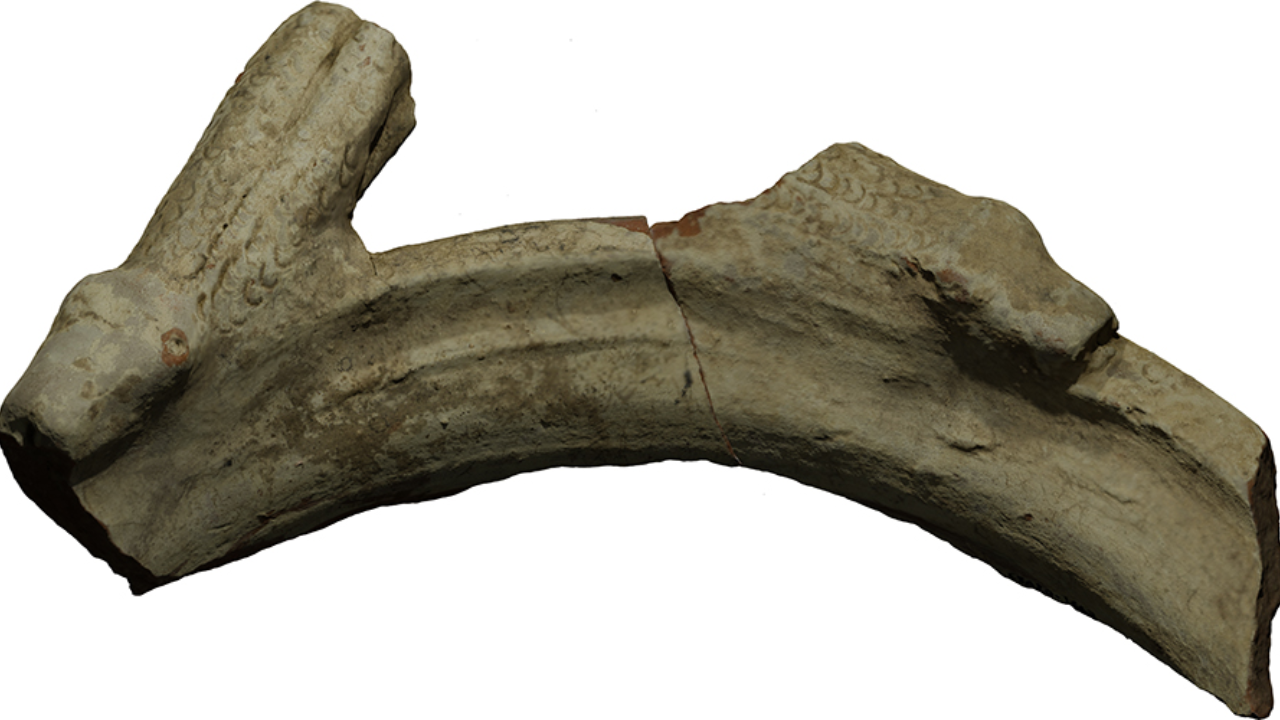
At the Roman villa of Collet, on a low cliff above Spain's Bay of Palamós, archaeologists have uncovered fragments of a large ceramic vessel that appears to reveal one of the empire's more secretive religious practices. Its handle, moulded into a two-headed serpent covered in tiny incised scales, was broken and buried close to a bread oven sometime during the Augustan period, roughly two thousand years ago. Researchers now argue the piece belonged to the cult of Sabazios, a Thracian and Phrygian god whose worship in the Roman world rarely left the home. Evidence for the cult on the Iberian Peninsula is thin, mostly clustered near the ancient city of Emporiae, making the Collet find a rare rural example. Laboratory testing of the vessel's clay points further still, suggesting it may have travelled from Roman Africa rather than being made locally, hinting at how far the cult's quiet influence could reach. The discovery is particularly significant because Sabazios worship often involved small private gatherings and ritual objects that were easily overlooked in the archaeological record. The serpent imagery, closely associated with the god, therefore provides an unusual glimpse into personal religious practices beyond Rome's major urban centres.
Get breaking news anytime, anywhere. Download the TOI app now!












