
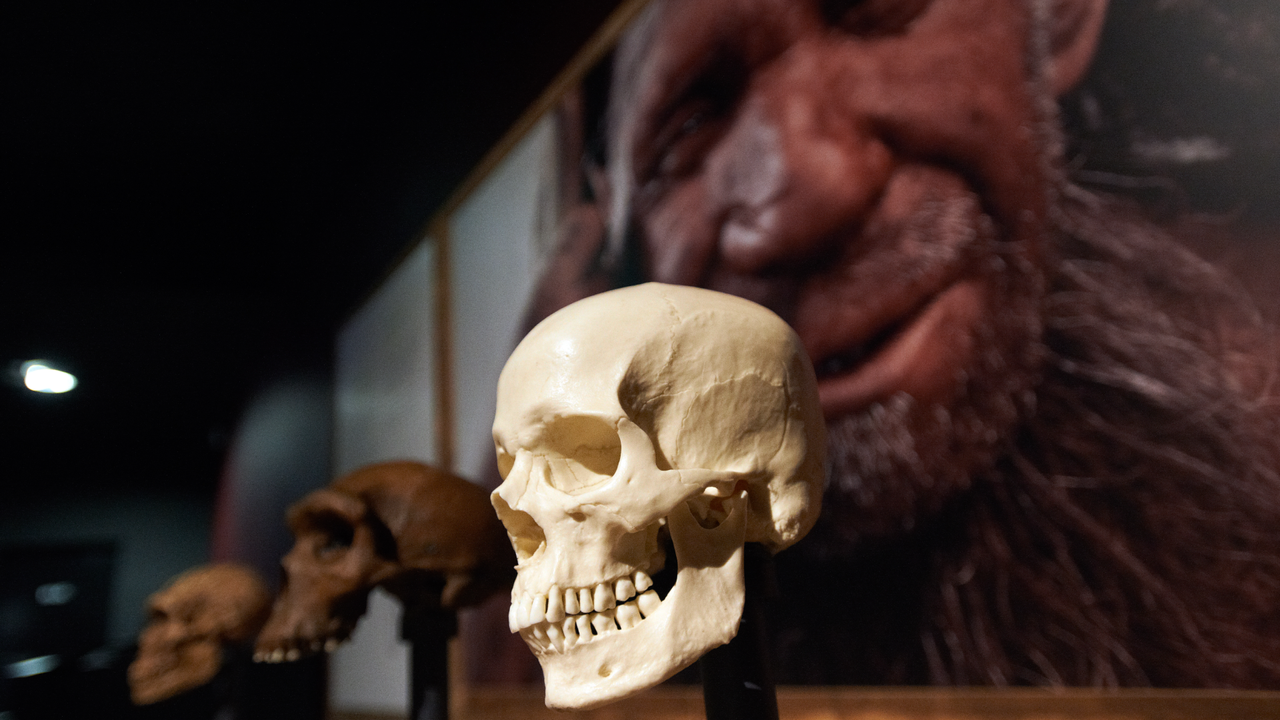
One idea given for the mysterious disappearance of Neanderthals around 40,000 years ago is a difference in brain power compared with early modern humans (Homo sapiens), who invaded their territory in Eurasia and outcompeted them. But a new study of brain variation reveals that Neanderthals and humans were much more alike than previously assumed.
Neanderthal skulls are quite obviously different in shape from those of early modern humans. While Neanderthals had longer, lower skulls with heavier brow ridges and larger nasal openings, modern humans have more globular skulls with smaller facial features. The inside of the skull, called the endocranium, also looks different in Neanderthals versus modern humans.