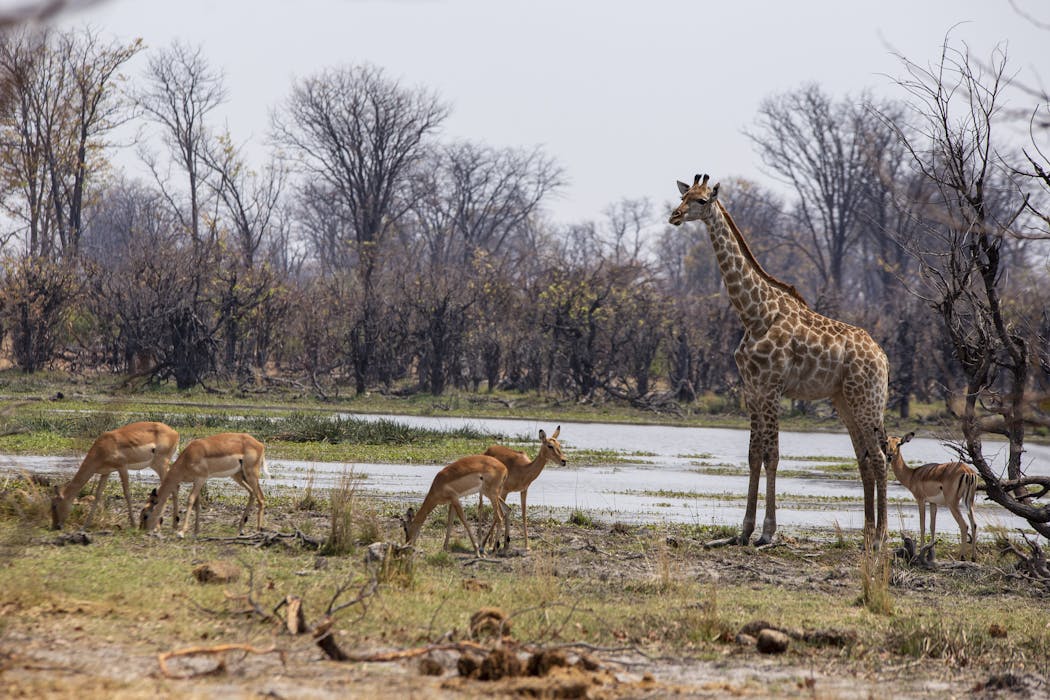
Botswana’s fertile Okavango Delta is one of the last remaining high-biodiversity ecosystems in the world, home to cheetahs, African wild dogs, baobab trees, crocodiles, termites and owls that catch fish. Roughly the size of the state of Connecticut, the freshwater Okavango Delta opens into an enormous alluvial fan that stretches up to 5,800 square miles (15,000 square km) into the Kalahari Desert. The area is so vast it can be seen from space, but most people have never heard of it.
In recognition of its natural and cultural significance, the Okavango Delta was designated a UNESCO World Heritage Site in 2014. When I conducted research in the Okavango in 2024, I witnessed both its natural beauty and the ebullient warmth of the people who live there.