Get all your news in one place.
100’s of premium titles.
One app.
Start reading
Space
Space
Science
Mike Wall

NASA to fly piece of Wright Brothers' plane on Artemis 2 moon mission

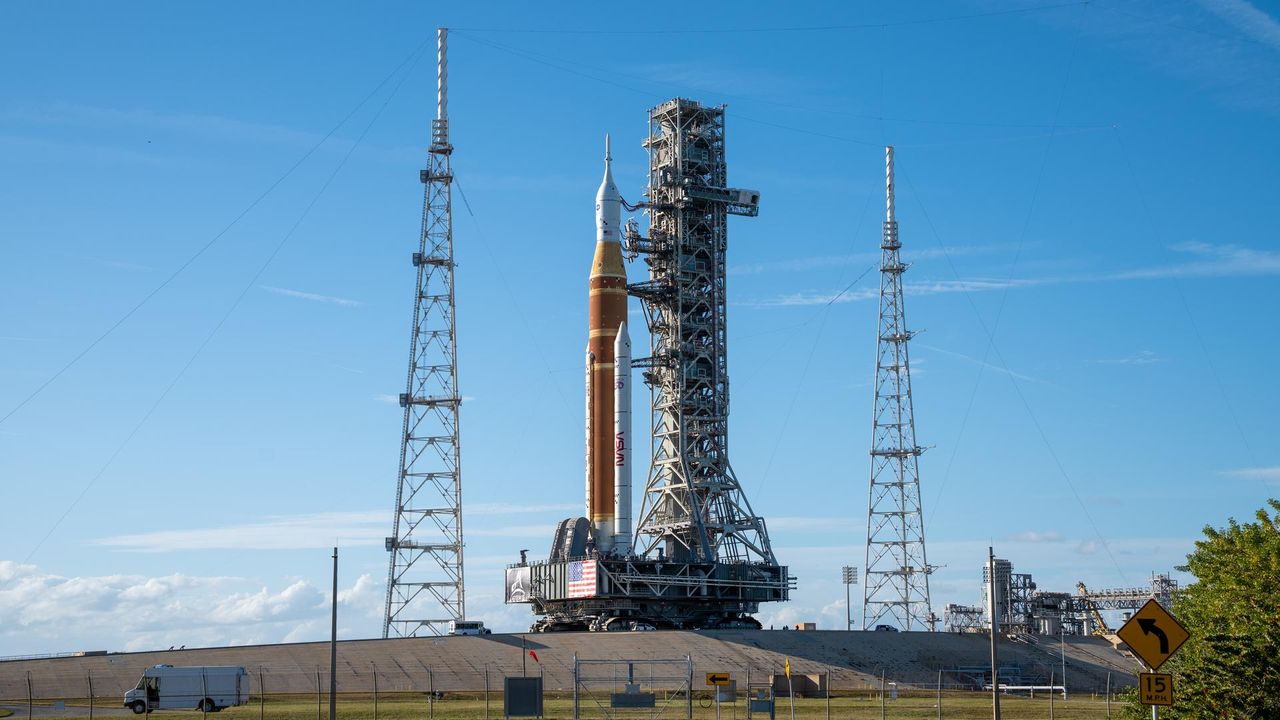
NASA rolls out the SLS rocket and Orion spacecraft for the Artemis 2 moon mission on Jan. 17, 2026.

NASA's Artemis 2 mission won't just send a quartet of astronauts around the moon — a trove of aerospace artifacts will make the trip as well.

A piece of the Wright Brothers' plane will fly on Artemis 2's Orion spacecraft, for example, as will an American flag that reached orbit on the first and final space shuttle missions, NASA announced on Jan. 21.

"Historical artifacts flying aboard Artemis 2 reflect the long arc of American exploration and the generations of innovators who made this moment possible," NASA Administrator Jared Isaacman said in a statement. "This mission will bring together pieces of our earliest achievements in aviation, defining moments from human spaceflight and symbols of where we're headed next."

Artemis 2's Orion will launch atop a Space Launch System (SLS) rocket, sending NASA astronauts Reid Wiseman, Victor Glover and Christina Koch, along with the Canadian Space Agency's Jeremy Hansen, on a 10-day trip around the moon and back to Earth aboard Orion.

NASA is targeting early February for the launch, which will be the first to send people to lunar realms since Apollo 17 back in 1972.

The mementoes placed on Orion will commemorate the historic nature of the mission, which takes place during the year of the United States' 250th anniversary.

The Wright Brothers made the first-ever successful powered flight back in 1903, getting their Wright Flyer (also known as Flyer 1) aloft over the dunes of Kitty Hawk, North Carolina. Artemis 2 will carry a small piece of the plane, a 1-square-inch (6.5 square centimeters) swatch of muslin fabric that's on loan from the Smithsonian's National Air and Space Museum.

A smaller piece of this same swatch has already reached space, getting there on the STS-51D mission of the space shuttle Discovery back in 1985, according to NASA officials.

Artemis 2 won't be the first trip to deep space for a piece of the Wright Flyer, by the way: A different swatch of the pioneering plane flew to Mars aboard NASA's Ingenuity helicopter, which became the first aircraft ever to ply the skies of a world beyond Earth. (The artifact, like Ingenuity, remains on Mars today.)

Also flying on Artemis 2 is an 8-by-13-inch (20 by 33 centimeters) American flag that went up on STS-1 and STS-135 — the first and last space shuttle missions, in 1981 and 2011, respectively — and 2020's Demo-2, the first astronaut mission that SpaceX ever conducted.

The coming moon mission will carry another flag, too.

"A flag that was set to fly on NASA's Apollo 18 mission is included in the flight kit and will make its premiere flight with Orion," NASA officials wrote in the same statement. "The flag serves as a powerful emblem of America's renewed commitment to human exploration of the moon, while honoring the legacy of the Apollo pioneers who first blazed the trail."

Apollo 18 was cancelled in 1970, as were Apollo 19 and Apollo 20, due to budget cuts and shifting national priorities after the U.S. won the Cold War-era space race to the moon. As a result, Apollo 17 became the final mission of the Apollo program.

In total, Orion will carry about 10 pounds (4.5 kilograms) of mementoes and artifacts on Artemis 2, according to NASA. Here's a brief rundown of the other historical payloads:

  • Negative of a photo taken in 1964 by Ranger 7, the first NASA mission to beam up-close imagery of the moon back to Earth. The Ranger missions were designed to help NASA select safe landing sites for the Apollo missions. Therefore, "the photo represents a major turning point in the race to the moon that will be echoed today through the success of Artemis," NASA officials wrote in the statement.
  • Soil samples dug from the base of "moon trees," which grew from seeds that flew to lunar orbit and back in late 2022 on NASA's uncrewed Artemis 1 mission. Such trees have sprouted at 236 different places around the U.S., but the soil flying on Artemis 2 comes from moon trees growing on the campuses of NASA's 10 research centers.
  • An SD card carrying the names of millions of people who participated in NASA's "Send Your Name to Space" campaign for Artemis 2.
  • Stickers and patches provided by the Canadian Space Agency and the European Space Agency (ESA), which are partners on the mission. ESA, for example, provided Orion's service module.
Sign up to read this article
Read news from 100’s of titles, curated specifically for you.
Already a member? Sign in here
Related Stories
Top stories on inkl right now
One subscription that gives you access to news from hundreds of sites
Already a member? Sign in here
Our Picks
Fourteen days free
Download the app
One app. One membership.
100+ trusted global sources.