What is it?
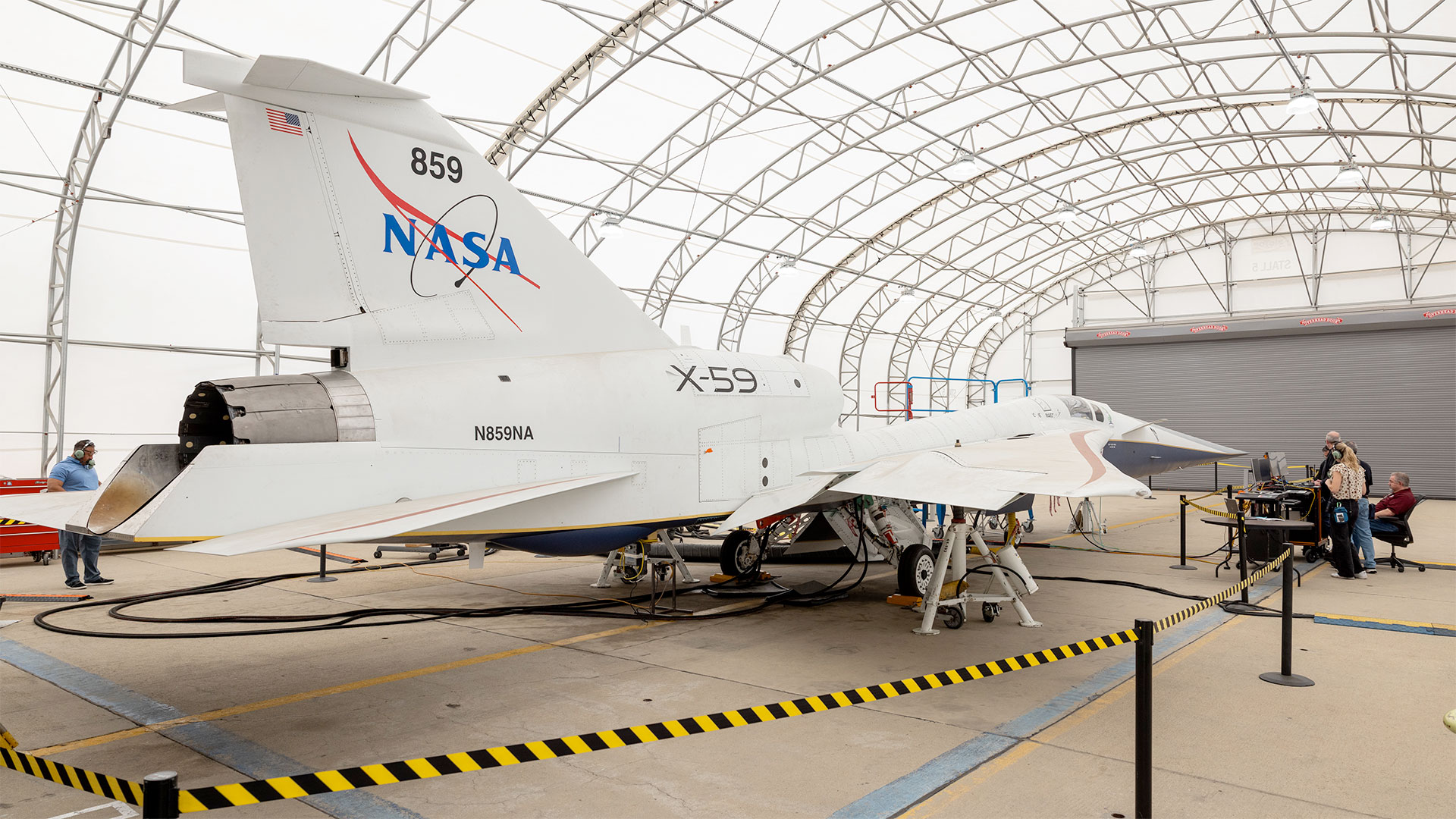
NASA's X-59 quiet supersonic research aircraft was developed by Lockheed Martin Skunk Works for the space agency's Low-Boom Flight Demonstrator project. Through the use of a long, narrow airframe and canards, the X-59 is able to reduce the noise that reaches the ground from sonic booms generated as the aircraft crosses the speed of sound.
The X-59's cockpit, ejection seat and canopy come from a T-38 "Falon" training jet and the landing gear from an F-16 "Falcon" fighter jet. The research aircraft (X-plane) is 100 feet long (30.4 meters) and has a 29.5-foot (9-meter) wingspan.
Powered by a General Electric F-414 engine, the X-59 is projected to reach a maximum speed of Mach 1.5 or 990 mph (1,590 km/h), and cruise at Mach 1.42 or 940 mph (1,510 km/h) at 55,000 feet (16,800 meters).