Get all your news in one place.
100's of premium titles.
One app.
Start reading
Space
Space
Science
Victoria Corless

NASA's Curiosity rover finds major clue that Mars was once habitable

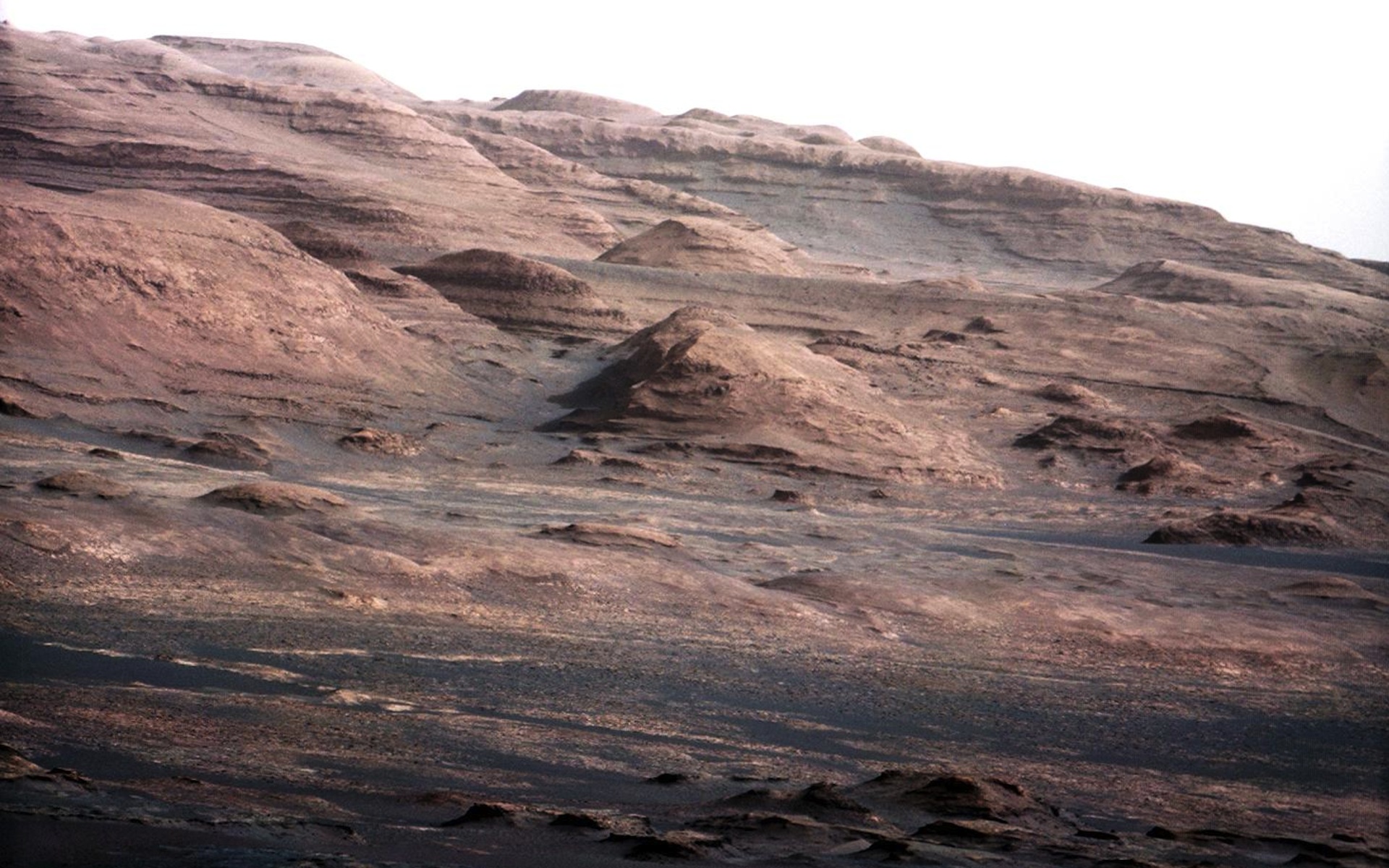
A chapter of the layered geological history of Mars is laid bare in this image from NASA's Curiosity rover. The image shows the base of Mount Sharp, the rover's eventual science destination.

While slowly climbing the slopes of Mount Sharp — a towering peak inside Mars' Gale Crater — NASA's Curiosity rover made a remarkable discovery: large deposits of carbon locked away in carbonate minerals. That may sound a little dry at first, but in reality this find could be a major piece of the puzzle in our search for ancient life on the Red Planet.

Carbonate minerals form when carbon dioxide interacts with water and rock, making them an important marker of past environmental conditions. Scientists have spotted these minerals before on Mars — by rovers on the ground, orbiters above, and even in Martian meteorites that fell to Earth — but Curiosity's latest data adds exciting new details.

Sign up to read this article
Read news from 100's of titles, curated specifically for you.
Already a member? Sign in here
Related Stories
Top stories on inkl right now
One subscription that gives you access to news from hundreds of sites
Already a member? Sign in here
Our Picks
Fourteen days free
Download the app
One app. One membership.
100+ trusted global sources.