
Get all your news in one place.
100’s of premium titles.
One app.
Start reading
Space
Space
Science
Brett Tingley

NASA's Artemis 2 mission: Everything you need to know

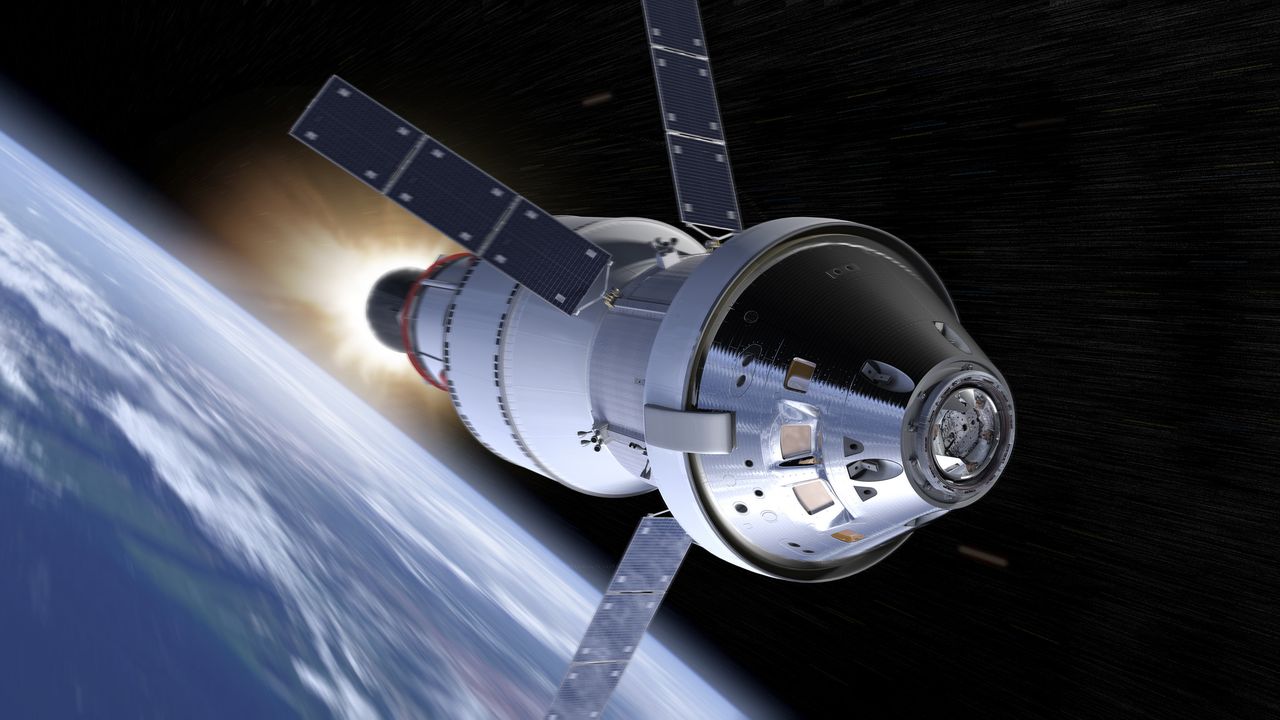
Artist's illustration of Artemis 2 mission including the Orion spacecraft with Earth in background.

Artemis 2 will be the first mission to carry humans toward the moon since NASA's Apollo program ended in 1972.

Artemis 2 is the second scheduled flight of NASA's Artemis program and the first to fly astronauts aboard the Space Launch System (SLS) rocket and Orion spacecraft. The mission will send four astronauts on a looping journey around the moon and back to Earth, testing the systems that will eventually return humans to the lunar surface.

The roughly 10-day mission is currently targeted for launch no earlier than February 2026, pending final testing and integration milestones.

What is Artemis 2?

Artemis 2 is a crewed lunar flyby mission designed to validate Orion, SLS and the mission operations needed for future landings. While Artemis 1 successfully flew Orion around the moon without astronauts in 2022, Artemis 2 will be the first time humans travel aboard the spacecraft and venture beyond low Earth orbit in more than 50 years.

During the mission, astronauts will travel thousands of miles beyond the moon, experience deep-space radiation, and test life-support, navigation and communications systems in real flight conditions.

Artemis 2 will not land on the moon. Instead, it serves as a critical stepping stone toward future Artemis missions that aim to put astronauts on the lunar surface later in the decade.

Who will fly on Artemis 2?

The Artemis II crew, including Canadian Space Agency astronaut Jeremy Hansen (left) and NASA astronauts Victor Glover, Reid Wiseman and Christina Koch, pose together in an Orion spacecraft simulator at Johnson Space Center. (Image credit: NASA/James Blair)

NASA announced the Artemis 2 crew on April 3, 2023. The mission will include three NASA astronauts and one astronaut from the Canadian Space Agency (CSA).

  • Reid Wiseman (NASA) – Commander
  • Victor Glover (NASA) – Pilot
  • Christina Koch (NASA) – Mission specialist
  • Jeremy Hansen (CSA) – Mission specialist

The inclusion of a Canadian astronaut reflects Canada’s long-term partnership with NASA through the Artemis program, including its commitment to provide Canadarm3, a robotic arm for the future Gateway space station that will orbit the moon.

Meet the crew

When will Artemis 2 launch?

The Artemis 2 launch date is tentatively set for no earlier than Feb. 5, 2025, from Launch Complex 39B at Kennedy Space Center in Florida.

The timeline depends on final testing of the SLS rocket, Orion spacecraft, and associated ground systems. NASA continues to evaluate data from Artemis 1, which successfully demonstrated Orion's heat shield, deep-space navigation, and long-duration operations beyond the moon.

Unlike Artemis 1, Artemis 2 will include a fully operational environmental control and life-support system, allowing astronauts to live and work aboard Orion throughout the mission.

What will Artemis 2 do?

Artemis II will be the first crewed flight of NASA's Orion spacecraft and Space Launch System (SLS) rocket. During the 10-day mission, four astronauts will confirm all of the spacecraft's systems operate as designed in the deep space environment. (Image credit: NASA)

Artemis 2 will be the first full-up test of NASA's deep-space exploration system with astronauts onboard. The mission is designed to assess four major readiness areas:

  • Mission planning and operations
  • Spacecraft and system performance
  • Crew interfaces and habitability
  • Guidance, navigation, and communications

The flight path

After launch, Orion will enter Earth orbit before performing a series of engine burns to set up a hybrid free-return trajectory — a path that naturally loops around the moon and returns to Earth using gravity, even in the event of major system failures.

The spacecraft will fly thousands of miles beyond the moon before beginning its return journey. At its farthest point, the crew will travel farther from Earth than any humans have before.

The mission is expected to last about 10 days, though mission planners have built in flexibility to extend the flight if additional testing objectives are approved.

Mission in a nutshell

  1. Launch from NASA's Kennedy Space Center's Launch Pad 39B to low-Earth orbit.
  2. A maneuver in Earth orbit to raise the perigee, or the lowest point of the orbit, roughly 40 minutes after liftoff. This will be performed with the SLS Interim Cryogenic Propulsion Stage (ICPS).
  3. A burn to raise the apogee, or highest part of the orbit, again using the ICPS.
  4. A system check at 42 hours after the mission begins to ensure the orbit is correct, ranging from (112 miles) 185 km at the closest point to Earth and 1,616 miles (2,600 km) at its highest point.
  5. The ICPS will be disposed and Orion will do a translunar injection to fly to the moon. The trip to the moon will take four days and have a maximum altitude of 5,523 miles (8,889 km) above the moon's surface.
  6. The spacecraft will return home. Once the spacecraft is close to Earth, the crew module will separate from the European Service Module and the crew module adapter, allowing for splashdown in the Pacific Ocean.

Will Artemis 2 land on the moon?

No. Artemis 2 is strictly a flyby mission.

The goal is to confirm that Orion, SLS, and mission operations can safely support astronauts in deep space before attempting a lunar landing on a future mission. Landing systems, surface spacesuits, and Gateway infrastructure are not required for Artemis 2.

What comes after Artemis 2?

Following the mission, engineers and flight controllers will spend months analyzing data to determine readiness for the next phase of Artemis.

The next planned mission, Artemis 3, which will land on the surface of the moon in 2027, if all goes according to plan.

However, NASA's Office of the Inspector General has expressed skepticism about that timeline. There have been delays in getting the human landing system ready, which will use SpaceX's Starship, due to technical and legal reasons. In addition, there were development delays in the spacesuits that NASA was creating; the agency has pivoted to commercial suppliers to fill the gap.

Starship has faced various development challenges, including environmental permits and a failure during its debut launch to space in April 2023. SpaceX has pledged to refly Starship quickly. But approval from the Federal Aviation Administration and other factors may push the Artemis 3 landing later in the decade.

How will Artemis 2 inform future space missions for the Artemis program and Gateway?

Now that we have humans in the capsule, we're going to have a life support system that we have not yet tested out. So that of course is a big step. Of course, we want to get our crew members back safely. And then we take that and then we look at Artemis 2, and Artemis 3 and subsequent.

What's next after Artemis 2?

When we go down to the surface (on Artemis 3), we need to know how this capsule behaves. When Gateway gets (to the moon), we're going to have a mission on how do we rendezvous and dock to the Gateway. All of these are just small steps, and the order may change around a little bit.

What kind of traits will each of the astronauts bring to the Artemis 2 crew?

You can see that they're all individually very talented, but when you select a crew it's how do they work together — that is what a team is all about. (For example) Victor's a great pilot, and Jeremy's a great pilot, and they can use those piloting skills. (More generally) you can imagine living in a capsule for more than 10 days, it doesn't matter how technically capable you are, it's how are you as a human.

This Q&A is based upon an exclusive Space.com interview with Joe Acaba on April 3, 2023.

Additional resources

You can read more about the Artemis program on the NASA Artemis website. If you want a deep dive into Artemis 2, consult this European Space Agency Artemis 2 site.

Bibliography

Canadian Space Agency. (2022, April 17). "The Artemis program: Humanity's return to the moon." https://www.asc-csa.gc.ca/eng/astronomy/moon-exploration/artemis-missions.asp

European Space Agency. (n.d., accessed 2022, Aug. 17.) "Artemis II." https://www.esa.int/Science_Exploration/Human_and_Robotic_Exploration/Orion/Artemis_II

NASA. (2023, May 15.) "NASA gears up to train Artemis II crew for moon mission." https://www.nasa.gov/feature/nasa-gears-up-to-train-artemis-ii-crew-for-moon-mission

NASA. (2021, Dec. 14). "Artemis II." https://blogs.nasa.gov/artemis/tag/artemis-ii/

Sign up to read this article
Read news from 100’s of titles, curated specifically for you.
Already a member? Sign in here
Related Stories
Top stories on inkl right now
One subscription that gives you access to news from hundreds of sites
Already a member? Sign in here
Our Picks
Fourteen days free
Download the app
One app. One membership.
100+ trusted global sources.