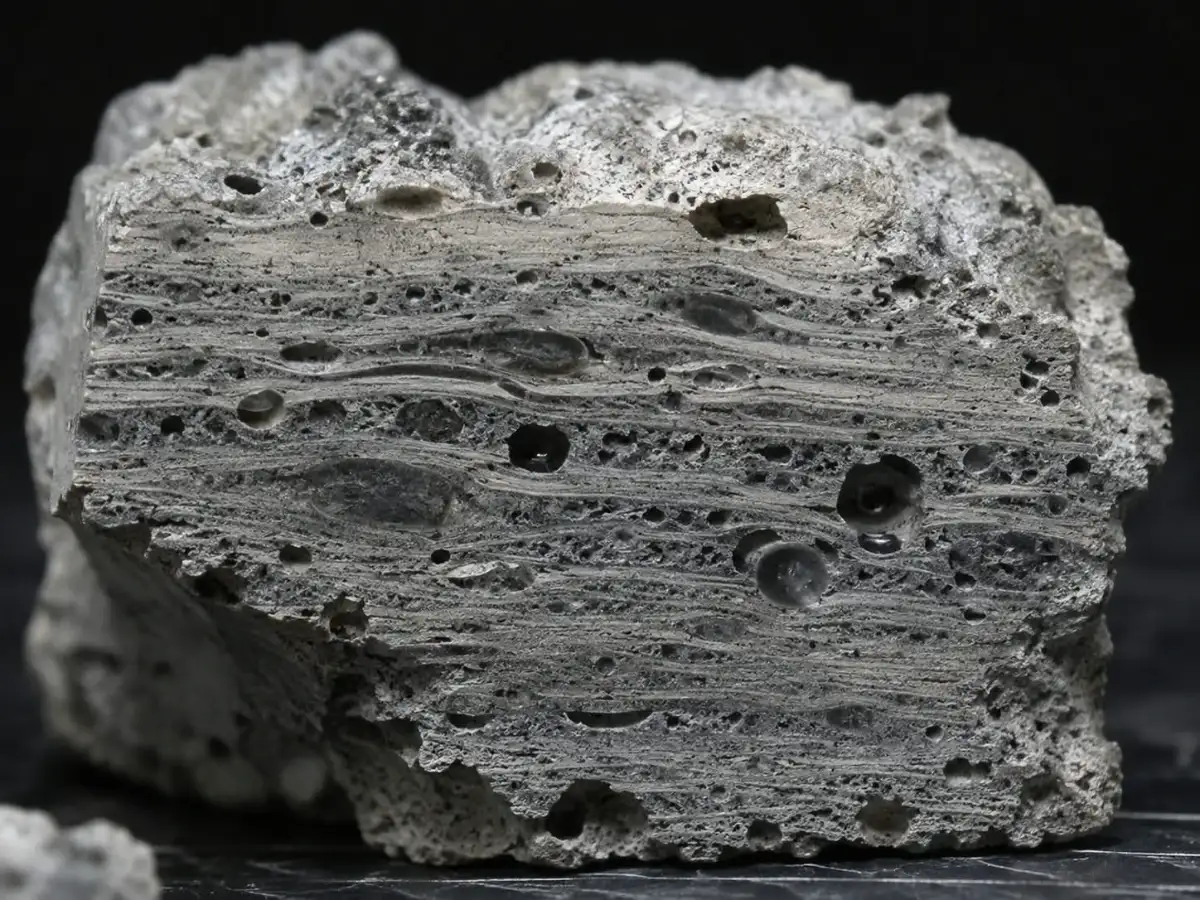
Sometime in 2021 during an average day at the International Space Station, astronauts did something they had never done before: mixing cement. Not to repair some hole or build a shelf. This was not about construction in space; NASA wanted answers for a much more important question: what if mankind wanted to live on the Moon or Mars for real? If they did, they might have to learn how to build shelters. And cement looks like a promising material for that. Thus, astronauts mixed powdered cement material with water inside a sealed pouch and waited to observe the solidification process in the absence of gravity.
The result was far more than unusual, in addition to its scientific significance. According to NASA's own research recap, astronauts aboard the space station physically mixed tricalcium aluminate and gypsum, two of the basic elements present in regular cement, as part of an investigation known as MICS, short for Microgravity Investigation of Cement Solidification. It was an experiment designed and later analyzed on the ground by a research team led from Penn State University. However, the simplicity of the goal does not imply the simplicity of the process and results.