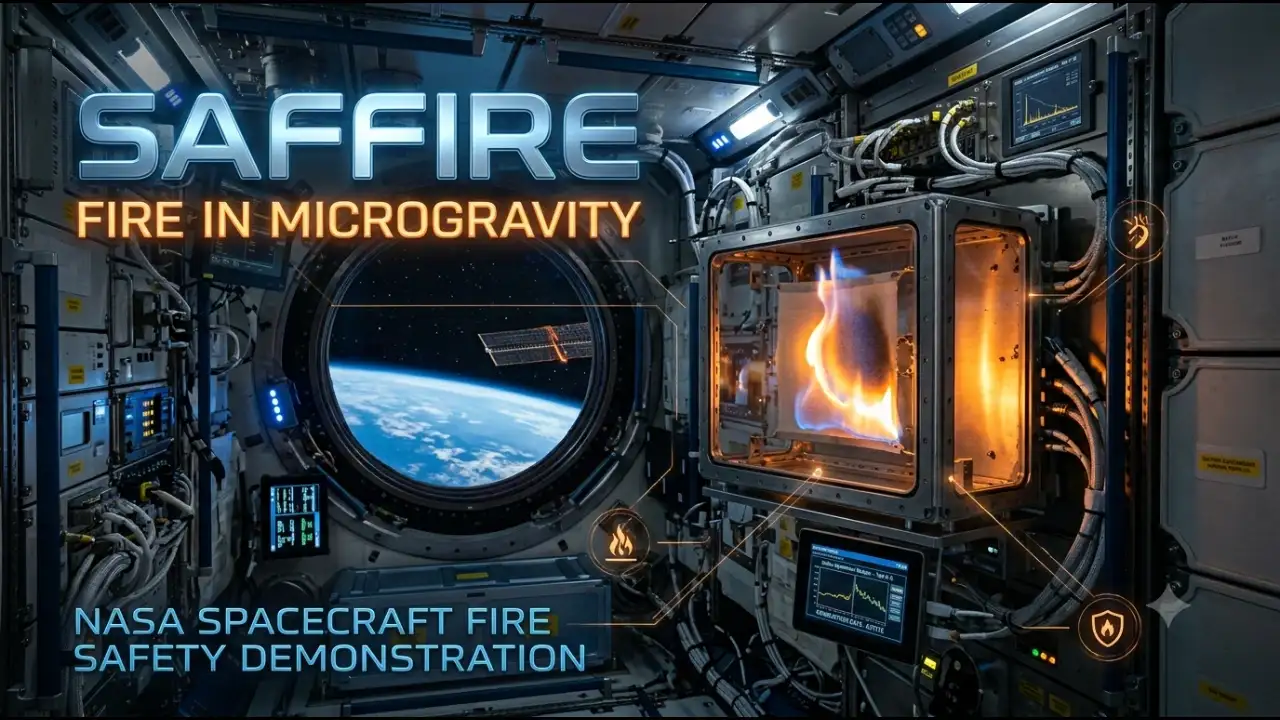
NASA once sent an uncrewed Cygnus cargo spacecraft away from the International Space Station and then ignited combustible materials inside it. The unusual experiment was designed to help researchers study how fire behaves and spreads in microgravity.
The experiment was part of NASA’s Spacecraft Fire Safety Demonstration Project, known as Saffire. The program used uncrewed Cygnus spacecraft after their missions to the ISS, allowing researchers to conduct combustion experiments without putting astronauts aboard the station in the test environment.

NASA Ignited Materials After Cygnus Left the ISS
The first investigation, Saffire-I, took place in June 2016 aboard an uncrewed Cygnus spacecraft.
After Cygnus was released from the International Space Station and moved away from it, the fire experiment was activated.
NASA did not set the entire spacecraft on fire. Instead, equipment inside Cygnus ignited specific combustible test materials so researchers could observe the resulting flames.
During Saffire-I, researchers burned a cotton-fiberglass material blend. NASA reported that the flame burned across the sample for about eight minutes.
Why NASA Studied Fire in Space
Saffire was designed to investigate combustion and fire behavior in spacecraft environments.
Conducting the experiments on an uncrewed Cygnus after it had departed the ISS allowed NASA to study fire without conducting the experiment inside the occupied space station.
The investigations examined how fires grow and spread in microgravity and how combustible materials behave during combustion in a spacecraft environment.