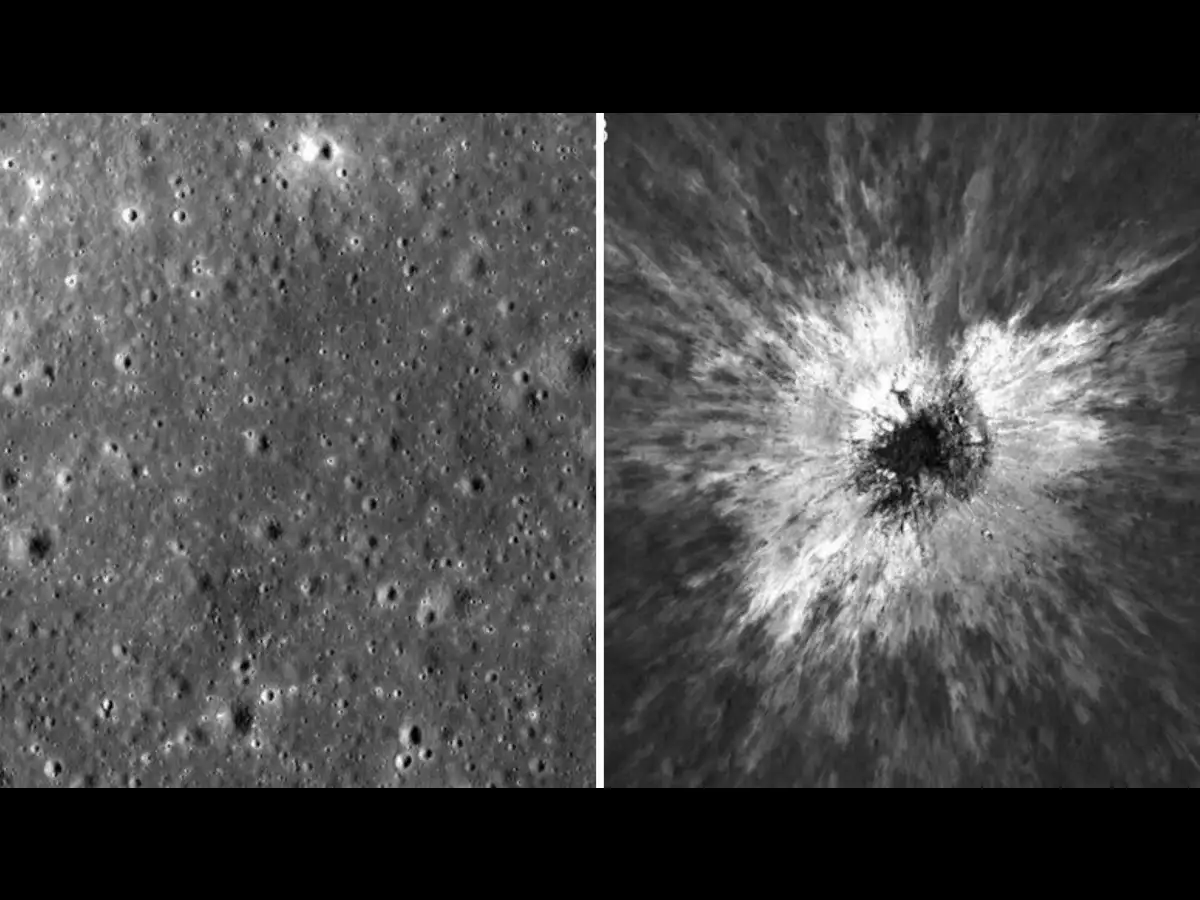
Scientists have discovered a massive new crater on the Moon that was created by a powerful impact and remarkably, nobody noticed it when it happened. The crater is about 728 feet wide and up to 141 feet deep, making it the largest known lunar impact crater formed in recent times.
It is also bigger than Rome's famous Colosseum. The discovery could provide scientists with valuable information about how the Moon's surface changes over time, particularly as NASA prepares for future astronaut missions and plans for a sustained human presence on the lunar surface.

NASA's Lunar Reconnaissance Orbiter (LRO) spotted the crater on the Moon's near side in May 2024, shortly after the impact occurred. The impact was caused by a fragment from an asteroid or comet slamming into the lunar surface.
The LRO had captured wide-angle images of the area, but researchers did not identify the newly formed crater until August 2025, when they were examining the spacecraft's enormous volume of data.
More detailed images were collected later that year, and scientists confirmed the discovery early in 2026.
The finding was described as exceptionally rare. “This event constitutes a statistically rare, effectively once-in-a-lifetime observation,” researchers wrote in one of two studies published in Science Advances.
The crater is three times larger than the previous record
The newly discovered crater has been named after Thomas McGetchin, a former director of the Lunar and Planetary Institute in Houston. At approximately 728 feet across, it is about three times larger than the previous record-holder for a recently formed crater discovered by the LRO.