Napoleon Bonaparte was there, at the dawn of cinema – the subject of an 1897 short by Louis Lumière. In 1927, he occupied the mind of French filmmaker Abel Gance, whose 330-minute epic, one of the medium’s great technical achievements, was intended to be the first of six films on Napoleon’s life. And he’s continued, ever since, to frustrate cinema’s greats: Charlie Chaplin, Stanley Kubrick, and Steven Spielberg all dreamed of and failed to bring Napoleon to screen. His allure – a mire of genius, megalomania, and hubris – has proven irresistible to storytellers dedicated to capturing the endless contradictions of the human spirit.
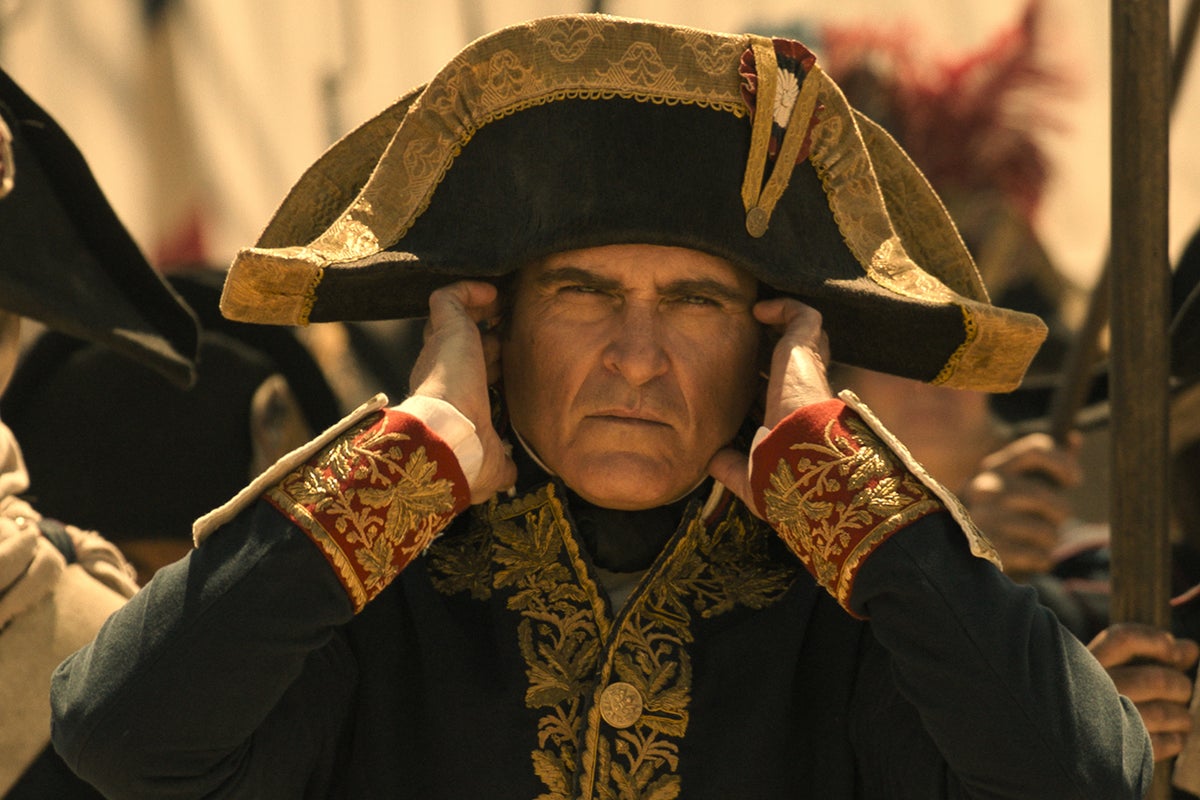
Ridley Scott’s Napoleon, ultimately, has no real sense of the definitive to it. It’s a culmination, only, of the director’s own legacy as one of our finest storytellers and a formative auteur of pop culture. In short, it’s the life of Napoleon as only Scott can tell it, full of verve, spectacle, and machismo. Its battle scenes are thrilling, a throwback to the sort of spectacle no one in Hollywood – save, well, Ridley Scott – is interested in anymore. But it can be equally dispassionate, in a way that duly and accurately captures the man one contemporary described as “a chess master whose opponents happen to be the rest of humanity”.