Get all your news in one place.
100’s of premium titles.
One app.
Start reading
Radio France Internationale
World
RFI

Nairobi sounds alarm over recruiters luring Kenyans into Russian war effort

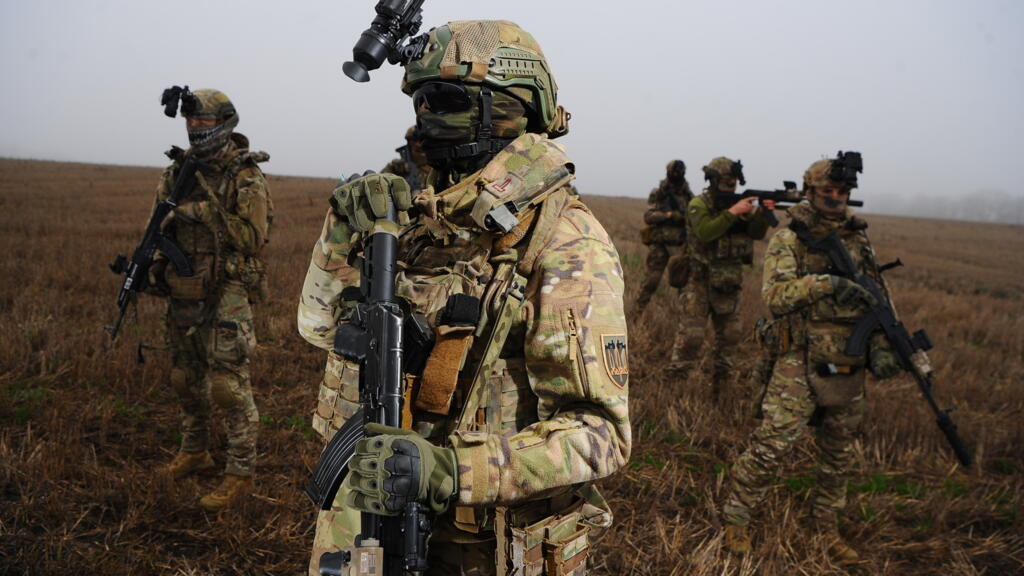
Soldiers at a training ground near Kupiansk, in the Kharkiv region of Ukraine, on 9 November 2025. © AP - Anatolii Lysianskyi

Kenya has pledged to crack down on overseas recruitment networks after hundreds of its citizens were lured to Russia with promises of work, only to be sent to military camps and, in some cases, the front line in Ukraine.

The government announced this week that 18 Kenyans who had been sent to fight on the Ukrainian front had been repatriated from Russia as part of a diplomatic push to assist Kenyans who have found themselves trapped in Russian military camps.

More than 200 Kenyans may have joined the Russian military, including some former members of the country's security forces, Foreign Minister Musalia Mudavadi said in a briefing last month.

“It is estimated that recruitment networks are still active in both Kenya and Russia,” he warned, adding that Kenya’s embassy in Moscow had documented cases where recruits were injured – some seriously.

How Moscow is reinventing its influence machine across Africa

Crackdown on recruitment agencies

The government has now promised tighter oversight of recruitment agencies that offer jobs abroad. Mudavadi said all such recruiters must be registered with Kenya’s National Employment Authority, noting that around 600 agencies have already been struck off the approved list.

Anti-trafficking groups have been calling for tougher action. Paul Adoch, director of the NGO Trace Kenya, says the phenomenon is neither new nor limited to combat roles.

“We have been seeing these departures to Russia for three years now,” he told RFI.

Before men were sent to the front lines, he said, young women were being recruited under false pretences to work in factories making military equipment.

The US State Department’s 2025 report on human trafficking cites reports of Kenyan women aged between 18 and 22 who believed they were heading for vocational training, only to end up working in Russian drone factories.

Adoch is calling for comprehensive legislation to regulate migrant labour. A draft law was submitted to parliament last year, but has yet to be debated.

Wagner replaced in Mali by Africa Corps, another Russian military group

Lured by promises

The Foreign Ministry has received reports of agents fraudulently convincing victims to sign contracts by promising to pay the equivalent of €15,000 for visas, travel and accommodation.

Leaked diplomatic cables exchanged between the ministry and Kenya’s embassy in Moscow, published in the Daily Nation newspaper earlier this week, paint a picture of how recruitment networks operate.

In one case, a man said he thought he had secured a job in meat processing in Russia. Recruited by a Nairobi-based agency, he paid 30,000 Kenyan shillings – less than €200 – to obtain a Russian visa within a week. The entire process was handled through WhatsApp.

On arrival in Moscow, he was taken to a military training camp and later deployed to Ukraine.

While he is among a handful of Kenyans who have been repatriated with the help of the embassy, at least 82 others are believed to remain stranded in Russia.

According to the cables, Kenyan nationals have been sent to camps in Belgorod, Saint Petersburg, Rostov-on-Don and Istra. Many recruits have no military background and receive less than a week of training before being sent to fight.

Four ended up in hospitals in Moscow, including for fractures and amputations.

Martin Macharia Mburu, a man from north of Nairobi who believed he was going to work as a chauffeur, is believed to be the first Kenyan officially recorded dead in the fighting in Ukraine, according to the Nation's sources. He was reportedly killed at the end of October on the front in Lyman.

African troops 'forced to Ukraine frontlines' while Russians stay in camp

African recruitment pool

In September, Kenyan police raided a housing complex outside Nairobi where 21 people were found allegedly being readied for deployment to the front line. A Russian suspect was arrested.

Kenyan officials say they have since raised the issue of fraudulent recruitment with Moscow.

Kenya is not the only country affected. A Ukrainian intelligence report published last year said Moscow had recruited foreign nationals from Somalia, Rwanda, Burundi, Congo and Uganda as well as Nepal, India and Cuba, while nationals of several more countries have spoken to the media about their ordeal.

According to the French Institute of International Relations (Ifri), African countries are fertile ground for Russian recruiters. Sub-Saharan Africa in particular represents "a vast and easily accessible recruitment pool due to high poverty rates in most countries in the region combined with a strong desire to emigrate", the think tank said in a report released on Thursday.

RFI spoke to one Cameroonian who thought he was going to Russia to work as a caretaker and ended up on the Ukrainian front.

"What I want is to mobilise the Africans who are travelling to Russia, so that they understand that they are being used. I want to tell people what's going on... so that it stops, so that Africans stop coming here to die," he said.

"We come here to die in a war that we don't know where it came from or why it started."


This story was adapted from the original in French by RFI correspondent Gaëlle Laleix.

Sign up to read this article
Read news from 100’s of titles, curated specifically for you.
Already a member? Sign in here
Related Stories
Top stories on inkl right now
One subscription that gives you access to news from hundreds of sites
Already a member? Sign in here
Our Picks
Fourteen days free
Download the app
One app. One membership.
100+ trusted global sources.