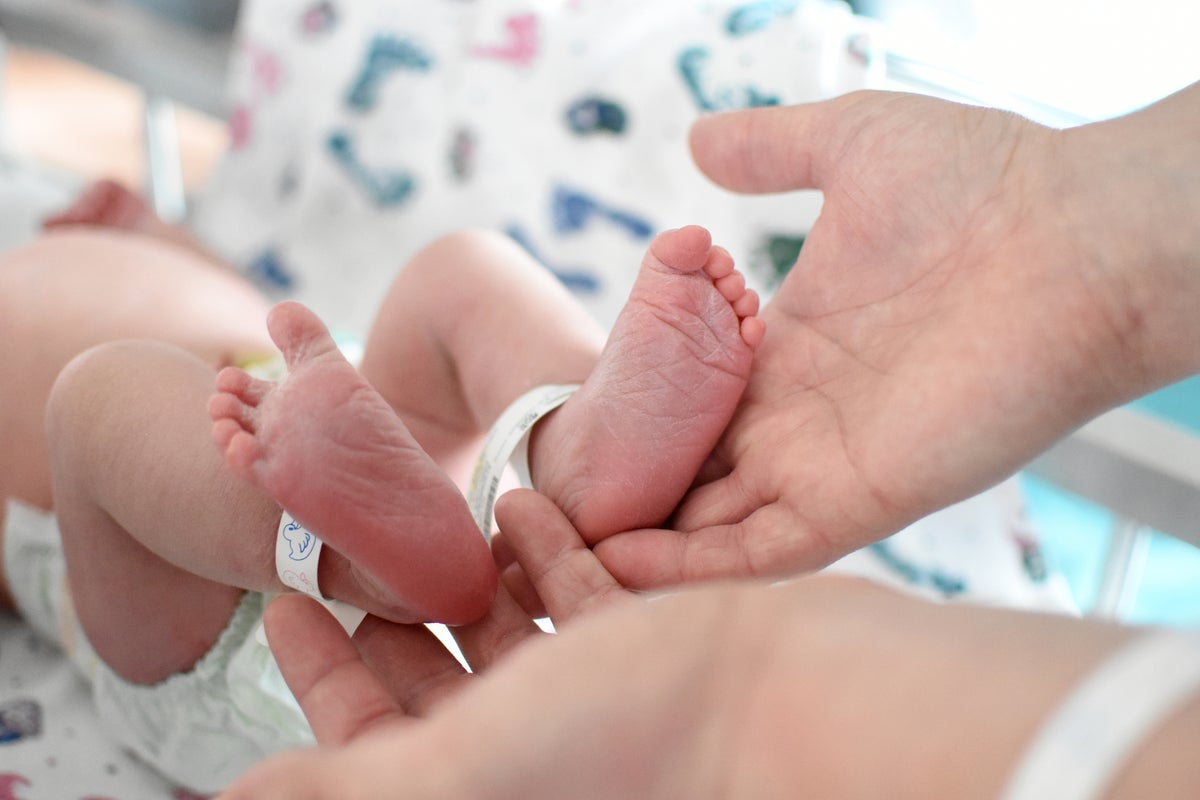
The paternity of a child, whose mother had sex with identical twins within four days, will remain a mystery for now. The Court of Appeal stated that current DNA testing limitations prevent identifying the biological parent. The legal case concerns a child, referred to as P in court documents, whose birth certificate initially named one of the twins as the father.
However, the other twin, alongside the child's mother, sought to assume parental responsibility by challenging a previous family court decision that had upheld the initial registration.

Presiding over the appeal, Sir Andrew McFarlane, sitting with Lady Justice King and Lord Justice Stuart-Smith, concluded that while the court cannot identify the father, the twin currently listed on the birth register will have their parental responsibility suspended until further arguments are heard.
Sir Andrew explained that DNA analysis confirms that either twin could be the father, but it cannot differentiate between them, leaving a 50 per cent chance that the correct father is already registered.

In a judgment delivered this month, he said: "Currently the truth of P’s paternity is that their father is one or other of these two identical twins, but it is not possible to say which."
He added that while future scientific advancements might allow for identification, "for the coming time that cannot be done without very significant cost, and so [the mother’s] ‘truth’ is binary and not a single man".
Judge Madeleine Reardon had previously found that "both brothers had had sex" with the woman "within four days of each other in the month when P was conceived", and that "it is equally likely that each of the brothers is P’s father".
Sir Andrew said that the first twin "was not entitled" to be registered as the father and that any parental responsibility derived from this "shall cease".
However, he was "wholly unpersuaded" to make a positive declaration that the first twin is not the father.
He said: "The failure to prove a fact means that that fact is not proved, it does not mean that the contrary is proved. There is a distinction between something being not proven, and making a positive declaration that the fact asserted is not true."