On the last day of 2025, an old friend and I lament that the usual resolutions like exercise more, work smarter and be a better parent are beginning to sound tired. After all, in this second phase of our lives, if we haven’t found a way forward it might pay to examine the goals rather than their pursuit.
For entertainment, I tell her that a US news network had called me that morning to schedule an “urgent” interview. I’d moved things around only to have the producer cancel without explanation. I didn’t mind the cancellation but hated the possibility that my patients could have been inconvenienced.
We jest that our reaction to the statement ‘It turns out we won’t be needing you any more’ might just be our new challenge, considering all the places it pops up – from the patients and institutions who drop us to the friends and relatives who break contact.
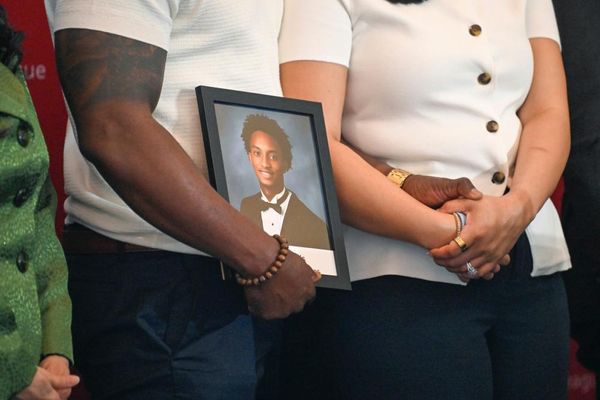
Unexpectedly, my first challenge of the new year is a funeral. Indians typically refer to their unrelated elders as uncle and aunty. It denotes respect but is also helps in remembering names. The uncle whose funeral is being held is the father of an old friend. Having arrived in Australia during the dying years of the White Australia policy, Uncle became the rare academic whose work reaped commercial success. But his most far-reaching work came after retirement when he and his wife poured themselves into community endeavours. Banding with a small group of like-minded people they kept alive the richness of Indian heritage in the emerging diaspora through music, dance and spirituality. Many of these people, including the couple, were recognised in Australian honours for this vital service to society.
Of the many Indian festivals, Holi – the riotous festival of colours – is my favourite and it’s where I probably first met Uncle. Between playing with colours, crowds were treated to a cultural program that showcased the power of diversity. The performers and speakers were old and young, born and educated the world over – with their unique talents, they were weaving the fabric of Australian multiculturalism.
After launching a successful non-profit to help people in crisis, Uncle was dreaming up his next act. For someone so vital and productive, his rapid descent from illness to death seemed grossly unfair. But as the poet Pablo Neruda so devastatingly observed, you can cut all the flowers but you cannot stop spring from coming.
Having attended many funerals through my years of being an oncologist, I realise that this occasion provides the ultimate reckoning with how a life was lived.
I once attended one where the only mourners were the pallbearers and me. At many, pews have heaved with people. Either way, I am always surprised and humbled by how little I knew the deceased.
Uncle’s funeral proves no different. In the huge crowd, everyone has a story. Students he taught and colleagues he helped. New migrants who came for counsel and never left. Those infected by his sense of purpose. Those inspired by his commitment to public good.
The ceremony is a masterclass in grace and dignity. The eulogies manage to handle grief without cloying sentimentality. An unexpected presence is a video of Uncle reciting in his sonorous voice the same meaningful prayers now offered as part of his last rites. I can’t help wondering if he ever imagined this novel use of his work.
As his son performs ancient Hindu rites in front of his father’s open coffin, we observe his courage and poise with bated breath and breaking hearts.
Earlier, a friend remarked that, even at a funeral, few people find cause to contemplate their own mortality, and I had rolled my eyes at him. Now, in the silence during the rituals, I spot one person on You Tube, another on ChatGPT, a third checking makeup and a fourth scrolling fashion finds. Phones ping and objects clatter. Being still really is so hard.
Reading this, one might think I knew Uncle well but our interactions were rare; like everyone, I thought I would have more time with him. So the intensity of my sorrow at his death catches me by surprise and prompts me to ask why.
I think it is because he made me feel seen. He exuded pride in and respect for my achievements as if he had never heard of anything more special. When we met at events he organised, he would greet me like a long-lost friend and fuss over me as if I were the chief guest. And he never, ever forgot to tell my parents how fond he was of me.
If making someone feel seen is considered the “loudest” form of love, there was no louder voice.
When he was unwell he sought my advice, although he knew I was no expert in his illness. It was a sign of trust but also intellectual humility, which is a good shield against never feeling threatened by others. Indeed, his best accomplishments probably resulted from a remarkable ability to not take himself too seriously and be open to advice.
The funeral ends and we emerge into a day of warm sun, bright flowers and unsuspecting birds, the universe cautioning us against taking ourselves too seriously.
We follow the priest in chants before quietly saying our final goodbyes. Then, for a man who was large in life and humble in bearing, tears are replaced by a prolonged standing ovation – poignant, perfect and somehow, uplifting.
Later, my friend asks about the funeral. I tell her that we have ourselves a proper new year resolution. It is to make others – especially our patients – feel seen through our daily actions so that one day when the world inevitably says “We won’t be needing you any more”, we will have fulfilled our purpose.
Ranjana Srivastava is an Australian oncologist, award-winning author and Fulbright scholar. Her latest book is called A Better Death