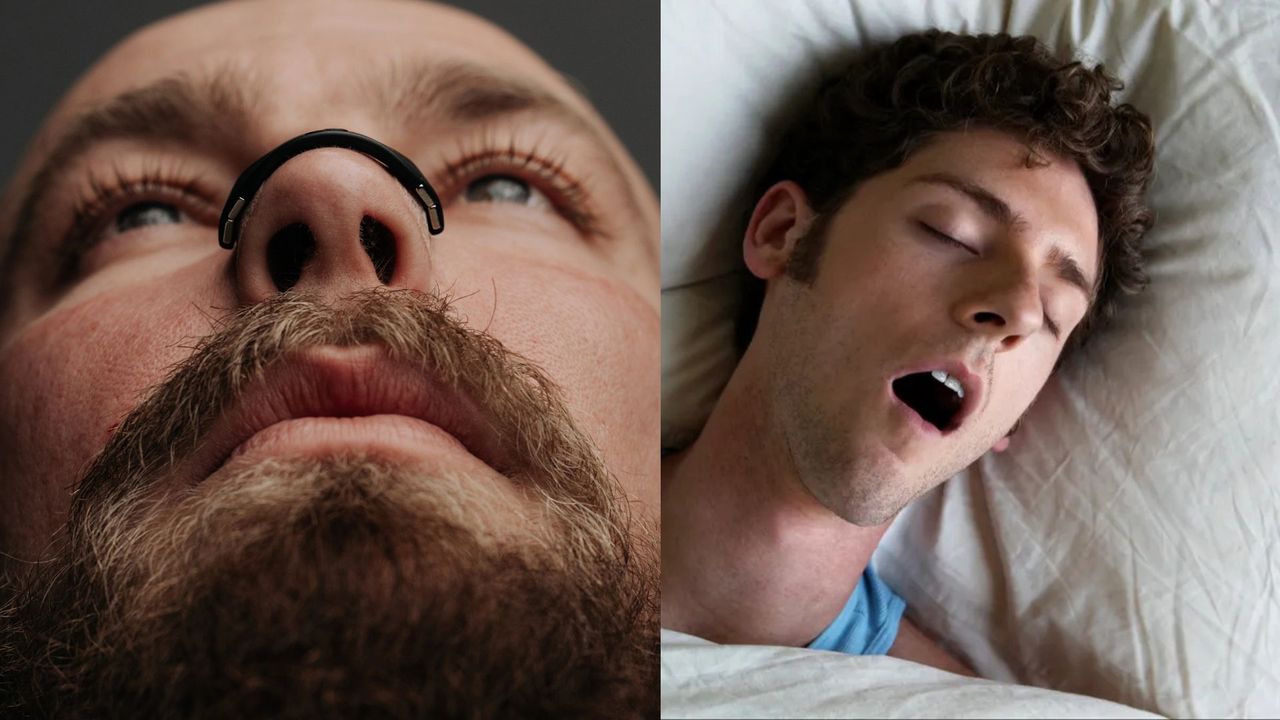
As someone who writes about sleep for a living, I’ve perfected my sleep set-up and nighttime routine to make sure I get quality rest night after night.
However, there is one thing that ruins my plans, and I have absolutely no control over it:

My husband’s snoring.
And yes, I’ve tried foam earplugs, silicone earplugs, noise-canceling headphones and just about everything to block out the sound. But nothing works. They either fall out of my ears, cause pain or simply don’t muffle enough noise.
So when I saw the viral magnetic nose clips that promise to stop snoring plastered over my Instagram, I was intrigued. Could I cut off my husband’s snoring at the source with this $40 product? Surely not. But I was desperate, and I’d try anything, so I ordered them.
Here’s how it went.
What are the viral magnetic nose clips and how do they work?
Magnetic nose clips work by attaching an adhesive patch that contains a small magnet to the outside of each nostril. A black, arched piece of plastic with a magnet on either end then connects to the adhesive patches, which pulls the nostrils open.
“The primary function of magnetic nose clips is to mechanically increase the width of the nostrils,” says Dr Blen Tesfu, Physician and Medical Advisor at Welzo, a clinical focus on sleep health and respiratory function.
The logic behind them is the same as any kind of nasal strip, like the popular Breathe Right strips. And while my husband and I have found Breathe Right effective, we needed something that opened up the nasal passages even more.
By widening the nasal passages, the space in your airways increases, allowing more airflow. This makes it easier to breathe through your nose throughout the night, rather than mouth breathing, which is a common cause of snoring.

Our experience putting this viral anti-snoring product to the test
Night 1
Pursuading my husband to stick a small magnet to either nostril was the first hurdle. And, fair enough. I wouldn’t exactly be thrilled if I were asked to sleep with black plastic stuck to my nose all night.
And while it was the first hurdle, it was actually the only obstacle standing in our way of a peaceful night's sleep. Once he agreed, the process was simple, quick and immediately effective. We applied the small rectangular stickers to either nostril easily, and once they were in place, they weren't going anywhere.
Next came the satisfying moment we’d seen in videos: Hovering the black plastic clip over each nostril and waiting for the magnetic ‘click’ as his nose expanded.
It felt like he could actually breathe properly for once
Instantly, my husband noticed a big difference. He said it felt like he could actually breathe properly for once, and he seemed genuinely excited to sleep with it on.
So we switched the lamps off and waited for sleep. Usually, at this point, he drops off first, and I lie awake dreading the moment when the insufferable snoring starts to vibrate my pillow.
But alas, that moment never came. My husband breathed through his nose quietly, and I fell asleep fast, not waking once in the night to roll him over.
We both woke refreshed, and I had to actually persuade him to take the clip off, as he wanted to keep it on all day, too.

Our verdict after a week
We continued using this cheap trick for the week, and felt like we’d found the answer. We were both refreshed and well-rested for once, excited that we could enjoy sleeping next to each other again.
And genuinely, over the course of the week, we didn’t see a downside, apart from the fact that using two new magnets every night and then discarding them felt slightly wasteful.
It was my husband who started to routinely put the clip on at night, excited for better quality sleep, rather than it feeling like a chore. And considering I’ve made him sleep upright, wear jaw straps and strap a tennis ball to his back before, this was an impressively non-invasive solution.
But do these clips actually ‘stop’ snoring?
It’s important to note that my husband does not have sleep apnea or a health condition that causes his snoring. For him, it’s often down to congestion (thanks to our lovely fluffy cats and increased pollen in the air). For this reason, the clips served their purpose well.
“Some of the key disadvantages are that they don't solve every cause of snoring,” says Dr. Tesfu about this product.
Dr. Tesfu always encourages getting to the root cause of your snoring before opting for products that might help ‘stop’ it
“Nasal clips will generally have little impact on snoring due to issues such as a large tongue (or uvula) in your throat or other related disorders like obstructive sleep apnea,” she explains.
“Nasal clips work best for a smaller subset of people who have some level of nasal congestion but no structural problems with either their airway or sleep,” the doctor adds. So my husband and I were one of the lucky few cases where a solution like this did work.
Dr Tesfu always encourages getting to the root cause of your snoring before opting for products that might help ‘stop’ it. Snoring is often a symptom of more serious health conditions like sleep apnea, so taking part in a sleep study and talking to a health professional are key steps in eventually resolving the issue.