
Get all your news in one place.
100’s of premium titles.
One app.
Start reading
Digital Camera World
Hillary K. Grigonis

My first serious camera was a cheap Nikon DSLR. I’m immensely jealous of the Nikon Z50 II

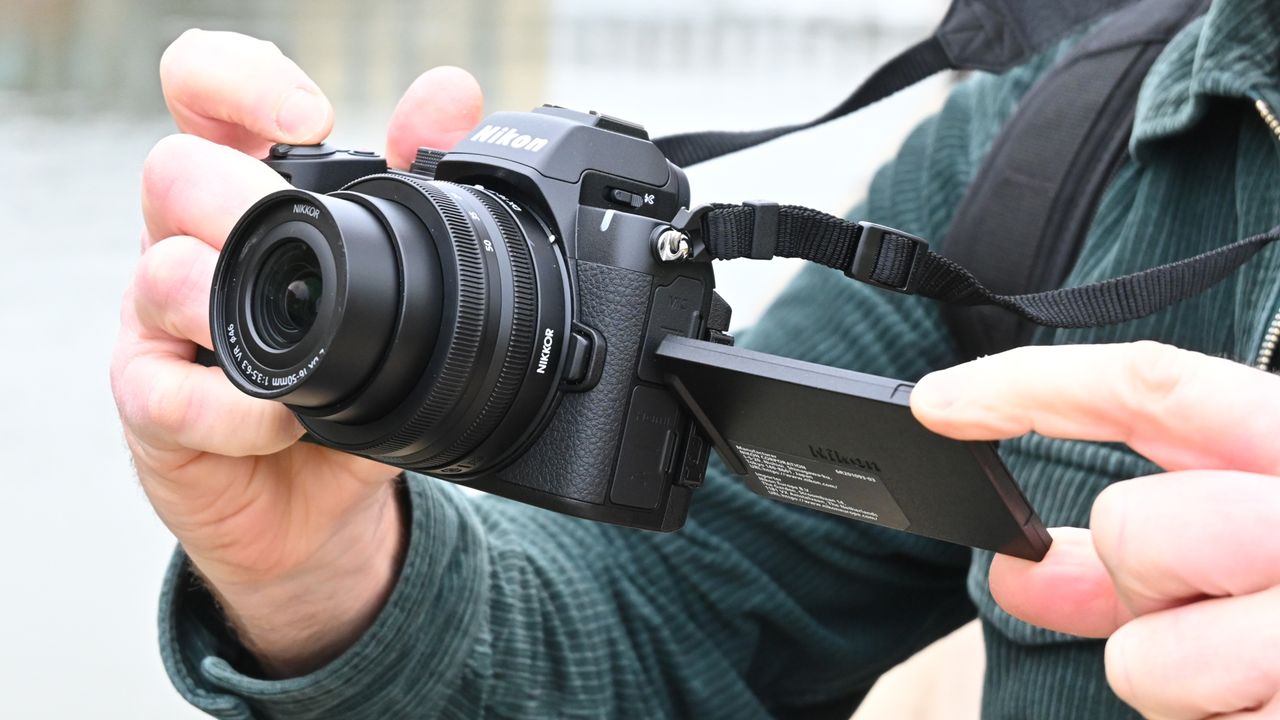
Man holding Nikon Z50 II with rear screen tilted.

When I bought my first “serious” camera, I spent what seemed like days researching before settling on an entry-level Nikon DSLR. I’m still enamoured enough with the 2007 D40X that it decorates a shelf in my office. But, I have a confession: I’m insanely jealous of modern entry-level cameras like the Nikon Z50 II.

I learned photography on a 10.2MP DSLR with a maximum burst speed of 3 fps, including photographing local sports teams working for a small town newspaper. Learning sports photography on a 3 fps camera was a lesson in patience, to say the least.

Fast forward nearly two decades – and Nikon’s entry-level lineup looks quite a bit different. For starters, the Nikon Z50 II has a 11 fps mechanical shutter and a 30 fps electronic shutter.

But, there’s more to the differences in learning on a mirrorless compared to learning on a DSLR beyond just the speed. Subject detection autofocus means far less floundering around trying to get the autofocus point on the right spot before the moment is over – and a much higher percentage of sharp shots.

(Image credit: Future)

Electronic viewfinders mean it’s possible to learn on a camera that shows you exactly how light or dark the shot is going to be without relying completely on a light meter. Unless you’re working with flash, you can see exactly what the exposure will look like before taking the shot.

Subject detection and electronic viewfinders are now the norm for entry-level cameras. (Although there are, of course, cameras like the Nikon Z30 that have no viewfinder at all.) But the Z50 II’s low-light autofocus rated down to -19 EV is not the norm for beginner cameras. I can’t help but think of how much easier shooting Friday night football underneath stadium lights would have been with the Z50 II over the D40X.

Now, I earn a living testing out cameras from high-end models to budget options. Certainly, the pro models have a significant advantage over budget models. But today’s budget models are far more suitable for more challenging genres like sports and wildlife than the cameras of a decade ago. When I tried the Nikon Z50 II – alongside two other entry-level models – I captured a shot of birds in flight that my old entry-level DSLR never would have been capable of catching in focus.

Shot on the Nikon Z50 II (Image credit: Hillary K Grigonis / Future)

If I could change one thing about the Nikon Z50 II, I would add in-body stabilization. Blurred shots are a common newbie problem, and while stabilization doesn’t solve all blur, it’s a big help.

I fell in love with photography on a cheap Nikon DSLR. I’m no longer a novice photographer – but I have to admit I’m jealous of all the tools beginners have access to on modern cameras, even at an entry-level price.

You may also like

Browse the best Nikon cameras or the best cameras for beginners.

Sign up to read this article
Read news from 100’s of titles, curated specifically for you.
Already a member? Sign in here
Related Stories
Top stories on inkl right now
One subscription that gives you access to news from hundreds of sites
Already a member? Sign in here
Our Picks
Fourteen days free
Download the app
One app. One membership.
100+ trusted global sources.