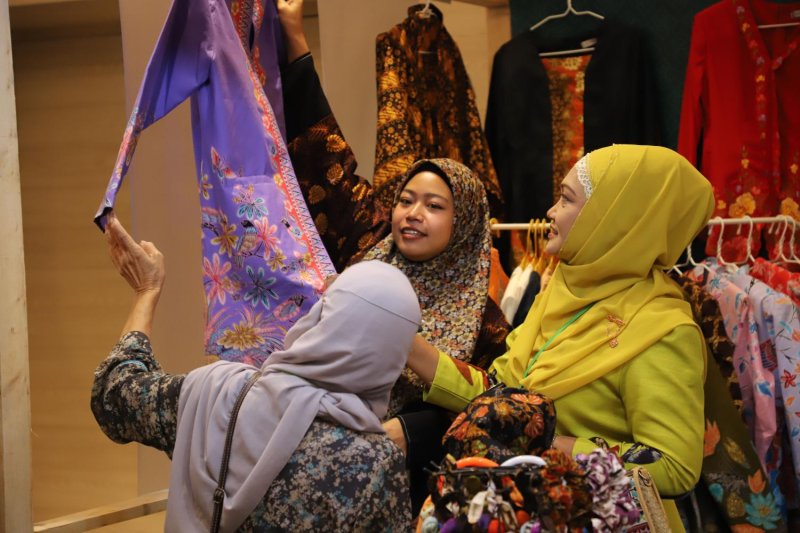
Thailand should improve Muslim-friendly facilities and services, implement a recognised accreditation system and ensure clearer, more consistent policies to attract more Muslim travellers, according to a travel specialist.
CrescentRating and Mastercard's Global Muslim Travel Index 2026 show Thailand ranked fifth among destinations outside the Organisation of Islamic Cooperation (OIC), down from second place during 2015-2019.
Fazal Bahardeen, chief executive of CrescentRating and HalalTrip, said the decline reflected stronger competition rather than Thailand losing ground, as other destinations accelerated efforts to attract Muslim travellers.
Thailand's performance remained relatively stable over the past decade, with its score improving in recent years as the country strengthened its post-pandemic tourism infrastructure, he said.
The ranking reflected stronger competition from destinations such as Hong Kong and Taiwan, which have made significant investments in Muslim-friendly services, hospitality standards and visitor experiences.
Among non-OIC destinations, Singapore retained the top spot with 73 points out of 100. Hong Kong climbed to second with 64 points, while Taiwan and the UK shared third place with 59 points. Thailand scored 58 points, maintaining fifth place from the previous year.
International Muslim arrivals tallied 196 million in 2025 and are projected to increase to 262 million by 2030, according to CrescentRating. Asia registered more than 128 million Muslim arrivals last year.
Key growth drivers include rising demand from young Muslim travellers and the increasing use of artificial intelligence (AI) to create more personalised travel experiences.
"Thailand remains a highly attractive destination for Muslim travellers, but maintaining its leadership position will require continued investment and a structured approach to strengthening its Muslim-friendly tourism ecosystem," said Mr Bahardeen.
"As more destinations recognise the value of the Muslim travel market, the competitive benchmark continues to rise."
One weakness for Thailand is the gap between physical readiness and digital visibility. Although many hotels and tourism businesses offer Muslim-friendly facilities, these are not sufficiently promoted or verified.
As a result, AI-powered travel platforms cannot identify or trust these offerings, leaving them absent from automated trip planning.
He urged operators to adopt recognised standards and accreditation to strengthen trust among global Muslim travellers.
POLICY UNCERTAINTY
The report noted that Thailand's frequent policy changes create uncertainty for travellers and tourism operators.
Earlier this year, confusion emerged over whether the 60-day visa-free scheme remained in effect, when revised rules would be introduced and how immigration officers would interpret repeat entries.
Most eligible countries are now expected to receive 30-day visa-free stays, although the enforcement date has yet to be announced.
The report said changing regulations, inconsistent enforcement and concerns over long-stay visitors underscored the need for clearer communication, greater policy stability and a transparent digital visa system.
Mr Bahardeen said Thailand's strengths included integrating faith-based requirements into its hospitality sector and its vibrant halal food scene in Bangkok and the southern provinces.
Thailand has also attracted large numbers of visitors from Muslim-majority markets such as Malaysia and the Middle East.
He said the country should continue expanding Muslim-friendly facilities, standardising services and improving staff training.
It should also offer more tailored travel experiences supported by digital convenience and halal-friendly services.
However, Thailand should expand credible third-party accreditation for Muslim-friendly tourism across its supply chain, as this would strengthen traveller confidence and help generate more bookings.