Get all your news in one place.
100's of premium titles.
One app.
Start reading
The Conversation
The Conversation
Maria Elena Buslacchi, socio-anthropologue, chercheuse post-doc à L'Observatoire des publics et pratiques de la culture, MESOPOLHIS UMR 7064, Sciences Po / CNRS / Aix-Marseille Université, Aix-Marseille Université (AMU)

Museums on prescription: how cultural activities are becoming crucial to the public health debate

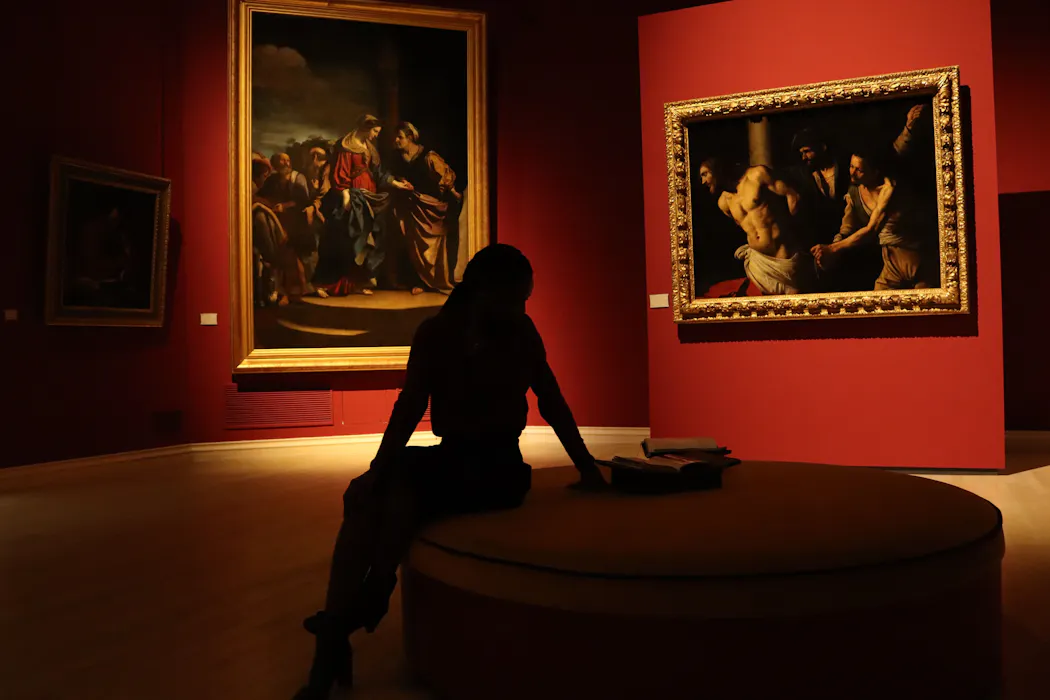
"Museotherapy" is gaining ground. In Europe, cultural pursuits are connecting communities and improving collective wellbeing, according to the Culture as Care Report. Loic Manegarium/Pexels, CC BY

KEY TAKEAWAYS

  • On June 18, European institutions declared culture to be a strategic priority for the European Union.

  • It is now recognised that cultural activities produce tangible and positive psychological, physiological, social and behavioural responses that are good for your health.

  • “Museotherapy”, or museum-based art therapy, is gaining ground, and the first museum visits on prescription have already been issued.


On June 18 2026, on the sidelines of the European Council in Brussels, the European Parliament, the European Commission and the Council of the European Union signed a joint declaration making culture a strategic priority for the first time.

This text, “Europe for Culture – Culture for Europe”, sets out twelve key principles intended to inspire, if not guide, member states’ cultural policies. Among these principles is culture’s impact on health. The Commission explicitly references the conclusions of a report by experts from member states, entitled Culture for Health, which highlights the beneficial effects of culture on health and wellbeing.

Culture is no longer championed merely as heritage – a source of attachment and a sense of belonging for individuals – or as an economic driver within the creative industries. It is becoming a resource for public health and social cohesion.

Culture as care

This shift is part of a wider trend that is inspiring pilot initiatives and policy directions at various levels, by placing a new priority on neuroscience research into how cultural practices affect the brain and wellbeing. The European network Culture Next has, in fact, just published a report, “Culture as Care: Participation, Health and Collective Well-Being in European Cities”, which directly builds on the terms of the declaration.

In the report, culture is described not as a substitute for social, health or educational policies, but as that which fosters care through participation itself – via the meeting places and cultural spaces accommodating mutual recognition and collective action that it makes possible.

The report places particular emphasis on young people, calling for a move beyond an “access” approach (bringing young people to cultural institutions) to recognise the role they already play as creators and organisers, often outside institutional frameworks (in line with a perspective more closely aligned with the principle of the “right to culture”).

A health ecosystem

The European Commission’s “Culture and Health – Time to Act” report (2025) calls for the development of a health ecosystem to address a range of socio-health issues that characterise the European continent today and which are contributing to a gradual deterioration in general health conditions, both physical and mental& nbsp;: post-pandemic burnout, an ageing population, increasing social isolation, a worrying geopolitical context and growing inequalities.

The concept of a health ecosystem was first put forward in the World Health Organisation (WHO) report published in 2019, entitled “What is the evidence on the role of the arts in improving health and wellbeing?” (“What are the real benefits of engaging in the arts for health and well-being?”. According to this report, artistic activities simultaneously engage aesthetic appreciation, imagination, sensory stimulation, emotional response and cognitive stimulation, which trigger concrete and positive psychological, physiological, social and behavioural responses that benefit health.

Pioneering initiatives

In reality, these reports merely institutionalise a movement that had already begun among a handful of pioneering cultural institutions. The Museum of Modern Art in New York (MoMA) was one of the first museums to make it official, with the help of healthcare professionals, a cultural programme tailored to a clinically defined audience: people living with Alzheimer’s disease.

Since 2006, the Meet Me at MoMA programme has offered monthly interactive, guided tours of the collections during hours when the museum is closed to the public. The aim is to provide a space for expression and exchange for people in the early and intermediate stages of the disease, drawing on iconic works of modern art. This marks a first step toward recognising the role that museums can play in promoting wellbeing.

In 2018, Art Historian Nathalie Bondil, then Director of the Montreal Museum of Fine Arts, launched the “Museum on prescription” scheme in collaboration with French-speaking Canadian doctors: a partner doctor can recommend a patient to visit the museum when they anticipate it would be beneficial for their health.

Nathalie Bondil, who has since become Museum & Exhibitions Director at the Arab World Institute in Paris, has helped to promote this model across Europe, notably through the concept of “museum therapy”, which is now recognised and promoted by public institutions in France, such as the National Heritage Institute (INP) and the École du Louvre, as part of their training programmes for museum professionals and future professionals.

Museums on prescription

Experiments in museums are multiplying. In Belgium, an initiative run by the City of Brussels and CHU Brugmann enables healthcare professionals to offer patients a prescription for a free visit to a museum (along with one accompanying person), just as they would prescribe medication.

In northern France, Louvre-Lens, an offshoot of the Louvre Museum in Paris has included the fight against health inequalities among the commitments set out in its scientific and cultural programme, and in 2023, the museum launched the free “Louvre-Lens-Thérapie” programme, available on medical prescription.

This exchange of practices is also accompanied by steps toward endorsement through training. Since 2024, Claude-Bernard Lyon 1 University has been offering a university diploma Prescriptions culturelles : Santé et Arts, or Cultural Prescriptions: Arts and Health (taught in French) and coordinated by Nathalie Bondil herself alongside Pierre Lemarquis, a neurologist, and Laure Mayoud, a clinical psychologist.

This marks the transition from an experimental phase of museum-based intervention to a stage where the aim is now to embed it within a transferable, theoretical and educational framework, at the intersection of museology, neuroscience and the social sciences. However, to achieve this, scientific evidence of its effects going beyond the pioneering studies is yet to be provided.

Conclusive but nuanced results

In Canada, a study conducted to examine the effects of “doctor’s orders” to single visit to the Montreal Museum of Fine Arts (MMFA, Montreal, Quebec, Canada) on the wellbeing and quality of life of patients living in Montreal (Quebec, Canada), suggests that museums could play a valuable role as partners in patients’ care pathways within primary and secondary healthcare settings.

In the United Kingdom, a quantitative study conducted in seven museums in central London and Kent assessed psychological wellbeing as part of a new social prescription initiative for older people, entitled “Museums on Prescription”, and concluded that “museums can play a key role in offering museum programmes to older people to improve their psychological wellbeing over time.”

In Caen, France, an Inserm study aimed at measuring the benefits of museum visits on different groups of people was one of the highlights of Caen’s Millennium celebrations in 2025.

In Italy, a similar study was carried out as part of the ASBA project (Anxiety, Stress, Brain-friendly Museum Approach) under the direction of Annalisa Banzi, a researcher at the Centre for the History of Biomedical Thought at the University of Milano-Bicocca, in collaboration with the Università Statale di Milano.

The anxiety and stress levels of 350 members of the public and dozens of museum reception and outreach staff were measured by recording electrocortical activity and through questionnaires before and after their participation in various cultural activities at the museum. The results quantify the reduction in perceived anxiety and stress levels – which can fall by a quarter – and the improvement in the participants’ psychophysical wellbeing.

The increasing frequency of opportunities for collective reflection on the subject – for example, the conference Who Cares? Museums, Wellbeing and Resilience, organised by the Network of European Museum Organisations (NEMO) in Horsens, Denmark, in October 2025 – attests both to its relevance and to the need to take a step back from a rapidly expanding phenomenon, while not obscuring the boundaries and tensions between the artistic and therapeutic fields. From a Social science perspective, the framework of socialisation, for example, is a prominent aspect that remains largely unexplored in research.

Recent studies show that the influence of museum representations and practices passed on within the family from a very young age also has a major impact on the transformation of the visiting experience into a sense of wellbeing – a transformation that wildly varies according to socio-demographic profiles.

Our personal encounter with the museum as an institution, but also with staff and other visitors, as well as everything that takes place “around” the visit, is also worth studying. The journey, the breaks, a snack at the museum café, buying a bookmark in the museum shop – the whole package that accompanies the aesthetic experience of the artwork must not be overlooked in the analysis. This does not undermine the social role of the museum space; on the contrary, it encourages us to continue reflecting on how to rethink it in these terms.


This article was written in collaboration with Andrea Esposito, an expert in neuroaesthetics, who holds a Master’s degree in Art History from Ca’ Foscari University of Venice and is a visiting researcher at the University of Milan-Bicocca (ASBA project) and at the Faculty of Behavioural and Social Sciences at the University of Groningen.


A weekly e-mail in English featuring expertise from scholars and researchers. It provides an introduction to the diversity of research coming out of the continent and considers some of the key issues facing European countries. Get the newsletter!


This article was originally published on The Conversation. Read the original article.

Sign up to read this article
Read news from 100's of titles, curated specifically for you.
Already a member? Sign in here
Related Stories
Top stories on inkl right now
One subscription that gives you access to news from hundreds of sites
Already a member? Sign in here
Our Picks
Fourteen days free
Download the app
One app. One membership.
100+ trusted global sources.