
Get all your news in one place.
100's of premium titles.
One app.
Start reading
AAP
AAP
Politics
Ben McKay

MPs blast potential legal bill for FOI request

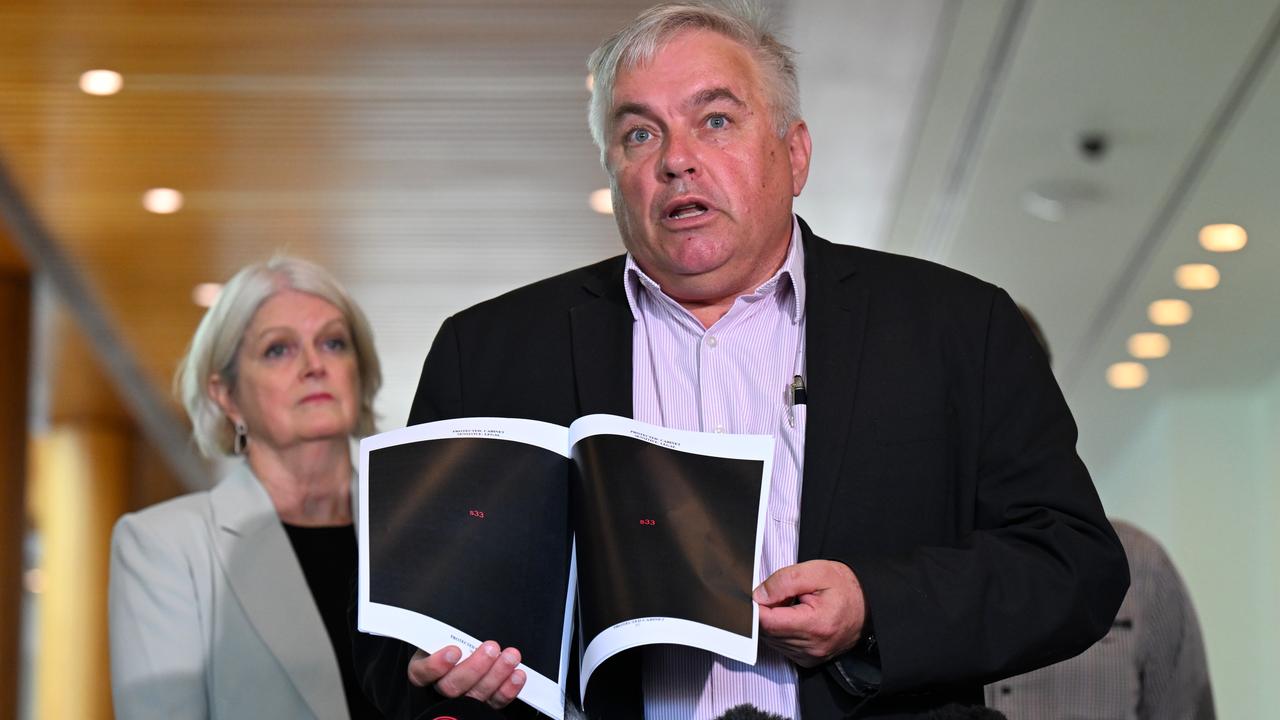
Transparency campaigner and former senator Rex Patrick faces a legal challenge from the government. (Lukas Coch/AAP PHOTOS)

Attorney-General Michelle Rowland has been asked to stop an "unprecedented and existential threat" to Australia's freedom of information system, prompted by requests to learn where nuclear waste from AUKUS submarines might be stashed.

After a successful request by former senator Rex Patrick to see a report into plans for the toxic material, the government appealed to prevent the release.

In an extraordinary move, the Department of Industry, Science and Resources (DISR) also asked the Federal Court for Mr Patrick to pay costs - estimated at up to $150,000 - should it win the appeal.

"Are we seeing another nail in the coffin of Freedom of Information and what is left of government transparency?" Mr Patrick wrote when learning of the appeal.

Attorney-General Michelle Rowland
Michelle Rowland has been asked to stop the government trying to recover costs from an FOI request. (Mick Tsikas/AAP PHOTOS)

That move prompted a wide backlash both inside and outside of Parliament House, including an improbable alliance of parliamentarians across the political spectrum.

Pauline Hanson, David Pocock, Andrew Wilkie, Lidia Thorpe, Ralph Babet, Jacqui Lambie and David Shoebridge are among 18 MPs and senators asking Ms Rowland to intervene.

"It is clear to us that this is an attack on our Freedom of lnformation regime, with the intent of deterring Australians from pursuing access to information," they wrote.

"Dragging an ordinary citizen, self-represented and under threat of costs, to argue questions of law raised by the government is most unfair.

"We urge you to intervene by agreeing to meet Mr Patrick's costs and not seeking costs in the event the government is successful."

A similar letter to Ms Rowland from nine civil society groups is supported by the journalists union, Transparency International, the Human Rights Law Centre, and others.

Mr Patrick believes the government is over-reacting to the sensitivity of the waste sites.

"It's clear that the documents the government was ordered to make public are politically sensitive," he said.

"They may well be politically radioactive, but this is not an allowable reason under the Freedom of Information Act to refuse to release documents.

"I hope the attorney-general intervenes. It's in the public interest for her to do so."

Composite image of Anthony Albanese, Defence Minister Richard Marles
The tripartite deal that will see Australia operate nuclear submarines is hugely controversial. (Susie Dodds/AAP PHOTOS)

The attorney-general's office declined comment on the matter, and DISR is yet to respond to a request from AAP.

This episode follows a botched effort to reform Australia's FOI laws earlier in this parliamentary term.

In March, the government withdrew plans to introduce fees for FOI requests, expand the types of documents deemed out-of-bounds, and lengthen allowable response times.

The government argues the system is burdensome and broken, while applicants are also routinely frustrated - with a recent audit office probe finding only 43 per cent of requests resulted in information being disclosed.

Sign up to read this article
Read news from 100's of titles, curated specifically for you.
Already a member? Sign in here
Related Stories
Top stories on inkl right now
One subscription that gives you access to news from hundreds of sites
Already a member? Sign in here
Our Picks
Fourteen days free
Download the app
One app. One membership.
100+ trusted global sources.







