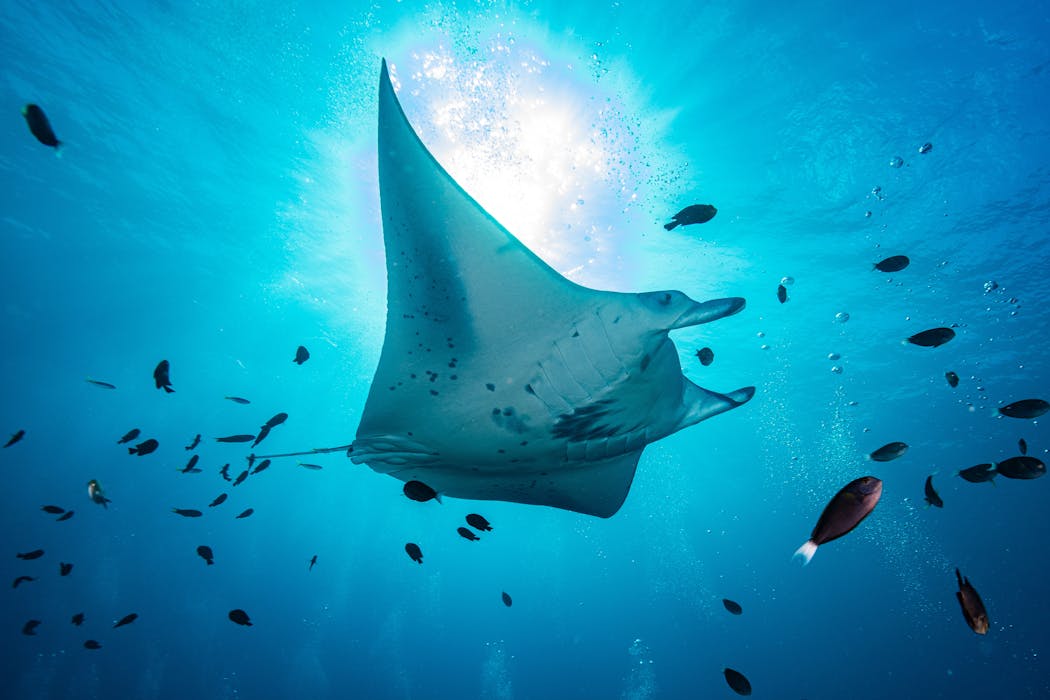
In a moment being celebrated by global marine conservationists, a new UN high seas treaty comes into force on January 17 providing a new way to govern the world’s oceans.
Formally known as the Biodiversity Beyond National Jurisdiction agreement, it will allow for the creation of protected areas in international waters, like national parks. It will also set out ways of sharing genetic materials from the high seas – and any future profits derived from them.
Agreed in June 2023, the treaty enters into force after Morocco became the 60th country to ratify it in September. Since then it has been ratified by a further 21 countries, and signed by another 64 who are committed to doing so. There are some notable absences. Russia has not signed the treaty. The US signed it in 2023 under the Biden administration, but has not ratified it.
The treaty has some grey areas – notably its powers to regulating fishing in international waters. It also won’t be able to regulate mining on the seabed, something already covered by the International Seabed Authority.
Yet, at a time of heightened geopolitical tensions, this is a rare moment when most of the world has come together in agreement to try and protect our oceans. In this episode of The Conversation Weekly podcast, we speak to Callum Roberts, professor of marine conservation at the University of Exeter in the UK, about how the treaty came to be and the challenges now facing its implementation.
“I think that the high seas treaty will be breaking new ground for international regulation because at the moment what we have doesn’t do the job effectively,” says Roberts, adding that “this will be a test of our ability to move in a cooperative direction.”
Listen to the interview with Callum Roberts on The Conversation Weekly podcast. You can also read more about the high seas treaty on The Conversation.
This episode of The Conversation Weekly was written and produced by Mend Mariwany and Gemma Ware. Mixing by Michelle Macklem and theme music by Neeta Sarl. Gemma Ware is the executive producer.
Newsclips in this episode from France 24 English.
Listen to The Conversation Weekly via any of the apps listed above, download it directly via our RSS feedor find out how else to listen here. A transcript of this episode is available via the Apple Podcasts or Spotify apps.
Callum Roberts receives funding from Convex Insurance Group and EU Synergy, and UK Natural Environment Research Council. He is a board member of Nekton and Maldives Coral Institute. He was awarded a Pew Fellowship in Marine Conservation in 2000.
This article was originally published on The Conversation. Read the original article.