
Get all your news in one place.
100's of premium titles.
One app.
Start reading
LiveScience
LiveScience
Sophie Berdugo

More than 43,000 years ago, Neanderthals spent centuries collecting animal skulls in a cave; but archaeologists aren't sure why

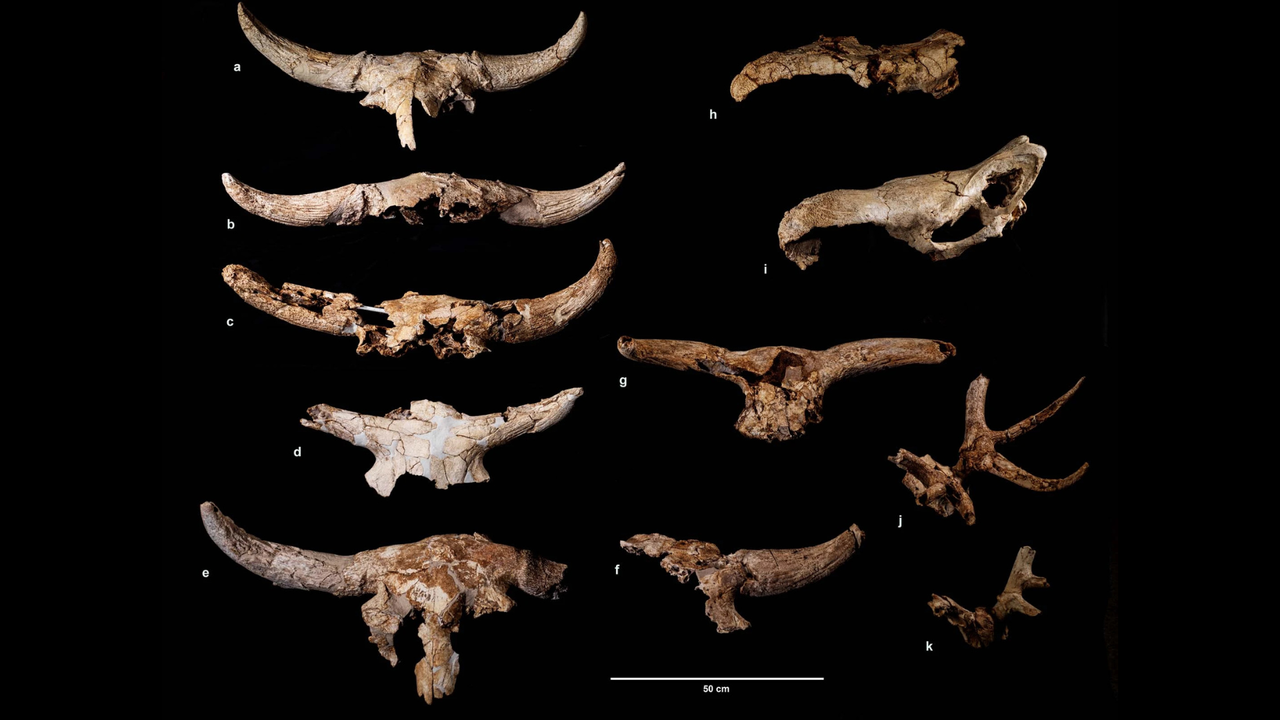
11 skull fragments of horned and antlered large mammals against a black background.

Neanderthals purposefully collected and positioned horned and antlered animal skulls in a cave in what is now Spain, suggesting that these extinct human relatives had complex cultural practices over 43,000 years ago, a new study finds.

Des-Cubierta cave in central Iberia was initially discovered in 2009. In 2023, researchers announced the unusual discovery of an assortment of 35 large mammal skulls inside the cave. Most jaw bones were missing, but all skulls came from horned or antlered species like steppe bison and aurochs. Over 1,400 stone tools were uncovered in the same level, all in the Mousterian style typical of Neanderthals.

Sign up to read this article
Read news from 100's of titles, curated specifically for you.
Already a member? Sign in here
Related Stories
Top stories on inkl right now
One subscription that gives you access to news from hundreds of sites
Already a member? Sign in here
Our Picks
Fourteen days free
Download the app
One app. One membership.
100+ trusted global sources.