Doris Green has just turned 104. She is alert and enjoys life.
Until a year ago, she lived in her own home. She sings in a choir.

She attributes her long and healthy life to exercise, particularly ballroom dancing. These days, she's wheelchair-bound but still exercises her legs and arms.
Her husband died 30 or so years ago. Since then, she's had men friends but "there was no hanky-panky".
Dating in old age may or may not be like dating in young age: "He used to come and ask me for a dance, and then when his partner died, he rang me up and said I'd like to take you out for lunch."
There was a time when Doris would have been a rarity. When the Queen ascended the throne in 1952, there were estimated to be about 40 letters of congratulation sent to Australians who'd reached the great centenary milestone.
The royal workload has exploded ever since.
At the beginning of 1982, there were 539 Australians aged 100 or older. At the turn of the millennium 18 years later, there were 2085 centenarians. On the latest figures, there were 7347 Australians aged 100 or more.

In NSW, according to the Australian Bureau of Statistics, there were 718 centenarians at the start of 2000 and 2414 on the latest figures. In the ACT, there were 15 at the turn of the century and 115 on the latest figures, including Doris.
In Victoria the number has jumped from 558 to 1878, and in Tasmania the increase this century has been from 50 to 166.
The Treasury reckoned that "by 2050, Australia will have over 50,000 people aged 100 and over".
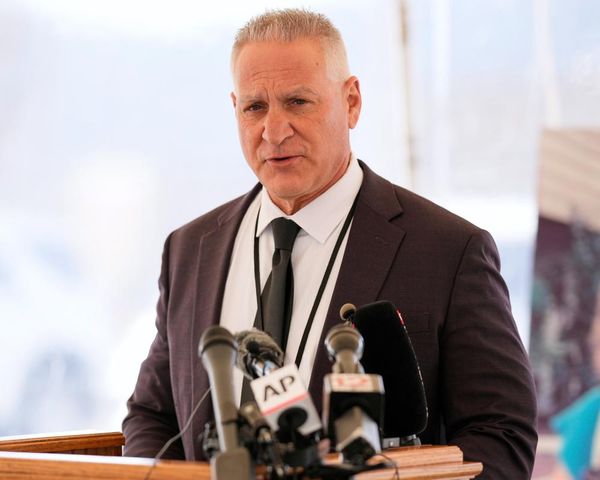
Australians over the age of 90 are now the fastest growing proportion of the population, Perminder Sachdev who is leading the Sydney Centenarian Study said.
His team's research at the University of NSW is trying to understand how to get to the great age successfully. It is studying 450 people aged 95 and upwards, looking at diet and a range of factors.
Genetics matters - parents who lived a long life are more likely to have children who do. But lifestyle is also important - and changeable.
"Poor diet, smoking, mental inactivity," Professor Sachdev cited as causes of avoidable earlier deaths.
He advocates a much more aggressive government policy, calling government advice on lifestyle "passive", meaning that there's too much advice which people don't take much notice of, and not enough economic disincentives like higher taxes on sugary foods or drink.
"Alcohol is something which governments rarely touch because of the money they make from alcohol," he said.
Women live longer than men. Australian women might expect to live until their 85, men only until they're 81.
"Life expectancy was highest in the Australian Capital Territory for both males (82.0 years) and females (85.8 years)," the Australian Bureau of Statistics said. "Life expectancy was lowest in the Northern Territory for both males (77.0 years) and females (80.7 years)."
But researchers make a distinction between lifespan - how long we live - and health span - how long we live healthy lives. Unfortunately, the gap between the two is wide.
The academic experts reckon that, on average, Australians live 12 years longer than they remain in good health. The last 12 years of life are often unhealthy and, presumably, progressively more miserable.
The big cost of caring for the very old happens in the last year of their lives. "There is a better way," Professor Sachdev said. There should be much more emphasis on prevention.
He and his UNSW colleague Zhaoli Dai-Keller had some advice on the basis of what they had discovered by research on centenarians: "Centenarians and near-centenarians typically had a balanced and diverse diet. Their diets included staple foods (such as rice and wheat), fruits, vegetables, and protein-rich foods like poultry, fish and legumes, with moderate red meat consumption.
"Good sleep is associated with extended years of good health and reduced risks of chronic diseases. The optimal sleep duration is between seven and eight hours per night. Tips to achieving better sleep include keeping a regular sleep routine, creating a restful environment, exercising regularly and managing stress."
They looked at the pattern elsewhere, in so-called "blue zones" where people live longer.
"More than 75 per cent of the centenarians and near-centenarians in our review lived in rural areas." they said.
"This is a pattern reflected in "blue zone" areas known for high concentrations of centenarians, such as Okinawa in Japan, Sardinia in Italy, the Nicoya Peninsula in Costa Rica, and Ikaria in Greece.
"This may be partly related to the connection between nature and health and wellbeing. For example, exposure to green space has been associated with lower stress, depression, blood pressure, type 2 diabetes and heart disease, potentially increasing life-expectancy."
Doris Green attests to the value of exercise. "I used to dance to a lot to all the big band favourites like Glenn Miller.
"I think it's boring just to sit at home."
Her family was already thinking about the 105th birthday party.