
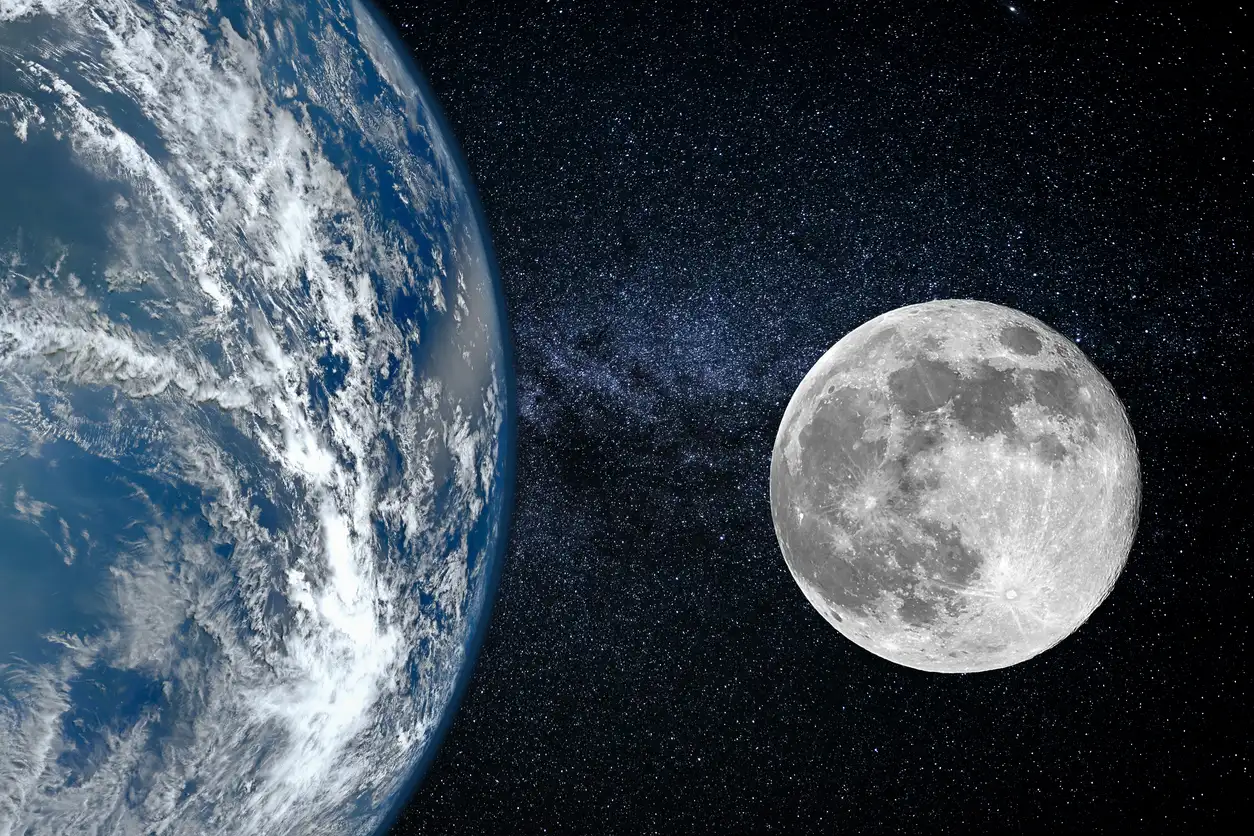
Earth's only natural satellite is gradually moving farther away at a measured rate of 3.83 centimetres per year, a phenomenon confirmed through decades of high-precision observations. While the change is negligible over a human lifetime, scientists say the long-term recession could lead to longer days, weaker tides and eventually the end of total solar eclipses over geological timescales.
The figure, with a formal uncertainty of about 0.09 millimetres, is based on the best interpretation of five decades of lunar laser ranging data collected from observatories across three continents.