Get all your news in one place.
100's of premium titles.
One app.
Start reading
The Conversation
The Conversation
Michelle Spear, Professor of Anatomy, University of Bristol

Moles, birthmarks and red hair: the anatomical features used to accuse women of witchcraft in the 17th century

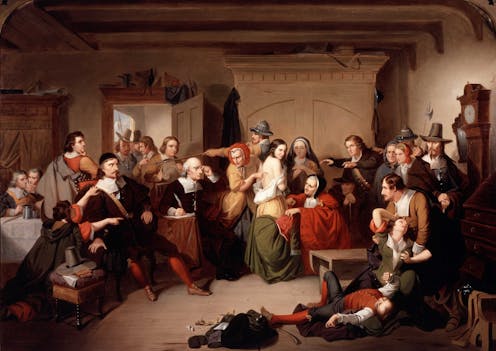
Women's bodies were inspected by witch-finders to uncover unusual growths of blemishes. T. H. Matteson/ Wikimedia Commons

Throughout accounts of 17th-century witch trials in Europe and North America, physical features alone were considered undeniable proof of witchcraft. The belief was that the devil branded witches’ bodies with symbolic, material marks – such as unusual growths or blemishes. This led to routine bodily inspections in witch trials. The discovery of such marks was thought to be strong medical and scientific evidence of witchcraft and frequently sealed the victim’s fate.

Here are just some of the anatomical features that historically would have been used to label someone a witch:

Sign up to read this article
Read news from 100's of titles, curated specifically for you.
Already a member? Sign in here
Related Stories
Top stories on inkl right now
One subscription that gives you access to news from hundreds of sites
Already a member? Sign in here
Our Picks
Fourteen days free
Download the app
One app. One membership.
100+ trusted global sources.