
Get all your news in one place.
100's of premium titles.
One app.
Start reading
The Conversation
The Conversation
Sumit Ganguly, Distinguished Professor of Political Science and the Tagore Chair in Indian Cultures and Civilizations, Indiana University

Modi’s narrow win suggests Indian voters saw through religious rhetoric, opting instead to curtail his political power

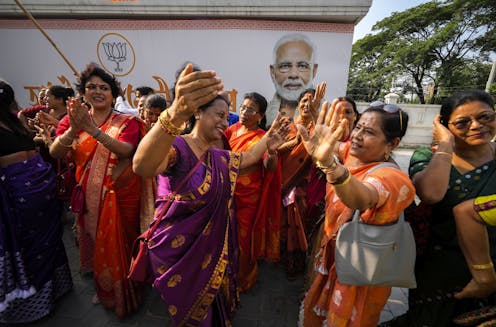
Supporters of the ruling Bharatiya Janata Party dance at a party office in Guwahati, India, during counting of India's national election on June 4, 2024. AP Photo/Anupam Nath

India’s ruling Bharatiya Janata Party, or BJP, had hoped for a landslide victory in the country’s six-week general election – the largest display of democracy, by far, in a year of voting around the world. But the party, led by Prime Minister Narendra Modi, scored 240 parliamentary seats in the final tally. It will need the help of its coalition partner, the National Democratic Alliance, to meet the requirement of 272 seats to form the government.

The Conversation U.S. spoke with Sumit Ganguly, distinguished professor of political science and the Tagore chair in Indian Cultures and Civilizations at Indiana University, to understand more about the election results and what they mean for Indian democracy.

Sign up to read this article
Read news from 100's of titles, curated specifically for you.
Already a member? Sign in here
Related Stories
Top stories on inkl right now
One subscription that gives you access to news from hundreds of sites
Already a member? Sign in here
Our Picks
Fourteen days free
Download the app
One app. One membership.
100+ trusted global sources.







