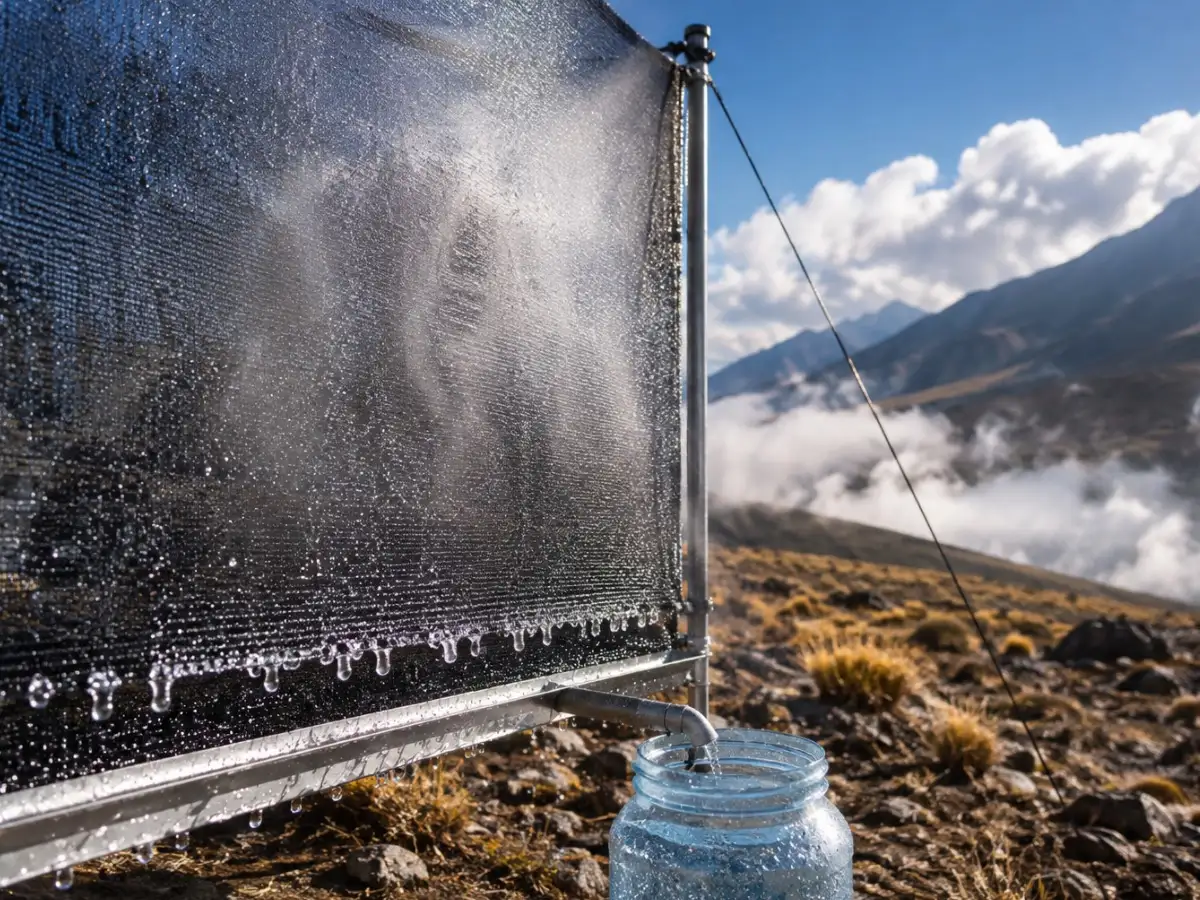
In Chile, the Atacama Desert is widely described as one of the driest places on Earth, with parts of it going years at a time with almost no rainfall. Yet the dense fog known as the camanchaca moves across Chile's arid coastal region daily, carrying fresh water that largely goes uncollected. Researchers at MIT found a simple way to harness this underused resource without developing complex technology. Instead, they innovated on existing mesh nets. By adjusting fiber diameter and the mesh coating, the engineers created a fog collector that captured far more water than existing designs.
How the MIT fog-harvesting mesh works