Get all your news in one place.
100's of premium titles.
One app.
Start reading
The Economic Times
The Economic Times
Team Global

MIT built a three-layer passive cooling panel of aerogel, hydrogel and reflective material; tests cooled it 9.3°C below ambient and suggested up to 40% longer food storage in humid conditions

On extremely hot days, the typical modern response is almost instinctive: lower the room thermostat, take out a cold beverage from the refrigerator, and reach for the ice maker; in short, allow another machine to handle the heat. Yet, there is a drawback inherent in such an approach to dealing with extreme heat conditions, and that is the fact that cooling requires energy. As the temperature rises higher, demand for air conditioning and refrigeration also increases. This eventually puts additional strain on power sources and makes reliable cooling harder to access in places that lack electricity.

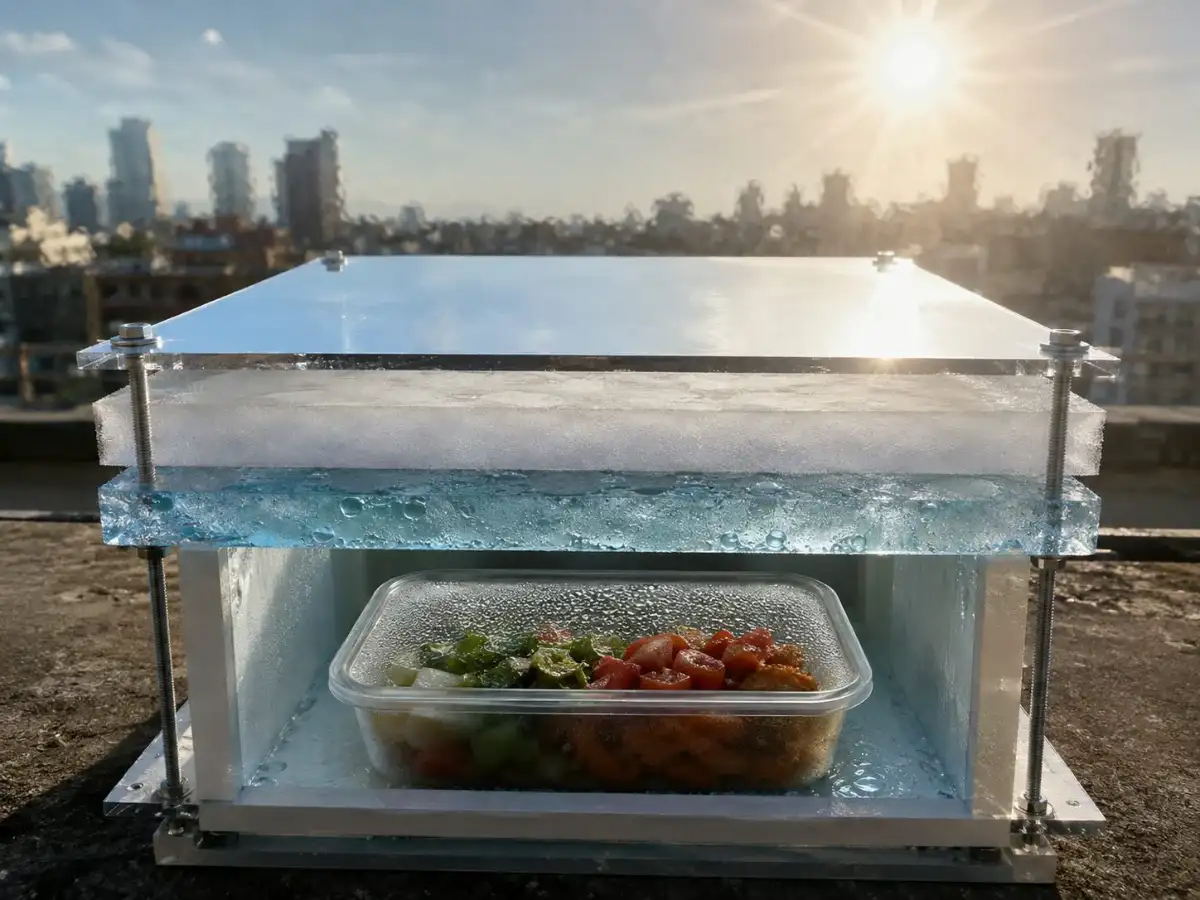
According to a 2022 MIT News article, researchers at MIT created a passive cooling system that uses evaporation, radiation and insulation instead of electrical power. At first glance, the concept looks simple, with a three-layer composite that consists of aerogel, water-saturated hydrogel, and reflective insulation material. The manufacturing behind it, as it turns out, is not as simple. During tests in a rooftop location, the small-scale model of this cooling mechanism managed to cool down to almost 9.3°C (19°F) below the ambient air. Under particularly humid environments, the researchers calculated the new system can extend the shelf life of perishable foods by almost 40%, while lower humidity increased the potential much more.

What's actually inside this thing

This design consists of three layers stacked one above another, and all of them have their individual roles. Aerogel is placed at the top. It is an almost weightless material resembling a sponge, basically made of trapped air. The aerogel layer allows water vapor and infrared radiation to move upward while protecting anything beneath it from external thermal energy. Beneath it lies a layer of hydrogel that resembles a wound dressing or a cooling pad. It slowly emits water vapor upwards, where it passes through the aerogel layer and evaporates, thus taking the heat with it. And finally, there is the bottom layer resembling a mirror reflecting the sunlight directly back without heating the entire panel.

Sign up to read this article
Read news from 100's of titles, curated specifically for you.
Already a member? Sign in here
Related Stories
Top stories on inkl right now
One subscription that gives you access to news from hundreds of sites
Already a member? Sign in here
Our Picks
Fourteen days free
Download the app
One app. One membership.
100+ trusted global sources.