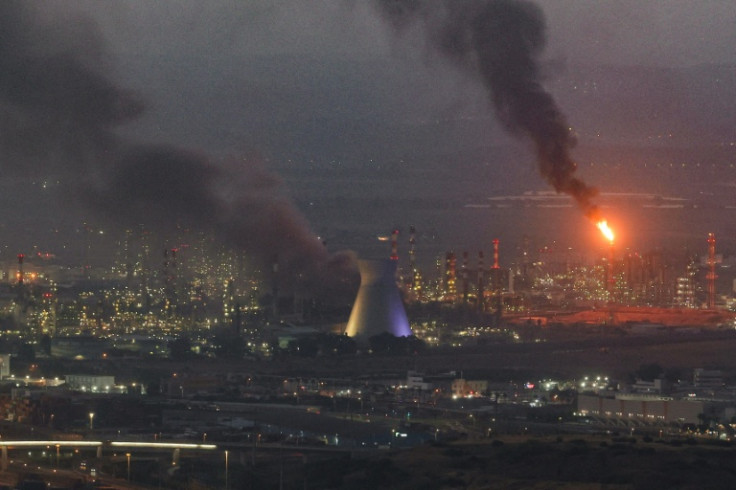
Fighting across the Middle East intensified sharply on Wednesday as Iran launched what state media described as its largest and most aggressive round of attacks since the war began, firing advanced ballistic missiles toward Israel while commercial vessels came under attack in the strategically critical Strait of Hormuz.
According to a report by NBC News, Iranian forces launched a wave of missiles targeting major Israeli cities including Tel Aviv and Haifa as the conflict entered its 12th day. The strikes marked a significant escalation in Iran's response to ongoing U.S. and Israeli military operations against Iranian infrastructure and military facilities.
The missile barrage came as the United States dramatically expanded its own military campaign. NBC News reported that American forces carried out the most intense day of airstrikes so far in the conflict, striking multiple targets linked to Iran's military network.
At the same time, tensions spilled into one of the world's most important energy chokepoints. At least three vessels were reportedly struck by projectiles in the Strait of Hormuz, according to a British maritime monitoring authority cited by Reuters. One cargo ship caught fire after being hit and its crew requested emergency assistance before abandoning the vessel.
The attacks on commercial shipping have heightened global concern because the narrow waterway between the Persian Gulf and the Gulf of Oman handles roughly one-fifth of the world's oil shipments. Any sustained disruption could ripple through global energy markets and international trade.
Security analysts say the incidents suggest the conflict is expanding beyond direct military targets and beginning to threaten global shipping routes. As reported by The Guardian, U.S. forces have recently targeted Iranian naval assets believed to be preparing to deploy sea mines in the same region, reflecting growing fears that Tehran could attempt to disrupt traffic through the strait.
The fighting has already spread across several countries in the region. Israel said its military has begun large-scale strikes inside Iran, targeting government and military infrastructure. Meanwhile, Hezbollah positions in Lebanon have also come under repeated Israeli attacks as the war widens.
Casualties continue to rise on multiple fronts. According to figures cited by NBC News from the Iranian Red Crescent Society, more than 1,200 people have been killed in Iran since the start of the war as a result of Israeli and American strikes. In Israel, officials say at least 13 people have died from Iranian missile attacks. Lebanese authorities report hundreds more casualties linked to Israeli strikes against Hezbollah targets.
The growing conflict has also rattled global financial markets. Al Jazeera reported that oil prices have experienced dramatic swings as traders attempt to gauge whether the fighting will significantly disrupt energy supplies. While prices initially surged amid fears of shipping disruptions, markets later stabilized somewhat as investors speculated that governments could release emergency oil reserves to offset supply shocks.
Meanwhile, political uncertainty in Iran continues to grow. NBC News reported that the country's new Supreme Leader, Ayatollah Mojtaba Khamenei, may have been wounded during the conflict, although officials from both Iran and Israel have indicated that the injury appears to be minor.
With missile exchanges intensifying, shipping under threat, and military operations expanding across multiple countries, analysts warn that the war is entering a more dangerous phase that could reshape security and energy markets far beyond the Middle East.