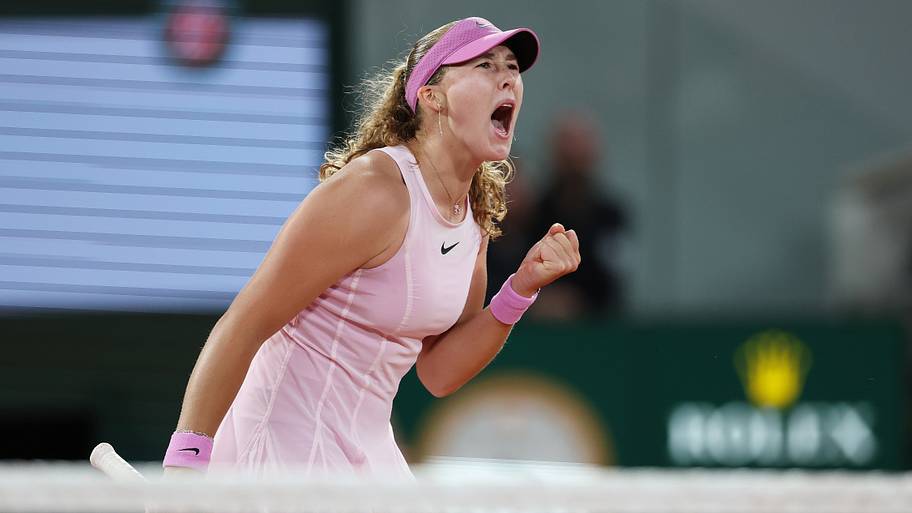
Mirra Andreeva, a 19-year-old Russian, won her first—likely of many—major singles title at Roland Garros. On a windy Saturday afternoon in Paris, she took care of business and beat the tournament’s Cinderella, Polish qualifier Maja Chwalińska, 6–3, 6–2, managing her swirling emotions and the swirling breezes. Not even Brad Pitt, in the stands, rooting for the underdog (who had that on their tennis bingo card?), could stop the higher seed from her destiny. Though she has yet to turn 20, Andreeva has been pegged for years as a future major winner. Today, she fulfilled all the pronouncements that she rightfully earned.
19-years old, first Grand Slam 🤩#RolandGarros pic.twitter.com/CpqecJGpqx
— Roland-Garros (@rolandgarros) June 6, 2026

There are different kinds of pressure in tennis; we think of it as tight points in tight matches. To wit, last year’s women’s Roland Garros final was a completely different affair, pitting Aryna Sabalenka against Coco Gauff in a three-set, who-wants-it-more cauldron of nerves. But there is also pressure that comes with being an overwhelming favorite to win your first major. So it was for Andreeva, more than 100 points higher in the rankings than her opponent (No. 8 vs. No. 114), and far more accomplished and far more experienced.
“Nothing to lose” has hardened into a sports cliché, but that was the description of the stakes for Chwalińska ahead of the match. Chwalińska, who needed to find new hotel accommodations mid-tournament, faced a player with a Nike contract, signed by IMG years ago. This was a total tennis resource mismatch, and had Andreeva not won, the damage could have been severe and long-lasting. Instead, she played like a complete veteran, dictating clay, managing the occasion, thwarting the few opportunities Chwalińska created for herself, and won quite handily.
A word, however, about the runner-up. Last month, she was playing small events in places like Parma, Italy, ranked well outside the top 100. The 24-year-old came to Paris and qualified to play in only her third major, and for two weeks, she did not stop winning. Her run to the final marks one of the more remarkable stories in recent tennis memory. A qualifier at this event, she will now be ranked inside the top 25. Assuming Wimbledon does the right thing and grants her a wild card, she will have the unprecedented journey of going from a qualifier in one major to a seed at the next. (And she won’t have to worry about finding mid-tournament accommodations for a long while.)
But ultimately, Saturday was about Andreeva. She has long been a tennis phenom and on a next-generation list. There have been times when her talent has been undermined by her emotions, teenage fits of anger that belie her sunny personality, and can sometimes undercut her results. But for two weeks in Paris, she kept it all together, playing different players in different circumstances, she looked nothing less than comfortable, not just on the clay, but in the player she has become. Now she has become something new: a major champion.