
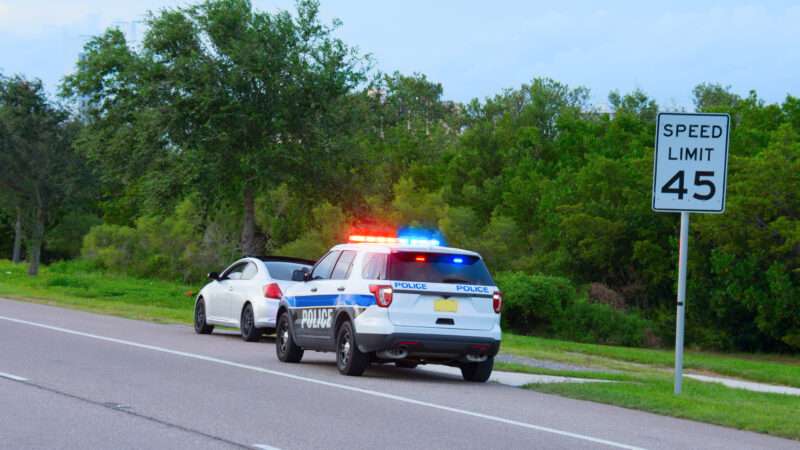
On a Monday night in July 2021, a Litchfield, Minnesota, police officer pulled over Adam Torgerson for violating a state law that limits the number of "auxiliary driving lamps" a car is allowed to have. Because the officer and a colleague who arrived later both claimed to smell the odor of burnt marijuana emanating from Torgerson's vehicle, they ordered him, his wife, and their child out of the car, which they searched. They did not find any marijuana. But they did find three pipes and a film canister that contained methamphetamine, which resulted in two criminal charges against Torgerson: fifth-degree possession of a controlled substance and possession of methamphetamine paraphernalia in the presence of a minor.
That car search, the Minnesota Supreme Court recently ruled, was unconstitutional because it was based on nothing but the purported smell of marijuana, which was not enough to establish probable cause. The unanimous decision is a welcome limit on the alarmingly broad authority to search cars during routine traffic stops. Had the court ruled otherwise, Minnesota cops would have been free to search any car on the road by claiming to smell marijuana after stopping the driver for breaking any of the myriad rules governing the maintenance and operation of motor vehicles—rules so numerous, arcane, vague, subjective, and picayune that it is nearly impossible to drive without violating one or more of them.














