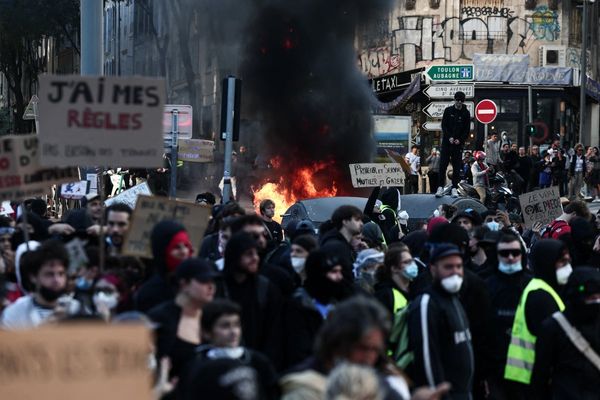
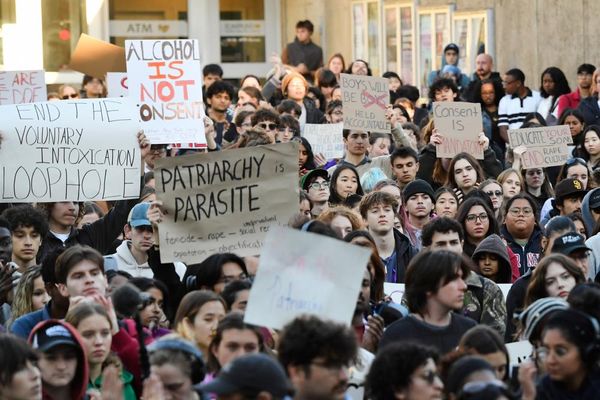
The killing of Alex Pretti has destabilized the cultural settlement that took hold after the 2024 election, dragging non-political actors and institutions back into the eye of a national reckoning.
Why it matters: America may never return to the mass social activism of 2020. But the vocal re-engagement of corporations, athletes and apolitical corners of the internet suggests a red line was crossed in Minneapolis.

The big picture: American public opinion famously behaves like a thermostat — rising and falling in response to perceived excess by one side.
- In 2020, George Floyd's murder triggered a surge of protests, corporate activism and police reforms that pushed institutions sharply toward social justice causes.
- By 2024, backlash to so-called "woke" excesses had become a dominant political force. Much of corporate and cultural America interpreted President Trump's victory as a mandate to stand down.
Zoom in: The same model of thermostatic opinion applies to America's views on immigration.
- Trump won on the promise of the largest mass deportation operation in U.S. history — a relatively popular concept after millions of undocumented migrants entered the U.S. under President Biden.
- But the politics changed — slowly, then sharply — as immigration enforcement became increasingly visible, indiscriminate and lethal.
Zoom out: The nationwide outrage over Pretti's shooting — just three weeks after Renee Good was shot by an ICE agent in the same city — captures how dramatically opinion has swung on Trump's immigration agenda.
- More than 60 CEOs of Minnesota's largest companies — plus local sports teams and even Silicon Valley tech firms that courted Trump's favor — have publicly condemned the shooting and called for de-escalation and accountability.
- More than half of Americans say they have "very little confidence" in ICE, according to a new Economist/YouGov poll — matching other surveys showing Trump's approval ratings on immigration at an all-time low.
The intrigue: Anti-ICE posts have exploded across social media, turning forums once focused on hobbies and escapism into hubs of political outrage, the Washington Post reports.
Between the lines: OpenAI CEO Sam Altman's note to staff, first reported by the New York Times, shows how difficult it's become for even Trump-aligned industries to sit out this moment.
- Altman praised Trump as a "very strong leader" and said OpenAI would "not get blown around by changing fashions" — noting the company didn't become "super woke" or lean into "masculine corporate energy" when those trends were popular.
- But he was also unequivocal about Minneapolis: "What's happening with ICE is going too far," Altman wrote, adding that "part of loving the country is the American duty to push back against overreach."
What to watch: Trump, who called Tuesday for an "honest and honorable" investigation into Pretti's shooting, appears keenly aware that his immigration crackdown is generating costs far beyond Washington.
- He has distanced himself from aides who referred to Pretti as a would-be "assassin" and "domestic terrorist," while reaching out to Minnesota's Democratic leaders in an attempt to defuse the crisis.
- Still, for a president who thrives on confrontation, serious danger lies in opposition that can't be dismissed as partisan or marginal.