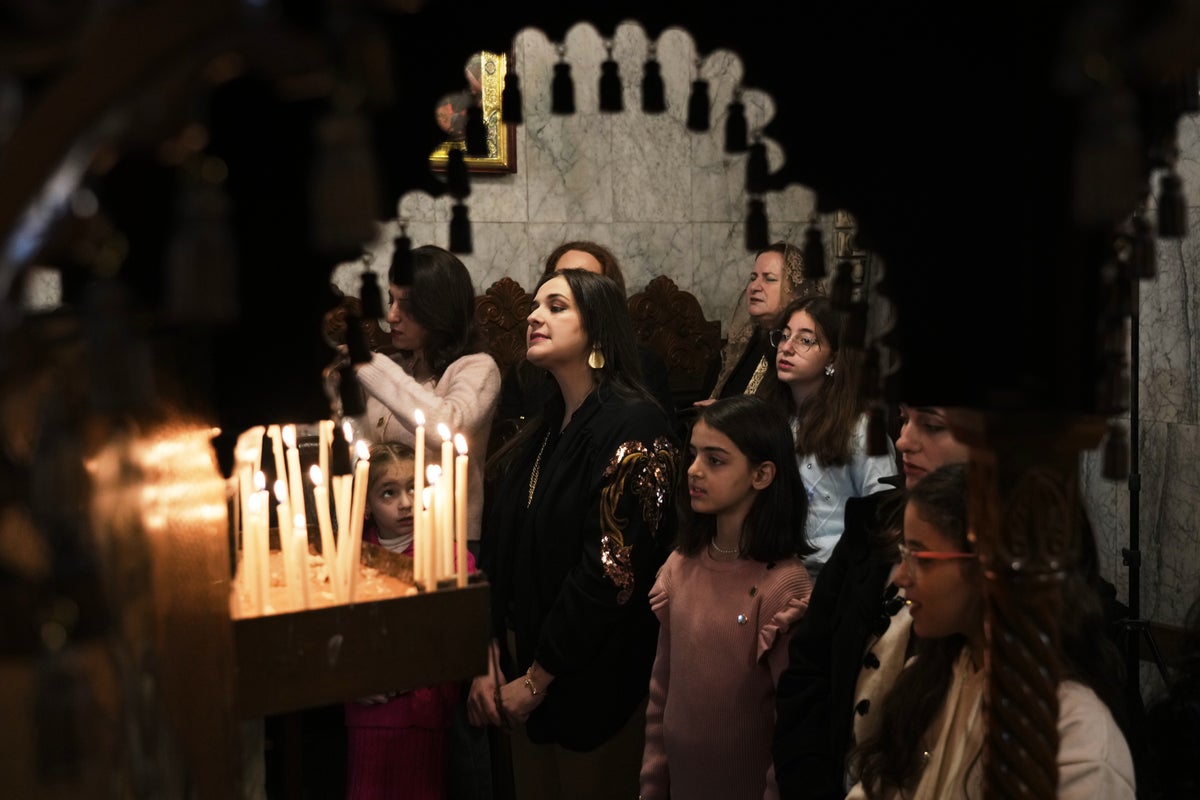
Millions worldwide celebrated Orthodox Christmas on Wednesday, nearly two weeks after much of the globe observed the holy day.
This later date is due to certain Eastern Orthodox churches, including those in Russian traditions, following the ancient Julian calendar.
This calendar operates 13 days behind the Gregorian calendar, which is used by Catholic and Protestant churches, and much of the secular world for everyday purposes.
The Ethiopian Orthodox Church and some other Oriental Orthodox churches – distinct from Eastern Orthodox but sharing many traditions – also marked Christmas on Wednesday.
Conversely, other Eastern Orthodox communities, such as those in the Greek tradition, celebrate Christmas on 25 December, aligning with Catholic and Protestant churches.
The disagreement over when Dec. 25 actually falls
Most Orthodox agree that Dec. 25 is the date of Christmas, or the Feast of the Nativity, as they call it. The question is whether Dec. 25 falls on Dec. 25 or Jan. 7.
That requires a little unpacking.
The ancient church in the Roman Empire set its religious feasts based on the Julian calendar, but after more than a millennium, that calendar had increasingly gotten out of alignment with the solar year.
Sixteenth century Pope Gregory XIII approved a revised, more astronomically precise calendar, which bears his name. It abruptly shifted the calendar several days forward to make up for lost time (literally) and added a more precise calculation of leap years. Protestant churches eventually followed the Catholic lead in adopting the calendar, as did secular governments.

All Eastern Orthodox kept to the old calendar until 1923, when an inter-Orthodox gathering adopted a revised Julian calendar that essentially mirrors the Gregorian. Most (but not all) churches in the Greek Orthodox tradition have adopted this, as have those in Romanian, Bulgarian and other traditions.
But the Russian Orthodox Church, the largest communion in Eastern Orthodoxy, has stayed on the old calendar, observing Christmas on Jan. 7 on the new calendar, as have Serbian, Georgian and some other Orthodox. Some Orthodox in Ukraine have begun to observe Christmas on Dec. 25, while others have retained the Jan. 7 observance.
One notable exception is the Armenian Orthodox tradition, which observes Christmas on Jan. 6.
Orthodox Christmas in North America
In the United States, observances vary. Churches in the Greek and Antiochian traditions observed Christmas on Dec. 25. Some churches in the Slavic tradition, including Serbian and smaller Russian churches, observe it on Jan. 7.
Eastern Orthodox observe Christmas with worship and ritual
Traditions vary, but typically the big worship service is the night before. In Serbian Orthodox churches, worship often begins with a short outdoor ceremony involving the burning of an oak branch or young oak tree, accompanied by a full-throated proclamation of the birth of Christ.
US Christian leaders minister to an anxious diaspora with Venezuela's future in flux
Florida's Greek community gathers for 120th Epiphany celebration and annual dive to retrieve cross
US seizes banned Venezuelan oil tanker in Atlantic as Trump risks Putin clash – live
Trump on collision course with Putin after US seizes Russian-flagged oil tanker
Britain is now helping Trump play Big Man in the Atlantic with oil tanker raid
EU pushes forward long-discussed free trade deal with South America