Britain is weighing up sending minehunting drones to unblock Iran’s stranglehold over a key oil shipping route as the government looks “intensively” at what it can do to help reopen the Strait of Hormuz.
Energy secretary Ed Miliband said there was “a range of things” that the UK and its allies could do to secure the route, which has been blocked by Iran and has led to a surge in energy prices.
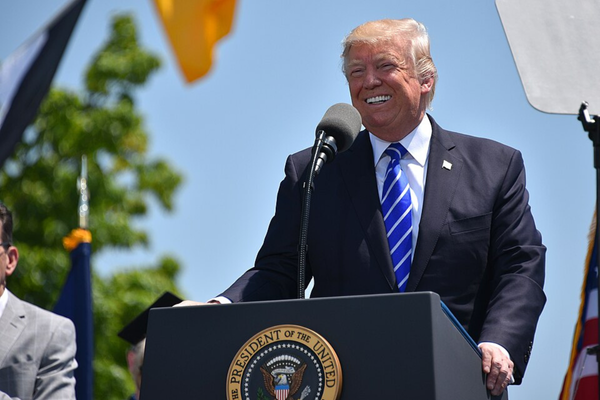
His intervention comes after Donald Trump called for allied warships to protect tankers in the region and help secure the waterway. In an appeal to nations affected by the price spikes on his Truth Social platform, Mr Trump said: “Hopefully China, France, Japan, South Korea, the UK, and others, that are affected by this artificial constraint will send ships to the area so that the Hormuz Strait will no longer be a threat by a nation that has been totally decapitated.
“In the meantime, the United States will be bombing the hell out of the shoreline and continually shooting Iranian boats and ships out of the water. One way or the other, we will soon get the Hormuz Strait OPEN, SAFE, and FREE!”
The Strait of Hormuz has been gripped by conflict after the Islamic Revolutionary Guard Corps said it had taken “complete control” of the passage, through which a fifth of the world’s oil passes. It is now effectively closed, stemming the flow of oil out of the Middle East, grinding trade in the region to a halt and pushing up energy prices across the globe.
— Rapid Response 47 (@RapidResponse47) March 14, 2026
Asked about reports which said that the UK could send minehunting drones to the region, Mr Miliband said: “We do want to work with our allies to seek to get the strait reopened.
“And as you say, there are a range of things that we can do, including autonomous mine-hunting equipment. And that's something we're obviously looking at.”
Mr Miliband had earlier said there are “a range of things that we can do, including autonomous minehunting equipment”, but refused to speculate on how far along these proposals were.
He said it is “in all of our interests to get the strait reopened”, but added: “We also need to de-escalate this crisis, because the best and most conclusive way to get the strait reopened is to get this conflict to come to an end.”
Mr Miliband added: “We are intensively looking with our allies at what can be done, because it’s so important that we get the strait reopened.”
On Saturday, the Ministry of Defence responded to Mr Trump’s demands, saying it was discussing a “range of options to ensure the security of shipping in the region”, where some 20 per cent of the world’s oil ordinarily passes through each day.
The relationship between Mr Trump and Sir Keir has become increasingly fractious in recent months, a breakdown which began over US opposition to the UK’s deal to hand the Chagos Islands to Mauritius and the president’s threats to annex Greenland, but has only escalated since the outbreak of war with Iran.

There is growing concern that Iran has started placing sea mines in the strait to frustrate shipping. Meanwhile, numerous oil tankers have come under fire as they attempted to pass through since the start of the conflict.
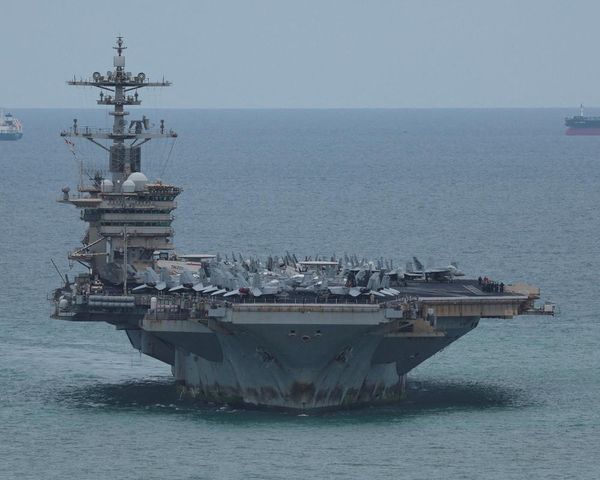
The Sunday Times, which first reported the proposals, said the minehunting drones could be deployed from the Royal Navy’s Mine and Threat Exploitation Group, which is currently in the Middle East.
But the newspaper said it is not known how many drones are in service and which could be deployed.
According to the Telegraph, the UK is also considering sending thousands of interceptor drones, made in the UK for Ukraine to use against Russia, to the Middle East to be used against Iran’s aerial Shahed drones.
That option is understood to be at a much earlier stage of consideration.
It came as Mojtaba Khamenei, Iran’s new supreme leader, vowed to keep blocking the Strait of Hormuz as a means of pressuring the US in his first public statement this week.
Mr Trump has threatened to “wipe out” Kharg Island, a vital part of Iran’s oil infrastructure, should Tehran not reopen the Strait of Hormuz.
Update on UK operations in the Middle East, 14 March 2026. pic.twitter.com/OtPjOwEhAe
— Ministry of Defence 🇬🇧 (@DefenceHQ) March 14, 2026
The US has already “totally obliterated” a series of military targets on the island in recent strikes, which Mr Trump described as “one of the most powerful bombing raids in the history of the Middle East”.
Elsewhere in events related to the Middle East crisis, the Metropolitan Police is preparing for a “difficult public order” environment on Sunday, when there will be an al-Quds Day demonstration in London. At least 1,000 officers have been drafted in to manage crowds expected to reach about 12,000 people.
Meanwhile, chancellor Rachel Reeves has hinted there may be some form of financial help for homes that use heating oil, which is not protected by the energy price cap.