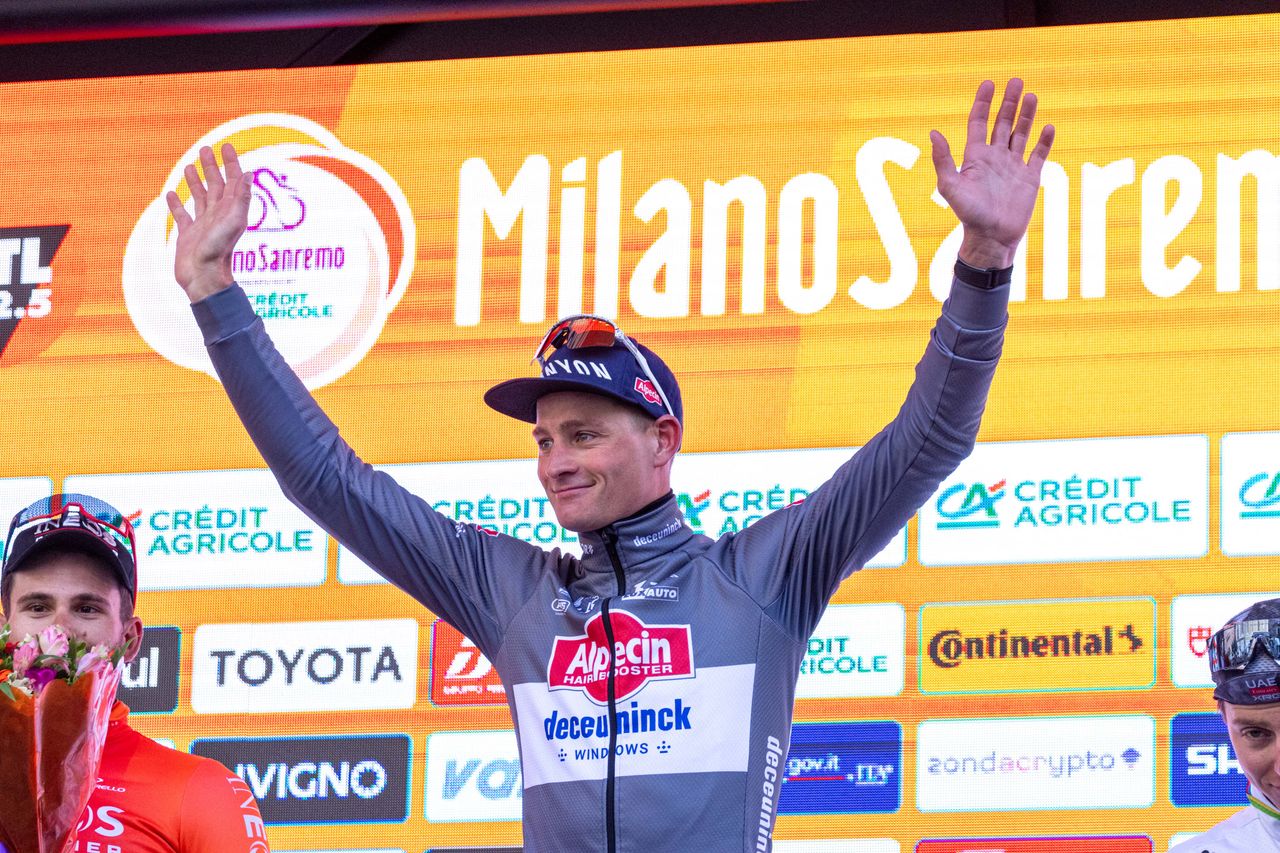
Milan-San Remo 2026 is the first of five Monuments, and is one of the most exciting and prestigious races of the season. It's also the longest, typically just shy of 300km, making winning it a feat of spectacular endurance and stamina.
Like the other Monuments it has plenty of nicknames: 'La Classicissima', 'La Primavera' due to its springtime slot, and it's also known as one of the 'sprinters' Classics' (the other being Paris-Tours) because of its fast finish on San Remo's Via Roma.
It was inaugurated in 1907, when it was won by Frenchman Lucien Petit-Breton. Since then it has been won by many of cycling's biggest stars, Eddy Merckx being the most prolific with seven wins between 1966 and 1976.
It's quite an open race, in that it can be won by a punchy climber, a bunch sprinter, or even a great descender, like Vincenzo Nibali in 2018 and Matej Mohorič in 2022, who used a dropper seatpost for an edge on that final downhill.
A women's version was reintroduced last year after a 20-year hiatus, and renamed the from the Primavera Rosa to Milan-San Remo Donne. Lorena Wiebes became the first winner in its modern form. As with last year, both men's and women's races will be held on the same day in 2026.
Milan-San Remo 2026: Key details
Date |
21 March 2026 |
Distance |
289km |
Start location |
Pavia |
Finish location |
San Remo, Italy |
UCI ranking |
WorldTour |
Edition |
117th |
Last winner |
Mathieu van der Poel (Ned) |
TV coverage (UK) |
TNT Sports |
TV coverage (US) |
TBC |

Milan-San Remo 2026: The route

Milan-San Remo 2026 will be the second of three editions to start in Pavia, thanks to a three-year deal between race organiser RCS and Pavia province. As they have done every year since the race began in Milan in 2022 again the early kilometres have changed slightly. Heading south from Pavia the route jinks east and then west, joining last year's route at Voghera 60 kilometres in. Finally, it links up with the historic route at Tortona after 80km.
There's a gradual climb up to the Passo del Turchino at around the halfway mark before a quick descent, while the twin climbs of the Cipressa (max 9%) and the Poggio (max 8%) which are now the hallmarks of this race appear in their usual position inside the final 30km.
After the Poggio it's time for the classic switchback descent into the urban centre of San Remo, with the finish line on the Via Roma, where the riders get a well-earned rest after 289km of hard racing.
Milan-San Remo: Past winners
2025: Mathieu van der Poel (Ned) Alpecin-Deceuninck
2024: Jasper Philipsen (Bel) Alpecin-Deceuninck
2023: Mathieu van der Poel (Ned) Alpecin-Deceuninck
2022: Matej Mohorič (Slo) Bahrain Victorious
2021: Jasper Stuyven (Bel) Trek-Segafredo
2020: Wout van Aert (Bel) Jumbo-Visma
2019: Julian Alaphillipe (Fra) Deceuninck–Quick-Step
2018: Vincenzo Nibali (Ita) Bahrain-Merida
2017: Michal Kwiatkowski (Pol) Team Sky
2016: Arnaud Démare (Fra) FDJ
2015: John Degenkolb (Ger) Giant-Alpecin
2014: Alexander Kristoff (Nor) Katusha
2013: Gerald Ciolek (Ger) MTN-Qhubeka
2012: Simon Gerrans (Aus) GreenEdge
2011: Matt Goss (Aus) HTC-Highroad
2010: Oscar Freire (Spa) Rabobank
2009: Mark Cavendish (GBr) Columbia-Highroad
2008: Fabian Cancellara (Sui) CSC