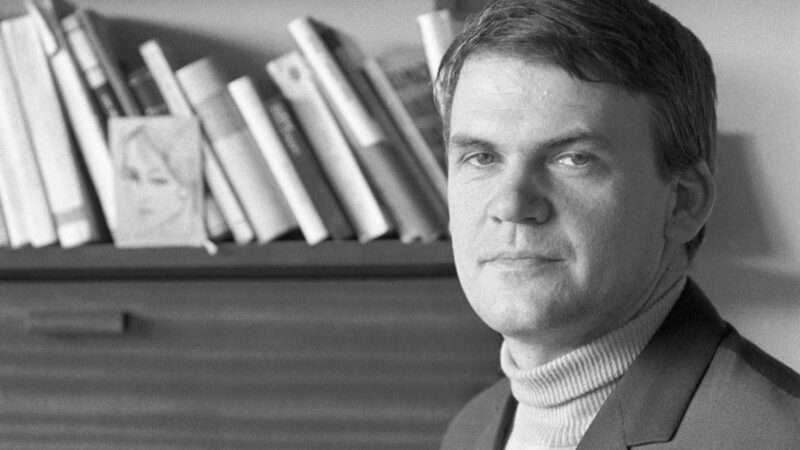
There is a memorable 15-page section of The Unbearable Lightness of Being, the most famous work by the celebrated Czech-French novelist Milan Kundera, who died this week at age 94, in which the world-weary and sexually voracious brain-surgeon protagonist Tomas dithers over whether he should sign a petition asking Czechoslovakia's communist president to grant amnesty to all the country's political prisoners. The setting is the early 1970s, and the government is midway through the societal suffocation process grotesquely marketed as "normalization."
Signing the petition would be "possibly noble but certainly, and totally, useless (because it would not help the political prisoners)," Tomas muses, as his long-estranged biological son and a dissident editor await an answer, "and unpleasant to himself (because it took place under conditions the two of them had imposed on him)." It was irritating to be put on the spot.