Get all your news in one place.
100's of premium titles.
One app.
Start reading
Bangkok Post
Bangkok Post
World

Middle East faces expanded war as Iran and US reignite attacks

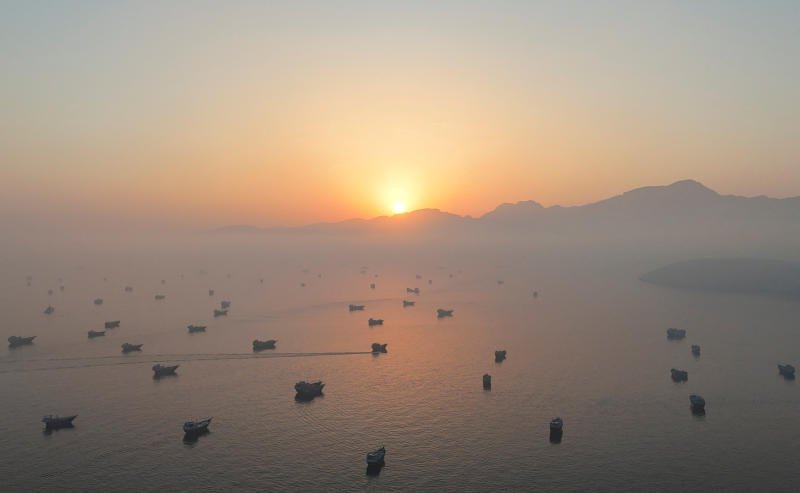
A drone view shows vessels in the Strait of Hormuz, as seen from Musandam, Oman, on June 15, 2026. (Photo: Reuters)

NEW YORK — The Middle East teetered on the brink of an expanded war Thursday, after Iran and the United States reignited their hostilities and inflamed conflicts on other fronts that threatened to draw in more countries.

For the first time since the conflict began in February, the authorities in Egypt said Thursday the country had come under attack, blaming an explosion at one of its ports the previous day on an unidentified drone. Earlier, Saudi Arabia also acknowledged direct involvement in the war for the first time, after conducting joint strikes with US forces on Iranian-backed militias in Iraq on Wednesday.

As the scope of the fighting widened, US Central Command said Thursday morning that it had completed another “heavy wave” of strikes on Iranian targets, including military command centres and missile and drone facilities. The Jordanian military later said it had shot down five missiles launched from Iran. Iran has not publicly claimed responsibility for that attack.

Central Command said its latest strikes were a response to Iran’s launching ballistic missiles at US forces in the Middle East on Wednesday, when the Revolutionary Guard said it had targeted US military sites in Jordan.

The fighting this week ended a days-long pause in direct attacks between the United States and Iran and ensnared an expanding list of US allies. Since the US-Iranian ceasefire collapsed earlier this month, there have been repeated attacks on several countries in the region, including Saudi Arabia, but Wednesday’s drone attack on the port of Damietta was the first reported to have hit Egypt.

The attack ignited a fire on two ships, including a US-owned gas storage tanker, and threatened to draw Egypt into the conflict. On Thursday, the authorities there said they were conducting a full investigation and would take “necessary measures to protect Egypt’s interests and national security.”

At a news conference at the Oval Office on Wednesday, President Donald Trump implied that Iran was responsible for the attack in Egypt, without offering details, and said, “We’re going to be hitting them very hard.” Iran has not claimed responsibility for that attack.

Even as the fighting between the United States and Iran expanded beyond the jostle to control the Strait of Hormuz, a critical waterway for the world’s energy supplies, ships attempting to pass through it were still facing significant risks.

The Revolutionary Guard said early Thursday that a fire had broken out on a tanker attempting to transit the strait using an unauthorised passage. Its statement, carried in Iranian state media, did not specify whether the fire had been caused by an attack.

Threats by the Iranian-backed Houthi militia against shipping in the Red Sea also stoked fears of a second choke point, injecting more volatility to energy markets. After the Yemeni group claimed to target another Saudi oil tanker with missiles this week, insurers warned shipping companies navigating the Red Sea that they faced a heightened risk of attack.

This article originally appeared in The New York Times.

Sign up to read this article
Read news from 100's of titles, curated specifically for you.
Already a member? Sign in here
Related Stories
Top stories on inkl right now
One subscription that gives you access to news from hundreds of sites
Already a member? Sign in here
Our Picks
Fourteen days free
Download the app
One app. One membership.
100+ trusted global sources.