Get all your news in one place.
100's of premium titles.
One app.
Start reading
The Guardian - AU
The Guardian - AU
World
Jonathan Yerushalmy, Vivian Ho, Maya Yang, Tom Ambrose and Yohannes Lowe

Tehran launches retaliatory attacks on Bahrain and Kuwait – as it happened

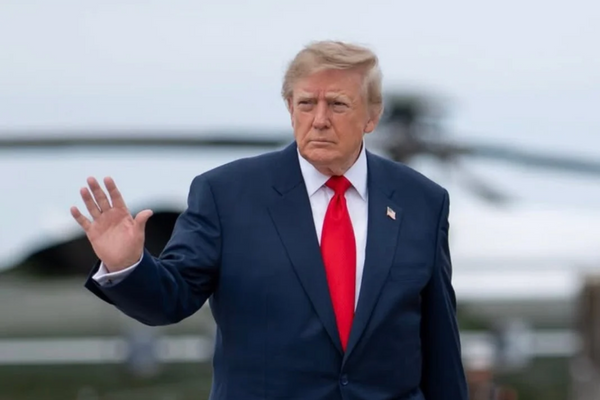
President Donald Trump speaks to the press before boarding Air Force One on 9 June.
President Donald Trump speaks to the press before boarding Air Force One on 9 June. Photograph: Saul Loeb/AFP/Getty Images

Closing summary

This blog is now closing, but our live coverage of the crisis in the Middle East continues here.

Here is how things stand at the moment.

  • The US launched multiple waves of strikes on Iran in response to a military helicopter crash off the strait of Hormuz that Donald Trump said Iran had downed. The Associated Press reported that the Apache helicopter that crashed went down after colliding with an Iranian drone, but it was not clear whether the collision was intentional.

  • US strikes were reported across Iran’s southern coast, on the strait of Hormuz. After more than three hours of military action, US central command (Centcom) said strikes were “completed”, adding that the US remained ready to defend against “unjustified Iranian aggression.”

  • Soon after, Iran launched retaliatory attacks against the US, according to the countries state media, which said American bases in the region and the US fifth fleet in Bahrain were targeted with drones. Kuwait and Bahrain issued air raid alerts and reported that air defences were active in repelling attacks. Iran also claimed it had targeted a US base in Jordan with long range missiles.

  • Iran’s foreign minister, Abbas Araghchi, said no attack would go “unanswered”, soon after the US launched strikes on Iran. Posting an image of the strait of Hormuz with the label, “Forever Persian Gulf”, Araghchi says that “despite its defeats on the battlefield, the U.S. opted to test our determination.”

  • Five hours before the airstrikes, Trump had posted on social media that the US “must” respond to the helicopter crash, from which two crew members were rescued in stable condition. Before his social media post, however, Trump appeared to downplay the crash, telling the Wall Street Journal in a phone interview that it “wasn’t a big deal” and that “the pilot is fine.”

  • Iranian state media reported that no air military operations have taken place in the strait of Hormuz over the past 24 hours, according to Reuters.

  • Lebanon’s health ministry said 11 people were killed in Israeli airstrikes on the southern city of Tyre on Tuesday. The state-run National News Agency (NNA) had reported the first strike taking place not long before Israel’s military issued an evacuation warning for the entire city and surrounding areas ahead of strikes there.

Iran has said it launched a missile attack at an airbase in Jordan hosting US forces, after also targeting Kuwait and Bahrain.

The Revolutionary Guards said long-range missiles targeted the Muwaffaq Salti airbase.

The Guards said the targets included F-35 fighter jet hangars and a command-and-control centre, and warned they were ready to deliver a “crushing and decisive” response to any further US attack.

Neither Jordan nor the US has acknowledged any attack, but if confirmed it would likely be the first time that Iran has targeted Jordan since the start of the ceasefire in April.

Updated

Kuwait’s army has said it is working to intercept “hostile aerial targets.”

The General Command of the Kuwaiti Army announces that Kuwaiti air defense systems are currently intercepting hostile aerial targets in accordance with approved operational procedures.”

In its announcement, the army says it “urges everyone to adhere to the security and safety instructions and guidelines issued by the competent authorities”.

Iran’s revolutionary guards say they have targeted Kuwait’s Ali Al Salem air base, which is known to host some US troops.

As the US launched several waves of strikes on Iran, Asian share markets fell and oil prices surged.

Escalating tensions in the Middle East have unsettled markets, dimming hopes for an end to the months-long war that has pushed commodities higher and stoked inflation worries.

Japan’s Nikkei fell 0.9% while the tech-heavy South Korean KOSPI slumped 2%.

Oil prices climbed about 1% in early trade, moving away from a seven-week low touched in the previous session. Brent futures rose 0.9% to $92.29 a barrel, while US West Texas Intermediate (WTI) crude climbed 0.8% to $88.97.

“Oil holding around $90 despite fresh Iran headlines suggests markets are not pricing a sustained supply disruption. That leaves room for a bigger repricing if energy infrastructure, shipping routes or U.S. involvement escalate,” said Charu Chanana, chief investment strategist at Saxo in Singapore.

US investor will be focused on inflation data, which is set to be released later on Wednesday. The report – covering the last 12 months through to May – will gauge the impact of the war, with a Reuters survey of economists predicting that inflation likely increased 4.2% in the perdiod.

Air raid sirens sound in Bahrain

Bahrain’s interior ministry has issued an air raid alert, urging citizens to take cover.

The alarm siren has been activated. We urge citizens and residents to remain calm, head to the nearest safe location, and follow updates through official channels.”

It comes after the IRGC said it had targeted US bases in the region, in response to US strikes on its territory.

Updated

As we wait to see whether this latest round of strikes between the US and Iran is at an end, we’re starting to get a better picture of what went on behind the scenes to get us to this point.

The Wall Street Journal is reporting that Trump was not convinced of the need to retaliate against Iran after the Apache Helicopter went down earlier on Tuesday. He spent much of the day playing down the incident, telling reporters that it wasn’t a big deal.

But according to the WSJ, his mind was changed after a briefing from defense secretary, Pete Hegseth, and chairman of the joint chiefs of staff, Dan Caine.

The Associated Press has reported that the Apache helicopter that crashed went down after colliding with an Iranian drone.

It is not clear whether the collision was intentional, but US officials reportedly told the president that the attack merited a response nonetheless.

Trump would the go on to say that Iran shot down the helicopter, in a post on Truth Social, and declared that the US must “respond to this attack.” Hours later the US began the strikes on Iran.

US military says strikes against Iran are now 'completed'

After more than three hours of military action, US central command (Centcom) has said strikes against Iran are now “completed”.

CENTCOM forces struck Iranian air defense, ground control stations, and surveillance radar sites near the strait of Hormuz with precision munitions from U.S. Air Force and Navy fighter jets. The operation was a proportional response to recent attacks on U.S. forces and international commercial ships transiting regional waters.”

In its statement, Centcom says it remains “vigilant” and prepared to defend against “unjustified Iranian aggression.”

US strikes on Iran reportedly remain ongoing, but we are yet to get any more official updates from the military or White House officials.

Iranian state media are reporting the sounds of explosions in Ahvaz, a city in Iran’s west.

Iran launches retaliatory attacks on the US, Iranian media reports

Iran has launched retaliatory attacks against the US, state media is reporting, with claims that American bases in the region and the US fifth fleet in Bahrain have been targeted with drones.

State media is also reporting a statement from the Islamic Revolutionary Guards Corp (IRGC), saying clashes are continuing and warning of “more severe responses”, if US hostilities continue.

The IRGC said the US strikes damaged a telecommunications tower and two water tanks in the Iranian port town of Sirik.

Former US navy Adm William McRaven has told CNN that this latest exchange of fire is not what the Trump administration wants.

McRaven says that “until the US and Iran can stop shooting at each other, no one is going to come to the negotiation table.”

We’ve got to figure out a way to convince the Iranian’s that we will lift the blockade if the y open the strait [of Hormuz], and then sit down and being the hard negotiations that will come.”

US outlet Axios is reporting that a third round of strikes is currently hitting Iran, with local Iranian media saying more explosions have been heard in Bandar Abbas in the country’s south.

Bandar Abbas is a strategically important port city on the strait of Hormuz and home to Iranian naval forces. The city serves as the main southern naval command centre, and many of the operations to disrupt shipping in the strait are thought to originate from there.

If it’s confirmed that the US is targeting Bandar Abbas, it will be at least the third time that they’ve attacked the city during the current ceasefire.

The precarious US-Iran ceasefire explained

Wednesday’s strikes by the US on Iran are just the latest in a series of ceasefire breaches that have escalated considerably in the last two weeks.

After weeks of conflict, the US and Iran agreed to a ceasefire on 8 April and entered into protracted negotiations to reopen the strait of Hormuz and resolve the issue of Iran’s nuclear program.

Since then the US and Iran have exchanged strikes on at least four occasions, but in every instance both sides have characterised their actions as “measured” and “limited”, and stressed the importance of maintaining the ceasefire.

The ceasefire faced its biggest test on Sunday, when Iran launched missiles at Israel in response to Israeli strikes on Beirut’s southern suburbs. The Israeli military launched airstrikes on Iran in retaliation; the first exchange of fire between the two countries since the ceasefire was reached.

Fears of a return to a full-scale regional war in the Middle East eased on Monday, with Israel and Iran saying they had halted attacks on each other after an appeal from Donald Trump to “immediately stop shooting”.

The breaches of the ceasefire fly in the face of Trump’s continued claims that a longterm deal with Iran is close. The US president is reportedly very close to agreeing to a series of Iranian demands that would allow the strait to reopen to traffic, and begin the process of a new round of nuclear negotiations. However Trump has for weeks promised that a deal is close, but failed to follow through on those promises.

Iranian state media are reporting the sounds of explosions in Sirik and Bandar Abbas, on Iran’s southern coast.

Both sites were targeted by US strikes earlier today.

US reportedly carrying out second round of strikes on Iran

Multiple media outlets are reporting that the US is carrying out a second round of strikes on Iran, targeting air defence and radar systems.

Iranian state media is reporting the sounds of explosions in a number of areas. We’ll bring you more on this as it comes in.

The Associated Press is reporting that the US army helicopter that crashed off the coast of Oman went down after colliding with an Iranian drone, citing a US official.

AP reports that it is not clear whether the collision was intentional, and official statements from the US government only said the crash is under investigation.

On Tuesday Donald Trump said Iran shot down the aircraft while it was on patrol over the strait of Hormuz and declared that the US “must, of necessity, respond to this attack,” in a post to social media. Hours later the US military began new strikes on Iran.

US House speaker Mike Johnson is among the many senior American officials playing down the significance of the strikes.

He called the strikes on Iran “targeted”, “proportional” and “defensive in nature.”

Johnson said he spent several hours earlier in the situation room with Trump, the vice-president, JD Vance, secretary of state, Marco Rubio and defense secretary, Pete Hegseth, discussing the Iran war and other matters.

“We lament that has become necessary,” he said.

But he said after Iran struck US assets and personnel in the region, “We can’t allow that.”

Iranian state media is now reporting that the situation is “calm”, after the US attacks on the south of the country.

There are reports that the country’s Revolutionary Guards are promising retaliatory strikes on America’s Gulf allies, we’ll bring you those updates if they are confirmed.

Iran will leave 'no attack or threat unanswered', says foreign minister

Iran will leave “no attack or threat unanswered”, says the country’s foreign minister, Abbas Araghchi.

Posting an image of the strait of Hormuz with the label, “Forever Persian Gulf”, Araghchi says that “despite its defeats on the battlefield, the U.S. opted to test our determination.”

Leave our region if you want to be safe. History of the Persian Gulf has many chapters on dire fates of intruding outsiders.

The US appears eager to play down the significance of these strikes, with multiple officials briefing US media that they expect wider negotiations with Iran to be unaffected by the action.

Politico is reporting comments from a senior White House official, saying Donald Trump still thinks a peace deal with Iran is on the horizon.

“Nothing changes where the deal stands right now,” Politico reported the official as saying, adding that a deal with Tehran was “still close.”

A US official told CNN that the strikes are a “warning shot” and they areexpecting them to affect the negotiations.

We are starting to get an idea of the areas that the US has targeted in its attacks on Iran.

Iranian state media have reported attacks on Sirik and Bandar Abbas – both areas along the coast of the strait of Hormuz – and Qeshm, an island in the strait.

Axios is reporting that the US is targeting Iranian air defence batteries and radar systems around the strait.

We have yet to hear directly from Donald Trump, since the US military began striking Iran in response to the downing of an Apache helicopter on Tuesday.

Earlier in the day, the president said the US would “respond” to the downing of the helicopter, and accused Iran of shooting it down.

Since the bombing restarted he has posted a Reuters report from January about America’s widening trade deficit to his Truth Social account, and another report from April claiming the trade deficit was narrowing.

Donald Trump has said he wanted a “very powerful” response to Iran shooting down the US helicopter, according to Jonathan Karl, correspondents for ABC News.

Karl says he was on the phone with Trump as the US military announced the strikes on Iran.

“I think it’s very important to respond. They shot down a helicopter, and we are responding as we speak,” Trump said, according to Karl.

“This is a response to what they did … with our helicopter last night, and I believe the response should be very strong, very powerful, and that’s what this one is.”

Today so far

  • The US began launching airstrikes at Iran in response to a military helicopter crash off the strait of Hormuz that Donald Trump said Iran had downed. Iran state media is currently reporting explosions in the port city of Bandar Abbas and the island of Qeshm, according to Reuters. US Central Command said the strikes came “at the Commander in Chief’s direction”.

  • Five hours before the airstrikes, Trump had posted on social media that the US “must” respond to the helicopter crash, from which two crew members were rescued in stable condition. Before his social media post, however, Trump appeared to down play the crash, telling the Wall Street Journal in a phone interview that it “wasn’t a big deal” and that “the pilot is fine.” Centcom had also posted on social media that the crash was under investigation.

  • Iranian state media reported that no air military operations have taken place in the strait of Hormuz over the past 24 hours, according to Reuters – which means Iran did not shoot down the US military helicopter. However, the military source quoted by Iranian state media said there would be a “decisive response” to any renewed hostility from the US because of the helicopter crash.

  • Iran’s foreign minister Seyed Araghchi warned that “foreign forces in proximity to our territory are at constant risk on account of their own human errors, plain accidents, or potentially being caught in crossfire” in a post on X that came after Trump’s Truth Social declaration that the US “must” respond.

  • Lebanon’s health ministry said 11 people were killed in Israeli airstrikes on the southern city of Tyre on Tuesday. The state-run National News Agency (NNA) had reported the first strike taking place not long before Israel’s military issued an evacuation warning for the entire city and surrounding areas ahead of strikes there.

  • Britain, Canada, France and Norway announced new coordinated sanctions on Tuesday against Israeli networks involved in financing, enabling and carrying out violence in the Israeli-occupied West Bank. The move follows escalating violence by Israeli settlers, which diplomats say is intended to undermine prospects for a Palestinian state.

  • Hezbollah, the powerful Iranian-backed Lebanese militant group, has thanked Iran for attacking Israel “in defence” of Lebanese people, suggesting that Lebanon’s government should take this opportunity to improve relations with Tehran. In a statement on Tuesday, Hezbollah said Lebanese authorities should “take advantage of this opportunity and correct their official relations with the Islamic Republic in a way that serves the interests of both countries.”

  • UN secretary-general Antonio Guterres said on Tuesday he was “deeply alarmed” by the renewed escalation in violence in the Middle East. “All attacks must stop immediately. The ceasefires in Lebanon, Iran + Gaza must be fully respected,” he said in a post on X.

The US strikes on Iran came just five hours after Donald Trump posted on Truth Social that Iran had shot down a US military helicopter that was patrolling the strait of Hormuz and that the US “must” respond.

Earlier, US Central Command said the crash – in which two crew members were rescued in stable condition – was still under investigation. In a phone call with the Wall Street Journal before his Truth Social post, Trump appeared to also down play the crash, telling the Journal that it “wasn’t a big deal” and that “the pilot is fine.”

Iranian state media is reporting explosions in the port city of Bandar Abbas and the island of Qeshm, according to Reuters.

Updated

US military says it's launching strikes against Iran after Trump vowed response to downing of helicopter

The US military began launching “self-defense” strikes again Iran at 5pm EST Tuesday – about 1am local time, US Central Command said.

The strikes come “at the Commander in Chief’s direction” in response to yesterday’s downing of a US army Apache helicopter,” Centcom said.

“The mission is a proportional response to unjustified Iranian aggression,” the post reads.

Explosions have been reported in Iran’s south, close to the strait of Hormuz, according to state media.

Updated

Three killed in Israeli strike near Tyre in southern Lebanon

The Lebanese health ministry said Tuesday that an Israeli strike killed three near Tyre in southern Lebanon, bringing the death toll up to 11 in the region, AFP reports.

Nine people were also wounded in the strike.

Iranian state media is reporting that no air military operations have taken place in the strait of Hormuz over the past 24 hours, according to Reuters – which means Iran did not shoot down the US military helicopter, an attack to which Donald Trump says the US “must” respond.

The military source quoted by Iranian state media said there would be a “decisive response” to any renewed hostility from the US because of the helicopter crash, Reuters reports.

In that same statement on X, Seyed Araghchi, Iran’s foreign minister, once again asserted his belief that the strait of Hormuz is an exclusively Omani-Iranian waterway and that Iran has a right to defend itself against foreign forces in its territory.

The Guardian’s Patrick Wintour has more details on how this assertion butts against the principle of freedom of navigation – international laws protecting freedom of movement at sea:

Western diplomats say Iranian proposals for the future permanent management of the strait are unlawful since they impose tolls on commercial shipping and would give Iran an arbitrary right to select the ships that are allowed passage, possibly based on the nationality of ownership.…The legal rights of coastal states to impose tolls lies at the heart of the deadlock on how to reopen the strait and whether Iran’s proposed move, by restricting freedom of navigation, is illegal and sets a precedent for other similar waterways.

Iran became a signatory to the UN convention on the law of the sea (Unclos) in 1982, very soon after the 1979 revolution, but never ratified the treaty.

This means that from Iran’s perspective it is not bound by the treaty’s transit passage rules that underpin freedom of navigation, but instead by customary international law, including a more restrictive right of innocent passage.

More here:

In a new statement on X, Iran’s foreign minister Seyed Araghchi warned that “foreign forces in proximity to our territory are at constant risk on account of their own human errors, plain accidents, or potentially being caught in crossfire.”

“To reduce risk, best solution is for them to leave. We prefer language of diplomacy but speak other languages too,” he added.

Araghchi’s statement follows Donald Trump saying on Truth Social earlier today that “last night the Iranians shot down one of our highly sophisticated Apache Helicopters while patrolling over the strait of Hormuz.”

Trump added that the “United States must, of necessity, respond to this attack.”

Although Donald Trump said that it was Iran that had shot down a US military helicopter, US Central Command posted on X that the cause is still under investigation.

The Army AH-64 Apache helicopter had gone down near the coast of Oman, with rescue efforts taking place at 7:33 p.m. EST Monday – early Tuesday local time, according to Centcom.

The two crew members, who had been patrolling regional waters, were rescued in about two hours and are in stable condition.

Just before Donald Trump posted on Truth Social that Iran had shot down a military helicopter and the US “must” respond, Mohammad Bagher Ghalibaf, Iran’s parliamentary speaker and chief negotiator, posted on X:

“We prefer the language of diplomacy, but we speak other languages far more fluently. Break your commitments, and we’ll switch to what we speak best. You ride the horse you saddled!”

The day so far

  • Lebanon’s health ministry said an Israeli airstrike on the southern city of Tyre before an Israeli military warning on Tuesday killed at least eight people and wounded 32 others, noting the toll was provisional. The state-run National News Agency (NNA) had reported the strike not long before Israel’s military issued an evacuation warning for the entire city and surrounding areas ahead of strikes there.

  • The Israeli army on Tuesday said its forces killed a gunman who had managed to infiltrate Israeli territory from Lebanon and opened fire on its troops. “A short while ago, an initial report was received regarding a shooting toward IDF soldiers operating in the Ramim Ridge area,” the army said, referring to a mountainous area stretching between Israel and Lebanon.

  • Britain, Canada, France and Norway announced new coordinated sanctions on Tuesday against Israeli networks involved in financing, enabling and carrying out violence in the Israeli-occupied West Bank. The move follows escalating violence by Israeli settlers, which diplomats say is intended to undermine prospects for a Palestinian state.

  • France has banned Israel’s far-right finance minister Bezalel Smotrich from entering the country, as part of coordinated sanctions with other countries over settler violence against Palestinians. Smotrich is the second member of the Israeli government to be forbidden from entering France in recent months, after national security minister Itamar Ben Gvir was barred on 23 May for mocking activists detained by Israeli soldiers from a Gaza-bound flotilla carrying aid for the Palestinian territory.

  • In a phone interview with the BBC, Donald Trump said he had stressed the need “to use a lot of common sense” when he spoke to Benjamin Netanyahu yesterday, who he has reportedly grown increasingly exasperated with during the war. “All I did is say, ‘we have to use sense’. We’re very close to signing a very powerful deal, a very good deal,” Trump said of the conversation. “No nuclear weapons, no nothing. You know, we have to use a lot of common sense. It was fine.”

  • Trump said the peace deal with Iran is in its “final throes” and suggested that the strait of Hormuz could open up in “two or three days” if an agreement with Tehran is secured. “It will open up immediately upon signing,” he told reporters on the tarmac at JFK airport after watching the NBA Finals on Monday night, insisting that Iran will not be allowed nuclear weapons under the terms of a deal.

  • Hezbollah, the powerful Iranian-backed Lebanese militant group, has thanked Iran for attacking Israel “in defence” of Lebanese people, suggesting that Lebanon’s government should take this opportunity to improve relations with Tehran. In a statement on Tuesday, Hezbollah said Lebanese authorities should “take advantage of this opportunity and correct their official relations with the Islamic Republic in a way that serves the interests of both countries.”

  • UN secretary-general Antonio Guterres said on Tuesday he was “deeply alarmed” by the renewed escalation in violence in the Middle East. “All attacks must stop immediately. The ceasefires in Lebanon, Iran + Gaza must be fully respected,” he said in a post on X.

  • A US navy surface drone found and rescued the two crew from a US Apache attack helicopter from the waters of the strait of Hormuz, the US military’s Central Command has told the Reuters news agency.

  • Iran’s football federation (FFIRI) said on Tuesday that its ticket allocation for the World Cup has been pulled just days before it starts, leaving supporters who had already made travel plans unable to attend their team’s matches. “This is despite the fact that many Iranian football fans, relying on the officially announced process, had already made the necessary plans to attend the matches,” the FFIRI added in a statement.

Trump says US helicopter shot down by Iran and US 'must' respond

President Donald Trump said Tuesday that a US military helicopter was shot down by Iran and that the United States “must” respond.

In a statement on Truth Social, Trump said he had been informed “that last night the Iranians shot down one of our highly sophisticated Apache Helicopters while patrolling over the strait of Hormuz.”

While the pilots were uninjured, “the United States must, of necessity, respond to this attack.”

Updated

Israel has bombed the city of Tyre, killing eight and injuring at least 32 people, and struck dozens of other villages in south Lebanon as it issued forced evacuation orders for the historic Christian quarter of the ancient city for the first time.

Israel struck the al-Masaken neighbourhood without warning on Tuesday morning, sending smoke plumes high above the city’s buildings and igniting fires. Further airstrikes were carried out across the city and a series of bombings hit Abbasieh, a village north of Tyre.

Hezbollah claimed responsibility for attacks on Israeli soldiers in the Lebanese village of Maroun al-Ras. The Israeli army said it had killed a “terrorist” who had crossed the border from Lebanon into Israel and opened fire on Israeli soldiers – the first time in this round of fighting that a fighter from Lebanon had crossed the border. It was unclear if the gunman was affiliated with Hezbollah.

Shortly after the bombings in Tyre, Israel issued a forced evacuation warning for Palestinian refugee camps in the city, as well as for the Christian quarter, claiming members of Hezbollah had infiltrated the area and could attack.

Smoke rising following an Israeli airstrike in Tyre, Lebanon, earlier today.

France has banned Israel’s far-right finance minister Bezalel Smotrich from entering the country, as part of coordinated sanctions with other countries over settler violence against Palestinians.

Smotrich is the second member of the Israeli government to be forbidden from entering France in recent months, after national security minister Itamar Ben Gvir was barred on 23 May for mocking activists detained by Israeli soldiers from a Gaza-bound flotilla carrying aid for the Palestinian territory.

The United Kingdom, Australia, Canada, New Zealand and Norway already slapped a travel ban on both ministers in June last year over inciting violence against Palestinians.

Other countries have also banned the ministers, including Spain, Slovenia and most recently Ireland.

The Israeli army on Tuesday said its forces killed a gunman who had managed to infiltrate Israeli territory from Lebanon and opened fire on its troops.

“A short while ago, an initial report was received regarding a shooting toward IDF soldiers operating in the Ramim Ridge area,” the army said, referring to a mountainous area stretching between Israel and Lebanon.

“The soldiers returned fire and eliminated a terrorist in the area. No IDF injuries were reported,” the army said, confirming to AFP that the gunman had managed to enter Israel.

Britain, Canada, France and Norway announced new coordinated sanctions on Tuesday against Israeli networks involved in financing, enabling and carrying out violence in the Israeli-occupied West Bank.

The move follows escalating violence by Israeli settlers, which diplomats say is intended to undermine prospects for a Palestinian state.

Tyre church leaders issue appeal to prevent Israel attacking Christian district of city

The heads of several churches in Tyre have appealed for the international community and Lebanese leaders, including the president Joseph Aoun, to act quickly to prevent Israel from attacking the Christian district of the major southern Lebanese port city.

“The Old City is the heart of Tyre, and any attack on it would be a national catastrophe,” the statement said.

It went on to describe the Old City as being home to innocent civilians and “centuries-old cultural and religious heritage”.

“We call for immediate political and security efforts to preserve the ability to remain steadfast, and we call on the international community and UN agencies to fulfil their moral responsibility to protect the population in accordance with international humanitarian law,” the church leaders said.

The statement by the Christian leaders was from George Iskandar, the metropolitan archbishop of Tyre for the Melkite Greek Catholic Church; Elias Kfoury, the Greek Orthodox metropolitan of Tyre, Sidon and Dependencies; and Charbel Abdullah, the archeparch of the Maronite Catholic Archeparchy of Tyre.

The Israeli military earlier issued an urgent evacuation order for residents in Lebanon’s fifth biggest city to flee ahead of attacks it claimed were aimed at Hezbollah. For the first time in this current conflict, the evacuation order was issued for an entire area in Tyre which is a Christian neighbourhood.

At least eight people were reportedly killed following an Israeli airstrike on the city earlier with dozens of people reported to have sustained injuries.

Updated

In a post on X, France’s foreign minister Jean-Noël Barrot said:

With our British, Canadian, Australian, New Zealand, and Norwegian partners, we are today imposing new sanctions against those responsible for intensifying colonization and violence in the West Bank.

At the national level, we have banned from our territory minister Bezalel Smotrich, four leaders of settler organizations, and twenty-one violent settlers.

Bezalel Smotrich actively promotes the annexation of the West Bank, which he openly claims, the creation of new settlements in the West Bank, the recolonization of Gaza, the economic collapse of the Palestinian Authority, and its deleterious consequences on the Palestinian population: this is a policy that the overwhelming majority of the international community cannot accept, firmly committed to the two-State solution.

The UK’s foreign secretary, Yvette Cooper, is to announce that illegal settlers in the occupied West Bank will be hit with new sanctions by Britain and its allies.

The package, due to be revealed in the House of Commons today, has been co-ordinated with Australia, Canada, France and Norway, who in a joint statement said they aimed to “hold extremist settlers accountable for the horrific levels of settler violence against Palestinian civilians”.

As part of the moves, the UK will impose sanctions on six entities and one individual involved in financing, enabling and carrying out settler violence in the occupied West Bank.

Updated

UN secretary-general Antonio Guterres said on Tuesday he was “deeply alarmed” by the renewed escalation in violence in the Middle East.

“All attacks must stop immediately. The ceasefires in Lebanon, Iran + Gaza must be fully respected,” he said in a post on X.

Updated

Lebanese official says Israeli strikes on Tyre have killed eight people

Lebanon’s health ministry said an Israeli airstrike on the southern city of Tyre before an Israeli military warning on Tuesday killed at least eight people and wounded 32 others, noting the toll was provisional.

The state-run National News Agency (NNA) had reported the strike not long before Israel’s military issued an evacuation warning for the entire city and surrounding areas ahead of strikes there.

Updated

The son of a prominent Palestinian doctor who was detained by Israeli forces in Gaza in late 2024 and held for more than 500 days without formal charges has spoken of his deep concern for his father’s wellbeing after he was transferred without explanation to solitary confinement in a maximum-security prison.

Dr Hussam Abu Safiya, the director of Kamal Adwan hospital in northern Gaza, was detained at work on 27 December 2024. Physicians for Human Rights Israel said last week it had received information indicating that the 53-year-old had been transferred from Ketziot prison to Ramon prison, part of the Ganot prison complex, where he had been put in solitary confinement. PHRI said it had not been told the reasons for the transfer.

During a visit by a PHRI lawyer last month, Abu Safiya described harsh detention conditions, untreated medical problems and severe food shortages. You can read the full story by my colleagues, Lorenzo Tondo and Seham Tantesh, here:

A US navy surface drone found and rescued the two crew from a US Apache attack helicopter from the waters of the strait of Hormuz, the US military’s Central Command has told the Reuters news agency (see this post for more details about the incident).

Hezbollah urges Lebanese authorities to build closer ties to Tehran

Hezbollah, the powerful Iranian-backed Lebanese militant group, has thanked Iran for attacking Israel “in defence” of Lebanese people, suggesting that Lebanon’s government should take this opportunity to improve relations with Tehran.

In a statement on Tuesday, Hezbollah said Lebanese authorities should “take advantage of this opportunity and correct their official relations with the Islamic Republic in a way that serves the interests of both countries.”

Iran’s support for Lebanon’s “legitimate rights, and its bearing of material and political costs, reaffirms that Iran is the one that supports Lebanon, not the other way around,” the group added.

Lebanon’s government has been engaging in US-mediated talks with Israel, something that Hezbollah, which is more powerful than the Lebanese army and operates independently of the state, opposes and sees as an act of humiliation.

Israeli troops have taken control of around a fifth of Lebanon since Hezbollah launched attacks on northern Israel in solidarity with Iran days after the US and Israel killed the former Iranian supreme leader in Tehran in February.

The Lebanese state accuses Hezbollah of dragging the country into war and had made efforts to disarm it before the latest escalation of fighting. Hezbollah has refused to hand over its arsenal in full and said the dispute over the group’s weapons is an internal affair.

Last week, Hezbollah’s leader, Naim Qassem, demanded a complete ceasefire and withdrawal of Israeli troops from Lebanon, and said that as long as Lebanese villages were being bombed, northern Israel would not be safe.

Updated

At least two Iranian military members killed in Israeli attack on Iran

Iran’s state TV said at least two members of an Iranian air defence unit were killed in Israeli attacks on Monday.

State TV identified the men as Bahman Hosseini and Ali Reza Abiri, without offering a rank for them. Their funerals will reportedly be held today. The report said they would be buried in a city outside of Tehran, suggesting they had been posted near the capital.

The oil price is dropping this morning, after Donald Trump declared that negotiations towards an Iran peace deal are in their “final throes”.

The US president made the comments to reporters at JFK airport after attending the NBA Finals at Madison Square Garden (where he was roundly booed by the crowd).

Brent crude has dropped by 1% this morning, to $93 a barrel – still around $20/barrel above its levels before the conflict began in late February.

You can follow the latest business and market news in our live blog here:

Updated

Donald Trump and Benjamin Netanyahu are close allies with a deeply complicated and often strained relationship that has shown signs of fracturing over recent days. The Guardian’s senior international correspondent, Julian Borger, has looked into how the two leader’s diverging political priorities are undermining ceasefire negotiations. Here is an extract from his analysis piece:

Trump and Netanyahu went to war together against Iran on 28 February but fell out of step within days, as soon as it was clear that the quick victory and regime change promised by the Israelis was unlikely to materialise. From then on, their interests have increasingly diverged.

Once Iran closed the strait of Hormuz, the spike in the oil price and the interruption in the flow of globally traded chemical products became a political threat to Trump. Despite Republican gerrymandering and voter suppression, Democrats have a plausible shot at capturing at least one chamber of Congress in November elections, undermining his authority. More immediately, the president would clearly prefer to steer clear of global distractions while he hosts football’s World Cup.

The electoral pressure on Netanyahu pushes him in the opposite direction. Unless he can orchestrate a turnaround, his ruling coalition stands to lose in the vote, which must be held before the end of October. As things stand, for all the bombing of the past three years, he cannot claim to have fulfilled any of his pledges to neutralise Israel’s major adversaries: Iran, Hezbollah and Hamas.

Netanyahu’s political logic drives him towards further onslaught in the hope of a breakthrough, such as regime collapse in Tehran. To secure support from the Israeli far right, Netanyahu has to show himself ready to defy Trump from time to time in pursuing that multi-front campaign, but no leader of Israel can afford to burn bridges with Washington, its principal security guarantor. That leaves a fine line to tread.

Here are some of the latest images coming out of the southern Lebanese city of Tyre after the Israeli military issued a sweeping evacuation order for residents:

Updated

Israeli airstrike on Tyre kills eight people - report

At least eight people have been killed after an Israeli airstrike on a popular housing area in the southern Lebanese city of Tyre, the civil defence in southern Lebanon has told Al Jazeera Arabic. We have not been able to independently verify this report.

The IDF earlier issued a forced evacuation order for Tyre, warning residents to flee before an attack was launched (see post at 08.32 for more details).

Updated

Iran’s football federation (FFIRI) said on Tuesday that its ticket allocation for the World Cup has been pulled just days before it starts, leaving supporters who had already made travel plans unable to attend their team’s matches.

“This is despite the fact that many Iranian football fans, relying on the officially announced process, had already made the necessary plans to attend the matches,” the FFIRI added in a statement.

Gaza’s health ministry said in its latest update that at least 7 people were killed and 34 others injured in Israeli attacks across the territory over the past day. It said one other person died as a result of previous injuries.

The health ministry says 978 people have been killed in Israeli attacks since the ‘ceasefire’ between Israel and Hamas came into effect in October 2025.

It says that 72,988 people, many of whom were women and children, have been killed in Israeli attacks across Gaza since October 2023, when Israel launched its assault on the territory following the Hamas-led attack on southern Israel on 7 October 2023, in which about 1,200 people were killed and 251 taken hostage.

We can bring you more comments Donald Trump gave reporters last night at JFK airport. When asked about a report that a US army helicopter went down near the strait of Hormuz, the US president replied “the pilots are fine” and that nobody was injured.

“We are going to issue a report tomorrow but the pilots are fine,” he said.

It came after the NY Times reported that a US army Apache helicopter gunship went down near the strait of Hormuz yesterday, with the two crew members safely rescued.

It was not clear whether the helicopter was downed by Iranian fire or if there was some sort of mechanical issue or another problem, one of the people briefed on the incident told the outlet.

At least four people have been killed by Israeli attacks in southern Lebanon, the country’s state-run National News Agency (NNA) reported this morning.

The strikes were reported in the towns of Adshit, Haboush and Kfar Rumman.

Updated

Israel issues forced evacuation order for residents of Lebanese city of Tyre

The Israeli army’s Arabic-language spokesperson, Avichay Adraee, has issued the latest forced evacuation order for residents of Tyre, Lebanon’s fifth biggest city, ahead of attacks.

“Urgent warning to the residents of the city of Tyre, including the Christian quarter, and the camps and surrounding neighbourhoods,” he wrote, urging residents in the southern Lebanese city to “evacuate immediately” and “move north beyond the Zahrani river”.

The strikes will be carried out because Hezbollah violated the ceasefire agreement and is targeting “Israel’s home front”, Adraee said, but these attacks, which occur on a near-daily basis, often are reported to kill civilians and destroy civilian infrastructure.

More than a million people have been displaced by Israel’s renewed war on Lebanon, sparking a refugee and humanitarian crisis with the sweeping evacuation orders forcing people to flee their homes, often with very short notice or no notice at all. Many have few resources, limited access to basic services, food, shelter and healthcare.

The IDF says it is countering the Hezbollah threat against northern Israel and has been demolishing homes, occupying territory in the south of Lebanon and launching attacks on towns and villages with impunity under this justification.

Iran, which has backed and funded Hezbollah for decades, has made it clear that no peace deal with the US can be signed until Israel ceases its attacks in Lebanon (not just Beirut, but in the south as well).

Lebanon was drawn into the war when Hezbollah fired rockets at Israel on 2 March to avenge the US-Israeli killing of Iran’s former supreme leader.

Updated

In a phone interview with the BBC, Donald Trump said he had stressed the need “to use a lot of common sense” when he spoke to Benjamin Netanyahu yesterday, who he has reportedly grown increasingly exasperated with during the war.

“All I did is say, ‘we have to use sense’. We’re very close to signing a very powerful deal, a very good deal,” Trump said of the conversation. “No nuclear weapons, no nothing. You know, we have to use a lot of common sense. It was fine.”

On Netanyahu firing missiles against Iran early on Monday, despite the US president’s request not to, Trump said: “They had already gone. They were already on their way.” He added: “If I tell him to do something, he does it.”

Strait of Hormuz could be open in 'two or three days' if Iran peace deal is reached, Trump says

The US president, Donald Trump, has said the peace deal with Iran is in its “final throes” and suggested that the strait of Hormuz could open up in “two or three days” if an agreement with Tehran is secured.

“It will open up immediately upon signing,” he told reporters on the tarmac at JFK airport after watching the NBA Finals on Monday night, insisting that Iran will not be allowed nuclear weapons under the terms of a deal.

Trump said there are no “sticking points” that would prevent a deal from being reached, although the management of the strait, the way frozen Iranian assets are to be released and Israel’s war on Lebanon have all contributed to the deadlock in negotiations thus far.

Trump has repeatedly threatened to resume full-scale bombing of Iran, although has pulled back several times as he likely knows that new strikes will keep the strait of Hormuz under the effective control of Iran and lead to an extremely dangerous escalation of attacks on US-allied Gulf states.

The effective closure of the strait has led to soaring energy prices around the globe, including in the US where the war is deeply unpopular. Trump said:

We are very close to having a very, very good strong, powerful deal. If we go and bomb – which we can do very easily if we want and we spend another two or three weeks bombing – they’ll have nothing left whatsoever but you won’t have the strait open for months.

If we do the bombing a lot of people are going to be killed. Who wants to do that? I don’t . And we’ll have a signed document that is actually stronger than doing the bombing.

Striking a rather casual tone, Trump told reporters Israel and Iran had been in conflict for thousands of years, and after his intervention would leave each other alone for at least a week.

He said he had a “very good conversation” with Israeli prime minister, Benjamin Netanyahu, who is under political pressure to continue his assault on Lebanon in order to degrade the military capabilities of Hezbollah, the Iranian-backed Lebanese militant group.

“He (Netanyahu) was hit, and he hit back, and I can’t blame him for that,” Trump said. “But he was hit, he hit back, and now they’ve called it quits. So they’re going to just leave each other alone for another week or something.”

Israel, ignoring Trump’s wishes, attacked the southern suburbs of the Lebanese capital of Beirut on Sunday in what Tehran viewed as a violation of the US-Iran ceasefire. Israel claimed it was targeting Hezbollah infrastructure after it said the group fired rockets at northern Israel.

Iran in turn launched missiles at Israel on Sunday and a fresh exchange of fire between the two sides occurred yesterday. Iran announced a cessation of its attacks after Trump demanded both sides stop “shooting” in a social media post.

Tehran said, however, that it would attack again if Israel persisted with its strikes in Lebanon, while Netanyahu warned that should Iran “make the mistake of resuming attacks against us, we will respond with full force”.

Updated

Sign up to read this article
Read news from 100's of titles, curated specifically for you.
Already a member? Sign in here
Related Stories
Top stories on inkl right now
One subscription that gives you access to news from hundreds of sites
Already a member? Sign in here
Our Picks
Fourteen days free
Download the app
One app. One membership.
100+ trusted global sources.