Mohammad Bagher Ghalibaf, the speaker of the Iranian parliament, said a ceasefire in Lebanon was “as important” as in Iran, according to a statement posted on Telegram.
In a telephone conversation with his Lebanese counterpart, Nabih Berri, the Iranian official said Tehran was “seriously seeking to force the enemies to establish a permanent ceasefire in all conflict areas in accordance with the agreement” reached with the US on 8 April, adding: “A ceasefire in Lebanon is as important to us as a ceasefire in Iran.”
Asked whether there is any update on the welfare of the new Iranian supreme leader, Hegseth says his status “remains the same”.
He adds that Mojtaba Khamenei is believed to be alive, wounded and disfigured.
Caine tells reporters that the United States would pursue any vessel attempting to provide support to Iran, adding that enforcement would occur in Iranian territorial seas as well as and international waters.
He says that 13 ships have “made the wise choice to turn around” and that, as of this morning, the US has not boarded any ships.
He adds:
If you do not comply with this blockade, we will use force.
Joint chiefs of staff chairman Dan Caine says the US military remains ready to re-engage in combat “at literally a moment’s notice”.
He says the blockade covers Iran’s ports and coastlines and applies to all ships, regardless of which flag they are sailing under.
“This includes dark fleet vessels, carrying Iranian oil,” he says.
Updated
US to maintain blockade 'for as long as it takes', says Hegseth
Hegseth says that the US is reloading “with more power than before” and says it is giving Iran the choice of doing things “the easy way or the hard way”.
He says Iran’s energy industry is not destroyed “yet” and that threatening to shoot at commercial ships “is not control, it’s piracy”.
The Pentagon chief adds:
For as long as it takes, we will maintain the blockade.
He is now attacking the “legacy, Trump-hating press” for not being patriotic enough for his liking…
Updated
Hegseth warns Iranian regime that the US is 'watching you'
Pentagon chief Pete Hegseth is speaking in DC this morning, warning Iran’s leadership that the US is “watching you”.
“While you are digging out of bomb-hit facilities, we are only getting stronger,” he says. “You only have what you have – you know that and we know that.”
Addressing the Iranian regime directly, he says they can “move things around” but that is exposing theirselves to the American’s “watchful eye”.
“You like to say publicly, Iran, that you control the strait of Hormuz but you don’t have a navy,” Hegseth adds.
Lebanese president holds call with Rubio
The Lebanese presidency said Jospeh Aoun held a call with US secretary of state Marco Rubio.
In a statement posted on social media, it said the Lebanese president thanked Rubio “for the efforts Washington is undertaking to reach a ceasefire and its support at all levels”.
In turn, Rubio “affirmed his continuation of the ongoing efforts to achieve a ceasefire as a prelude to establishing peace, security, and stability in Lebanon”.
The statement made no mention of any possible talks between Aoun and the Israeli prime minister, Benjamin Netanyahu, despite comments by Donald Trump that the leaders of Lebanon and Israel would speak today.
Pope decries leaders who use religion to justify war amid feud with Trump
Amid a feud with Donald Trump over the US’s war on Iran, Pope Leo has used a speech in Cameroon to decry leaders who use religion to justify wars.
“Woe to those who manipulate religion and the very name of God for their own military, economic and political gain, dragging that which is sacred into darkness and filth,” said the pope, who is on a four-country tour of Africa.
He made similar remarks last month when he said God ignores the prayers of leaders who wage war and have “hands full of blood”, which was widely interpreted as a veiled swipe at US defence secretary Pete Hegseth, who has used religious language and urged prayer in Jesus’s name for violence against enemies.
On Sunday, Donald Trump took aim at the pope and called him “weak on crime, and terrible for foreign policy” in a post on Truth Social. The US president’s comments have been widely condemned by Catholics and the international community, including Italian prime minister Giorgia Meloni.
In Cameroon, Pope Leo also criticised leaders who spend billions on wars. “They turn a blind eye to the fact that billions of dollars are spent on killing and devastation, yet the resources needed for healing, education and restoration are nowhere to be found.”
Updated
A spokesperson for the Lebanese presidency said it was “not aware of any call” taking place between Joseph Aoun and Israeli prime minister Benjamin Netanyahu, according to CNN.
The spokesperson added that if such a call were to happen then there would be an announcement.
The confusion over whether Israel and Lebanon are expected to speak stems from a social media post this morning by Donald Trump, in which he claimed the leaders of the two countries would talk today, without providing any details on where or how they would communicate.
Lebanese president calls for ceasefire before talks with Israel
The president of Lebanon, Joseph Aoun, has stressed the importance of a ceasefire before any direct negotiations with Israel but did not confirm reports of a possible talks with Israeli prime minister Benjamin Netanyahu.
“The ceasefire that Lebanon is calling for with Israel will be the natural starting point for direct negotiations between the two countries,” he said in a statement posted on social media.
“Lebanon is keen to de-escalate the situation in the south and across all Lebanese regions, so that the targeting of innocent and defenceless people—women, men and children—comes to an end, and the destruction of homes in Lebanese villages and towns ceases.”
He added that negotiations would be conducted “solely by the Lebanese authorities”, the implication being that the Iran-backed Hezbollah group would not be involved.
Aoun said the withdrawal of Israeli troops from Lebanese territory “is an essential step towards consolidating the ceasefire” and that it would enable the Lebanese army to redeploy to the two countries’ shared border.
Israel destroys last bridge connecting southern Lebanon to rest of country - report
An Israeli airstrike has destroyed the last bridge connecting southern Lebanon to the rest of the country, according to Lebanon’s official National News Agency.
The Israeli military struck the Qasmiyeh Bridge over the Litani river, destroying it completely, the news agency reported.
The Israel Defense Forces (IDF) has not immediately commented on the report, but it targeted the bridge on 23 March after accusing Hezbollah of using it to move fighters and weapons into the country’s south.
The IDF has issued repeated warnings in recent weeks to people in southern Lebanon to flee their homes and head north of the Zahrani river, which is located about 10 miles north of the Litani.
Iran wants to hold the US and Israel accountable for the assassination of its leaders, the Iranian foreign ministry spokesperson, Ismail Baghaei, told Russia’s Ria Novosti news agency.
“We must do this. And I believe that it is not only Iran, but the entire international community that is calling for those responsible to be held to account,” he said.
Israel has killed a number of Iran’s most powerful figures since the start of the war, including Ayatollah Ali Khamenei, the former supreme leader, and Ali Larijani, a top national security official.
Marco Rubio to join call between Israel and Lebanon leaders - report
The Lebanese TV channel Al Jadeed has reported that efforts are under way to arrange a call between Israel, Lebanon and the US.
Citing diplomatic sources, Al Jadeed reported that mediators are attempting contact between Israeli prime minister Benjamin Netanyahu and Lebanese president Joseph Aoun, with US secretary of state Marco Rubio to also join the discussion. Rubio hosted the first talks in decades between Israeli and Lebanese officials in Washington on Tuesday.
There has been no official confirmation of talks, although an Israeli minister told local media this morning that Netanyahu will speak to Aoun today. Lebanese officials however, have said privately that they were unaware of any such call.
In a statement shared on social media, Aoun said the ceasefire that Lebanon is “demanding with Israel” will serve as a “natural entry point for direct negotiations between the two countries”. He did not address reports about a call with the Israeli prime minister.
Iran has stopped all petrochemical exports to prioritise domestic supply and prevent shortages of raw materials, Reuters reported.
The state-owned National Petrochemical Company ordered firms to suspend exports until further notice.
Some petrochemical production hubs in Iran have been targeted by Israeli strikes in recent weeks, while a US naval blockade is preventing ships from using Iranian ports.
Pakistan’s foreign ministry said no dates have been decided for a second round of talks between the US and Iran.
Asim Munir, Pakistan’s army chief, is in Iran as part of ongoing mediation efforts to renew negotiations as the deadline for the fragile US-Iran ceasefire looms.
Reuters news agency reported a senior Iranian official as saying Munir’s visit “was effective in reducing differences in some areas” but added that fundamental disagreements remained between the warring parties, specifically over Iran’s nuclear programme.
“More hopes have been created for extending the ceasefire and holding a second round of talks,” the official said.
“The fate of Iran’s highly enriched uranium and the duration of Iran’s nuclear restrictions are among the highly disputed issues for which no solution has yet been found.”
Netanyahu will speak to Lebanon president, Israeli minister says
A member of Israel’s security cabinet, Galia Gamliel, said the prime minister, Benjamin Netanyahu, will speak to the Lebanese president, Joseph Aoun, today, according to Israeli media.
The conversation will take place “after so many years of a total disconnect in the dialogue between the two states, and this move will hopefully, in the end, lead to prosperity”, she told the Israeli Army Radio, the Times of Israel reported.
Several media outlets, however, have reported Lebanese officials as saying they were unaware of any contact or meeting with Israel.
Military adviser to Iran supreme leader threatens to sink US ships
The military adviser to Iran’s supreme leader warned that Tehran would sink American ships in the strait of Hormuz if the US decided to “police” the narrow waterway.
Mohsen Rezaei, a former commander-in-chief of Iran’s Islamic Revolutionary Guard Corps (IRGC) who was named as a military adviser by Mojtaba Khamenei last month, also threatened to take American soldiers hostage if they came ashore and “demand one billion dollars for each captive”.
“[Donald] Trump wants to become the police of the strait of Hormuz, but we will under no circumstances back down from our ten conditions in the short negotiations over a maritime blockade,” he told state TV last night, according to the semi-official Tasnim news agency.
“Extending the ceasefire is not in our favour at all; this is my personal opinion. The pressures must be intensified, Our launchers are now locked onto the ships and we will sink them all.
“A ceasefire will only have meaning when all our agreements and rights have been met and a statement has been submitted to the security council [of Iran].”
The US blockade of ships using Iranian ports in the Gulf came into effect on Monday evening as a counter to Iran’s near-total closure of the strait of Hormuz since the start of the war. The US Central Command (Centcom) said it stopped 10 vessels from sailing out of Iranian ports during the first 48 hours of the blockade, but ship tracking data indicated at least three ships sailing from Iranian ports crossed the strait of Hormuz, though some vessels later turned back.
Updated
Lebanese officials 'unaware' of meeting with Israel - reports
Some news outlets have reported Lebanese officials as saying they were unaware of any contact or meeting with Israel, after Donald Trump said on social media that Israeli and Lebanese leaders would speak to each other today.
AFP news agency reported an official source in Lebanon saying: “We are not aware of any planned contact with the Israeli side, and we have not been informed of any through official channels.”
Al Jazeera also reported an official source in Lebanon saying “there is no information” about a possible phone conversation between Lebanese and Israeli leaders or a second meeting between their ambassadors in Washington following Tuesday’s talks.
In a Truth Social post, the US president said Israeli and Lebanese leaders will hold talks, but he did not provide any other details and it was not clear if he meant the countries’ heads of state or other officials. There has been no official confirmation of a meeting from Israel or Lebanon.
This morning the Israeli military issued another order telling people in southern Lebanon to flee the area due to “ongoing” airstrikes against what it described as Hezbollah targets, in its second such warning in 24 hours.
Avichay Adraee, the Israel Defense Forces (IDF) Arabic language spokesperson, have told people south of the Zahrani river to flee their homes, saying: The airstrikes are ongoing as the IDF operates with great force in the area.”
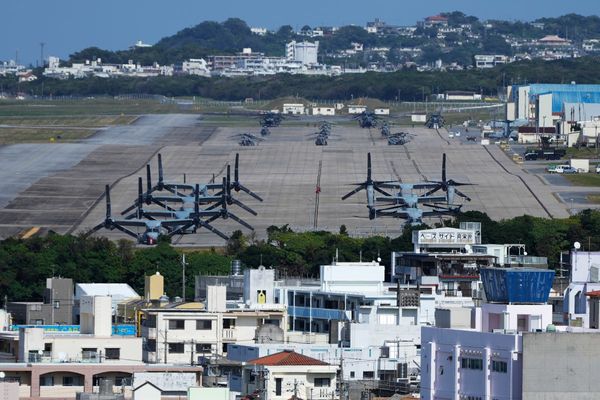
Here are some of the latest images coming in from the Middle East amid growing optimism that the Iran war may be near an end, with a key Pakistani mediator in Tehran and the Trump administration talking up hopes for a deal that would open the strait of Hormuz.
Updated
The European Union is drafting plans to tackle a looming jet fuel supply crunch and maximise refinery output, officials say.
European airlines have warned of jet fuel shortages within weeks as a result of the Iran war, disrupting travel ahead of summer.
Europe is more dependent on jet fuel imports – with some 75% from the Middle East – than for any other transport fuel, Reuters reports.
From next month, the European Commission will introduce EU-wide mapping of refining capacity for oil products and introduce measures “to ensure that existing refining capacity is fully utilised and maintained”, a draft proposal says.
The EU is also working on measures targeting jet fuel supply, but those are still in development, officials familiar with the proposals said. The EC declined to comment on the draft plans, which are due to be published on 22 April.
Jet fuel prices have soared since the blocking of the Strait of Hormuz and European airlines are warning of price hikes, cancellations and grounded planes if the war does not end soon.
Donald Trump said in comments aired on Wednesday that the war with Iran could end soon, telling the world to watch out for an “amazing two days”, while US forces imposing a blockade turned back vessels leaving Iranian ports.
Updated
The US defence secretary and the chair of the military’s joint chiefs of staff will hold a press conference on Thursday morning US time about the US-Israel operation against Iran, the US defence department has said on social media.
Pete Hegseth and Gen Dan Caine would hold the presser on Operation Epic Fury at 8am ET (1200 GMT), it said.
Asian stocks mostly gained while oil prices steadied on Thursday over expectations of an extension of a ceasefire in the Iran war and hopes for more talks between the US and Iran.
Tokyo’s Nikkei 225 jumped 2.4%, while South Korea’s Kospi climbed 2%, Hong Kong’s Hang Seng rose and the Shanghai Composite index was up 0.6%.
China on Thursday reported 5% economic growth for the January-March quarter, an acceleration from the previous quarter, the Associated Press reports
While economists say China has largely shrugged off the initial impacts from the Iran war, some are warning its massive export engine could be hit more significantly in the coming months on slower global economic growth.
Taiwan’s Taiex was trading 0.9% higher, while Australia’s S+P/ASX 200 edged down 0.1%.
Opening summary
Hello and welcome to our live coverage of events in the Middle East.
Donald Trump says the leaders of Israel and Lebanon will hold talks on Thursday, after the countries’ first face-to-face diplomatic negotiations in decades.
“Trying to get a little breathing room between Israel and Lebanon,” the US president posted on Truth Social on Wednesday. “It has been a long time since the two leaders have spoken, like 34 years. It will happen tomorrow.”
Trump did not say who would be involved or give more detail. The Financial Times said a ceasefire could be announced soon, citing Lebanese officials.
Reports earlier said Israeli prime minister Benjamin Netanyahu was weighing a possible truce with Lebanon after pressure from Washington.
Meanwhile, the White House denied reports the US had requested an extension to its ceasefire with Iran, set to expire next week. Talks between them were “productive and ongoing”, press secretary Karoline Leavitt said, and the US “feels good about the prospects of a deal”.
The US also announced it was tightening sanctions against Iran’s oil industry. Oil transport infrastructure would be targeted with sanctions on more than two dozen people, companies and ships that operated within the network of petroleum shipping magnate Mohammad Hossein Shamkhani, the Treasury department said.
In other developments:
Pakistan’s army chief met with Iran’s foreign minister in Tehran on Wednesday in the latest diplomatic move to ease Middle East tensions and arrange a second round of US-Iran negotiations. Trump said earlier that the war was “very close to over”.
Leavitt said a second round of US-Iran talks would “very likely” take place in Islamabad again and that Pakistan was “the only mediator” in the discussions.
Major Wall Street stock indices extended an upward climb on optimism about a US-Iran agreement.
Israel’s security cabinet met to discuss a ceasefire after the Israel-Lebanon talks mediated by the US in Washington on Tuesday. But the Israeli military continues to strike the country, with Netanyahu saying Israel was about to “overwhelm” the southern Lebanese town of Bint Jbeil, calling it a Hezbollah stronghold.
Four Lebanese rescue workers were killed in consecutive Israeli strikes in the southern Lebanon village of Mayfadoun on Wednesday, paramedic groups said. Six others were wounded.
The US military’s Middle East command Centcom said it stopped 10 vessels from sailing out of Iranian ports during the first 48 hours of the US naval blockade. But ship tracking data indicated at least three ships sailing from Iranian ports crossed the strait of Hormuz, though some vessels taking the route later turned back.
The finance ministers of 11 countries including the UK and Japan called for “coordinated emergency support” from the IMF and World Bank to help countries hit by disruptions from the Middle East war.
Updated