Get all your news in one place.
100’s of premium titles.
One app.
Start reading
The Guardian - US
The Guardian - US
World
Adam Fulton (now); Lucy Campbell, Tom Ambrose, Taz Ali and Wendy Frew (earlier)

Cathay Pacific suspends flights to and from Dubai until end of April – as it happened

Closing summary

We are closing this blog but you can continue to follow the latest on our new liveblog here. Thanks for reading.

Here is a summary of the latest developments:

  • Donald Trump has threatened to “massively blow up” the entire South Pars gas field if Iran carries out any more retaliatory attacks on Qatar’s LNG gas facilities. Trump said that “no more attacks will be made by Israel” on the field – unless Iran “decides to attack a very innocent, in this case, Qatar”.

  • The Pentagon “has asked the White House to approve a more than $200bn request to Congress to fund the war in Iran, according to a senior administration official”, the Washington Post reports.

  • The oil price climbed towards $110 a barrel on Wednesday as the mounting threat to the Gulf’s oil and gas infrastructure fuelled concerns of more disruption to global supplies, amid the continuing blockade of the strait of Hormuz.

  • QatarEnergy said “sizeable fires” caused extensive damage at its LNG facilities after Iranian missile attacks in the early hours of Thursday.

  • An attack set a ship ablaze early on Thursday off the UAE coast, authorities said. The United Kingdom Maritime Trade Operations centre said “a vessel has been hit by an unknown projectile, which has resulted in a fire onboard”.

  • French president Emmanuel Macron called for an immediate moratorium on striking civilian infrastructure, and said civilian populations and their needs must be “protected from military escalation”.

  • Three Palestinian women were killed in an Iranian missile attack in the occupied West Bank late on Wednesday, the Palestinian Red Crescent said, in the first deadly Iranian strike there.

  • A man was killed in central Israel in the latest round of Iranian missile fire, medics say. It brings the death roll in Israel from the war to 15.

  • Republicans in the US Senate blocked a measure that aimed to reign in Donald Trump’s power to wage war against Iran without congressional authorisation, winning a 53-47 vote.

Cathay Pacific suspends flights to and from Dubai until end of April

The Hong Kong aviation giant Cathay Pacific has suspended flights to and from Dubai over the war in the Middle East.

“In view of the developing situation in the Middle East, all Cathay Pacific flights to and from Dubai have been cancelled up to and including 30 April 2026,” the company said in a statement, adding that “further changes to our flight schedule may be needed in the coming days”.
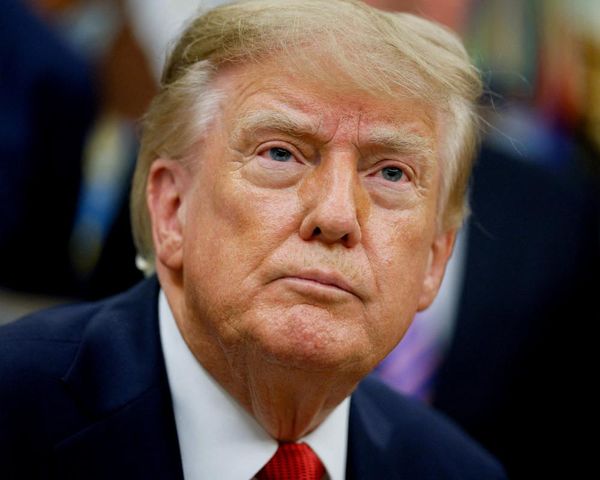
Trump threatens to 'blow up' entire South Pars gas field if Iran attacks Qatari LNG again

Donald Trump has threatened to “massively blow up” the entire South Pars gasfield in Iran if the country carries out any more retaliatory attacks on Qatar’s liquefied natural gas (LNG) facilities.

The US president also said in a post on his Truth Social platform that the US “knew nothing” about Israel’s earlier attack at the South Pars field, and nor did Qatar. He said that “no more attacks will be made by Israel” on the gasfield – unless Iran “decides to attack a very innocent, in this case, Qatar”. Trump added:

In which instance the United States of America, with or without the help or consent of Israel, will massively blow up the entirety of the South Pars Gas Field at an amount of strength and power that Iran has never seen or witnessed before.

Trump added:

I do not want to authorize this level of violence and destruction because of the long term implications that it will have on the future of Iran, but if Qatar’s LNG is again attacked, I will not hesitate to do so.

Qatari state-run energy company QatarEnergy – the world’s largest LNG producer – said earlier that several of its LNG facilities were targeted in missile attacks in the early hours of Thursday, causing “sizeable fires” and extensive damage. And earlier the country’s defence ministry said Iranian missiles had targeted the Ras Laffan Industrial City.

The Israeli strikes on Iran’s largest gasfield on Wednesday prompted the Islamic republic to threaten retaliatory attacks on energy infrastructure across the Gulf region. The South Pars field – shared by Iran and Qatar – is the biggest in the world and Iran’s main source of domestic energy.

Updated

New Zealand PM warns fuel crisis 'could get worse'

New Zealand’s prime minister, Christopher Luxon, has laid out a plan for the country’s response to the energy crisis sparked by the US-Israel war on Iran, while warning the public things “could get worse before they get better”.

Petrol prices have increased roughly NZ40-50 cents a litre, pushing the average price of Unleaded 91 to more than NZ$3 a litre since the conflict began. Meanwhile, some petrol stations have reported running out of petrol as people rush to stock up.

Luxon said New Zealand had roughly 41 days’ worth of fuel stock and that was still sufficient, but the government was preparing for “the worst-case scenario”.

We have sufficient fuel supplies, but even in the unlikely event the ceasefire is announced tomorrow, the effects on global supply chains and fuel supplies won’t be immediately resolved.

Ministers were in talks with fuel companies and countries such as Australia, the UAE and Qatar about alternative fuel supplies and would consider relief for a targeted section of society should the crisis worsen, Luxon said.

The government was also considering whether to move New Zealand up a fuel escalation level alert. It is currently at the lowest level.

New Zealand is particularly exposed to the energy shocks produced by the conflict – and to economic crises generally – with the small, isolated nation highly dependent on global trade and susceptible to disruptions in supply chains and shipping.

Updated

Qatar says 'sizeable fires' after missile attacks on gas sites

QatarEnergy is saying several of its liquefied natural gas (LNG) facilities were targeted in missile attacks in the early hours of Thursday, causing “sizeable fires” and extensive damage.

The state-run energy company said no casualties had been reported and that emergency response teams were deployed immediately to contain the damage.

Qatar’s defence ministry said earlier that Iranian missiles earlier had targeted the Ras Laffan Industrial City. QatarEnergy – the world’s largest LNG producer – said that attack caused “extensive damage” to its Pearl GTL (gas-to-liquids) facility.

Updated

In the US, Republicans in the Senate have blocked a measure that aimed to reign in Donald Trump’s power to wage war against Iran without congressional authorisation.

The 53-47 vote against taking up the measure fell almost completely along party lines on Wednesday, with no movement from earlier this month when Republicans blocked Democrats’ bid to limit Trump’s war-making power in the days after the joint US-Israeli strikes began across Iran.

“We do not know Donald Trump’s goals,” Chuck Schumer, the Democratic leader, said before the vote, urging Republicans to support the effort to force a debate on the war.

We do not know Donald Trump’s timeline. We do not know what victory even looks like in his eyes. Enough is enough.

The full report is here:

‘High and rising’ risk of severe shock to world economy amid Iran war, Australian central bank warns

Conflict in the Middle East could trigger a shock that sends the world economy into a tailspin, the Reserve Bank has warned.

Risks to financial systems rose in recent weeks and an extended disruption to oil and other markets will increase the chance of a major shock, the Reserve Bank of Australia (RBA) has said in its twice-yearly check-up of the Australian financial system.

Oil prices surged to US$110 a barrel this morning after Iran and Israel attacked energy infrastructure. The review was finalised yesterday but said Australians should prepare for “a more shock-prone international environment”.

Australia has a “good degree of resilience” and banks are not heavily invested in the Middle East but international markets’ reaction to a major shock could still force global interest rates up and slash asset value, RBA analysts wrote.

Brad Jones, the RBA’s assistant governor for the financial system, said:

We see international risks as high and rising. In terms of financial risk, volatility has risen sharply … and further shocks could lead to markets becoming somewhat disorderly.

UAE denounces Iranian attacks after Tehran threatens retaliation for gas field strike

The United Arab Emirates early on Thursday denounced Iran’s attacks targeting its Habshan gas facility and Bab field as a “dangerous escalation” amid the escalating war in the Middle East.

Authorities in Abu Dhabi said the gas operations had been shut down after interceptions over the sites.

Iran also attacked gas facilities in Qatar after Israel attacked Iran’s South Pars offshore natural gas field it shares with Qatar.

Qatar’s ministry of defence said Iranian missiles targeted the Ras Laffan Industrial City and caused damage.

Iran said after the strike on its South Pars field that it would respond forcefully to any further attacks on its energy sector.

“If it is repeated again, further attacks on your energy infrastructure and that of your allies will not stop until it is completely destroyed,” the Revolutionary Guards said in a statement carried by Iranian media.

The South Pars field is the largest in the world and Iran’s biggest source of domestic energy in Iran. Peter Beaumont explains here why the attacks on so-called upstream gas production facilities in recent days are a significant escalation in the war and have potentially long-term consequences.

Iran’s threat of further retaliation came after Qatar’s state energy company said a missile strike sparked a fire causing “extensive damage” at its main gas facility, prompting Doha to expel two Iranian diplomats.

Saudi Arabia also said it intercepted drones targeting energy infrastructure in the east, while debris from a ballistic missile landed near a refinery south of Riyadh.
With agencies

Updated

A vessel has been hit near the Hormuz strait by an unknown projectile that caused a fire onboard, the United Kingdom Maritime Trade Operations has said.

The agency said the incident occurred east of Khawr Fakkan, an United Arab Emiratess port in the Gulf of Oman, and that it received the report at 23.00 GMT on Wednesday.

UKMTO said:

Vessels are advised to transit with caution and report any suspicious activity to UKMTO while authorities continue to investigate.

Macron calls for halt of attacks on civilian infrastructure

More on Emmanuel Macron now: the French president said in calling for an immediate moratorium on striking civilian infrastructure that civilian populations and their needs had to be “protected from military escalation”.

Macron posted on social media:

I have just spoken with the Emir of Qatar [Sheikh Tamim bin Hamad al-Thani] and President Trump following the strikes that hit gas production facilities in Iran and Qatar today.

It is in our common interest to implement, without delay, a moratorium on strikes targeting civilian infrastructure, particularly energy and water supply facilities. Civilian populations and their essential needs, as well as the security of energy supplies, must be protected from military escalation.

Updated

Pentagon asks White House for $200bn more to fight Iran war - report

The Pentagon “has asked the White House to approve a more than $200bn request to Congress to fund the war in Iran, according to a senior administration official”, the Washington Post reports.

The newspaper explains:

The funding request is likely to stage a major political battle in Congress, as public support for the effort remains tepid and Democrats have been sharply critical. Republicans have signaled support for the forthcoming supplemental request but haven’t committed to a legislative strategy, or found a clear path to surpass the Senate’s 60-vote threshold.

President Donald Trump campaigned on ending American adventurism abroad and frequently hammered the Biden administration for the amount of money approved to finance the war in Ukraine. By December, Congress had approved roughly $188 billion in spending for the war in Ukraine, according to the U.S. special inspector general for Operation Atlantic Resolve.

As the Post notes, Donald Trump has repeatedly criticised his predecessor for helping Ukraine defend its territory from the full-scale Russian invasion that began in 2022. But Trump has constantly exaggerated or lied about how much the US has spent to help Ukraine deter Russia, offering vastly inflated estimates that could make the cost of his war with Iran seem small by comparison.

Updated

Three dead in first Iranian attack to kill Palestinians in West Bank

Three Palestinian women were killed in an Iranian missile attack in the occupied West Bank late on Wednesday, the Palestinian Red Crescent said, in the first deadly Iranian strike there and the first to kill Palestinians since the start of the US-Israel war with Iran.

A missile struck a hair salon in the town of Beit Awwa, south-west of the city of Hebron, Reuters has cited the Palestinian Authority’s official Wafa news agency reported. Thirteen were wounded, one of them seriously.

The Israeli military said it understood the strike was caused by a cluster munition, a warhead that splits into tiny bomblets that scatter into a disparate area.

The Palestinian Red Crescent reportedly initially confirmed four deaths but the medics then said that one woman remained in critical condition.

Wafa said the salon had been set up in a metal caravan next to a house. It also said missile fragments landed in multiple locations in the West Bank, including in Hebron.

Iran has been launching missiles towards Israel daily amid the war but there have been no reports of it deliberately targeting Israeli-occupied Palestinian territories.

Most Israelis have access to bomb shelters that protect them from cluster munitions and falling debris but virtually no such shelters exist for Palestinians in the West Bank, Reuters said. Many Palestinians rely on either the sound of sirens from Jewish settlements or neighbouring cities in Israel to alert them to rocket volleys.

Updated

French president Emmanuel Macron is reportedly calling for a moratorium on strikes on civilian infrastructure amid the Iran war.

We’ll bring you more on this shortly.

Foreign worker killed in Israel after Iran attack – medics

A man has been killed in central Israel in the latest round of Iranian missile fire, medics say.

It brings the death roll in Israel from the war to 15.

Israel’s Magen David Adom emergency services said on Thursday the victim was a “foreign worker” aged in his 30s and that he was killed in Moshav Adanim, about 20km north-east of Tel Aviv.

“Metal shrapnel was scattered across the scene, and nearby lay a man ... unconscious and suffering from severe shrapnel injuries,” MDA medic Idan Shina said in a statement, cited by the AFP news agency.

The injuries were very severe, and unfortunately we had to pronounce him dead at the scene.

Shortly before the death the Israeli military said it had identified another round of missile fire headed toward the country from Iran and was “operating to intercept the threat”.

  • This is Adam Fulton picking up our live coverage – we’ll keep bringing you the latest updates

Updated

Gabbard won't say if White House claim Iran posed an 'imminent nuclear threat' is true

As my colleagues Joseph Gedeon and George Chidi report, over in the US, Democrats on the Senate intelligence committee pressed Tulsi Gabbard, the director of national intelligence, to explain why her deputy, Joe Kent, said in his resignation letter on Tuesday that “Iran posed no imminent threat to our nation”, which contradicts weeks of statements to the contrary by Donald Trump.

The president and his aides have repeatedly described the threat posed by Iran as imminent to justify the war, although when he announced the start of “major combat operations in Iran” from his Florida beach club on 28 February, Trump declared that it was a mission “to defend the American people by eliminating eminent threats from the Iranian regime”, having apparently misread the word “imminent” on the Teleprompter.

In a carefully worded statement after Kent’s resignation on Tuesday, Gabbard, who made opposition to war with Iran the central plank of her failed run for the presidency in 2020, said that “determining what is and is not an imminent threat” was up to the president, not the intelligence community she oversees. She notably failed to say that the intelligence she had seen supported Trump’s claim that Iran was about to attack the US.

In his questioning of Gabbard, Senator Jon Ossoff, a Georgia Democrat, pointed out that on day 2 of the conflict the White House website called the US attack a “military campaign to eliminate the imminent nuclear threat posed by the Iranian regime”.

“Was it the assessment of the intelligence community that there was an ‘imminent nuclear threat posed by the Iranian regime’, yes or no?” Ossoff asked.

When Gabbard replied, “Senator, the only person who can determine what is and is not an imminent threat is the president,” Ossoff shot back: “False. This is the ‘Worldwide Threats’ hearing, where you present to Congress ‘national intelligence, timely, objective and independent of political considerations’. You’ve stated today that the intelligence community’s assessment is that Iran’s nuclear enrichment program was obliterated and that ‘there had been no efforts since then to try to rebuild their enrichment capability’.”

Gabbard pressed on whether Iran posed an “imminent threat”

“Was it the intelligence community’s assessment,” he continued, “that, nevertheless, despite this obliteration, there was a quote ‘imminent nuclear threat posed by the Iranian regime’? Yes or no.”

“It is not the intelligence community’s responsibility to determine what is and is not an imminent threat,” Gabbard replied.

“No, it is precisely your responsibility to determine what constitutes a threat to the United States. This is the ‘Worldwide Threats’ hearing, where, as you noted in your opening testimony, quote, you ‘represent the IC’s assessment of threats’.”

When Ossoff again repeated the question of whether there was intelligence to support the White House claim Iran posed “imminent nuclear threat”, Gabbard repeated her claim that it was up to the president to say if a threat was imminent.

“You’re evading a question because to provide a candid response to the committee would contradict a statement from the White House,” Ossoff concluded.

Abu Dhabi gas facilities shut down due to falling debris after missiles intercepted

Operations at Abu Dhabi’s Habshan gas facilities have been shut down over two incidents caused by falling debris from the successful interception of missiles, according to the Abu Dhabi media office.

It added that the missiles had been on course for the Habshan gas facility and the Bab oilfield.

Operations at the gas facilities have been suspended, and no injuries have been reported.

Updated

The day so far

  • Qatar’s state-owned oil and gas company reported “extensive damage” caused by fires following Iranian missile attacks on the key industrial city of Ras Laffan. Qatar’s foreign ministry called Tehran’s “brazen” attacks a “direct threat to its national security and the stability of the region” and said it was “pushing the region toward the abyss and drawing in countries that are not parties to this crisis into the circle of conflict”.

  • Doha later expelled two diplomats and their staff as a result of Iran’s repeated attacks on the country, the latest of which targeted Ras Laffan. Its foreign ministry said that if Iran continued to take “hostile” action then Qatar would have to take “additional measures” to protect itself.

  • It came after Iran vowed to retaliate by attacking Gulf energy infrastructure in response to an Israeli strike on its South Pars gas field facilities – the largest in Iran and one of the largest in the world. The strikes on the South Pars gasfield, which Iran shares with Qatar, were widely reported in Israeli media to have been carried out by Israel with the consent of the US. Tehran named several energy facilities across Saudi Arabia, the UAE and Qatar to target in retaliation.

  • Donald Trump supported the strike on Iran’s South Pars gas field to send a message to Tehran about the strait of Hormuz, but didn’t want any further strikes on Iran’s energy infrastructure, according to a report in the Wall Street Journal. But, according to the Journal’s report, the US president could ⁠be open to ​targeting more Iranian energy ​facilities, depending on whether ​Tehran impedes traffic in ⁠the critical waterway.

  • Saudi Arabia said it successfully intercepted four ballistic missiles launched towards Riyadh. Debris fell in various parts of the capital due to the interceptions, the ministry said. No damage or injuries were reported. It also intercepted drones attempting to approach gas facilities in the country’s eastern region, with no damages reported there either.

  • The UAE also intercepted Iranian missiles and drones.

  • The oil price climbed towards $110 a barrel on Wednesday afternoon as the mounting threat to the Gulf’s oil and gas infrastructure fuelled concerns of more disruption to global supplies, amid the continuing blockade of the strait of Hormuz.

Updated

Trump wants no more strikes on Iran's energy sites – report

Donald Trump does not want any ‌further strikes on Iran’s ​energy infrastructure after Israel struck facilities linked to Iran’s South Pars gas field today, the Wall Street Journal reports, citing US officials.

The officials told the Journal that Trump supported that attack as a message to Tehran ‌over its blocking of the strait of Hormuz, but is now against any further attacks.

But, according to the Journal’s report, the US president could ⁠be open to ​targeting more Iranian energy ​facilities, depending on whether ​Tehran impedes traffic in ⁠the critical waterway.

Updated

IDF says it's working to intercept Iranian missiles

The Israel Defense Forces said earlier that it had identified missiles launched from Iran towards Israel this evening.

“Defense systems are operating to intercept the threat,” the IDF said in a statement, adding that those in affected areas would receive instructions on their phones.

Updated

Israel says it's attacking northern Iran 'for first time'

Israel has said it has begun striking targets northern Iran for the first time since the war began on 28 February.

The announcement was made in a brief post on Telegram by the Israel Defense Forces with no further details.

Updated

Qatar expels Iranian diplomats after missile attack on Ras Laffan

Qatar’s foreign ministry has declared its Iranian embassy’s military and security attachés, along with their staff, persona non grata and demanded that they leave Qatar within 24 hours.

It said the decision came as a result of Iran’s repeated attacks on the country, the latest of which targeted Qatar’s key industrial city Ras Laffan.

In the statement, posted on X, the ministry added that if Iran continued to take “hostile” action then Qatar would have to take “additional measures” to protect itself.

The Ministry affirmed that the State of Qatar reserves its right to take all necessary measures to protect its sovereignty and security, in accordance with the provisions of international law.

Updated

Qatar denounces Iran for ‘brazen' targeting of Ras Laffan

Following “brazen” attacks on its Ras Laffan industrial city, the Qatari foreign ministry called Iran’s actions a “direct threat to its national security and the stability of the region”.

The ministry called the attacks a “flagrant violation of the state’s sovereignty, as well as a direct threat to its national security”.

In spite of Qatar’s attempts to distance itself from the war, it said: “The Iranian side continues its escalatory policies that are pushing the region toward the abyss and drawing in countries that are not parties to this crisis into the circle of conflict.”

Qatar “reserves its right to respond”, it added, and will “not hesitate to take all necessary measures to protect its sovereignty, security and the safety of its citizens”.

Separately, Qatar’s defence ministry said that five missiles were launched at the country from Iran throughout Wednesday. Four were intercepted, while the other fell in Ras Laffan, causing the fire that has since been brought under control (see my earlier post).

Updated

Iran’s president says attacks on energy infrastructure could lead to ‘uncontrollable consequences’

Iran’s president, Masoud Pezeshkain, has said on X that he “strongly condemns” Israel’s attacks on Iran’s energy infrastructure, after strikes targeted the South Pars gasfield earlier today.

He wrote:

Such aggressive actions will not achieve anything for the Zionist American enemy and their supporters. Rather, they will complicate the situation further and could lead to uncontrollable consequences, the scope of which could engulf the entire world.

As we’ve been reporting, Iran has been responding with attacks on Gulf countries including Qatar, Bahrain and Saudi Arabia.

Updated

'Extensive damage' reported after missile strike on Qatar's Ras Laffan industrial city

Qatar’s state-owned petroleum company has said missiles struck Ras Laffan industrial city, home to a major oil-processing site and the world’s largest LNG production facility, on Wednesday evening.

“Emergency response teams were deployed immediately to contain the resulting fires, as extensive damage has been caused,” QatarEnergy wrote on X. “All personnel have been accounted for and no casualties have been reported at this time.”

Qatar’s interior ministry also said in an update on social media that the fire had been “preliminarily brought under control” and there had been no injuries.

Updated

Trump to take part in 'dignified transfer' of killed US military personnel

Donald Trump has travelled to Dover, Delaware, where he is set to take part in what’s known in the US military as a “dignified transfer” of military personnel killed overseas.

It will be the second of these the US president has attended since he launched his war on Iran with Israel on 28 February - the first being the 7 March return of six US soldiers who were killed by a retaliatory Iranian drone strike on a base in Kuwait. (On 9 March his vice-president JD Vance and defence secretary Pete Hegseth attended the dignified transfer ceremony for another soldier who died from injuries sustained in a 1 March strike on Prince Sultan air base in Saudi Arabia).

Today’s event mark the return to US soil of the six service members who were killed when their KC-130 refuelling aircraft crashed in western Iraq while supporting so-called Operation Epic Fury. The US military has said the crash was not the result of hostile or friendly fire.

The number of US service members killed in the war now stands at 13.

Updated

'It's not going to last forever': Vance promises lower energy costs as oil prices keep climbing during 'temporary' Iran war

Speaking in Michigan today, vice-president JD Vance acknowledged the soaring price of oil, and the subsequent increase at the fuel pump for most Americans.

Today, Brent crude went up by 4.8% – meaning the cost per barrel sits at $108.42. Meanwhile, the average price for a gallon of gasoline in the US is $3.84 – almost 30% higher than it was a month ago, according to American Automobile Association (AAA).

“We know that people are hurting because of it, and we’re doing everything that we can to ensure that they stay low. This is a temporary war. It’s not going to last for ever,” Vance told the crowd at a manufacturing facility in Auburn Hills, Michigan. “We’re going to take care of business. We’re going to come back home. When that happens, you’re going to see energy prices come back down.”

Updated

Saudi Arabia intercepts four missiles heading towards Riyadh and drone approaching gas facilities

In an update to our earlier post, Saudi Arabia’s defence ministry has said its air defences have successfully intercepted four ballistic missiles launched towards Riyadh.

Debris fell in various parts of the capital due to the interceptions, the ministry said in a brief statement on X. No damage or injuries were reported.

In a separate X update, the ministry said a drone “attempting to approach one of the gas facilities” in the country’s eastern region had been intercepted, with no damages reported there either.

It comes after, as we’ve been reporting, Iranian threats to attack energy infrastructure across the Gulf region in retaliation for Israeli strikes on its largest gasfield, the first targeted attacks on its fossil fuel production since the US and Israel launched their war on Iran.

Updated

Tulsi Gabbard, the director of national intelligence who in 2019 was selling “No War With Iran” T-shirts, told the Senate intelligence committee on Wednesday that US strikes on Iran had been a strategic success.

“I’d like to remind those who are watching what I am briefing here today conveys the intelligence community’s assessment of the threats facing US citizens, our homeland and our interests,” Gabbard told the committee, “not my personal views or opinions”.

Iran’s retaliatory strikes to the US-Israeli campaign have already killed 13 American service members and wounded approximately 200 more, cost taxpayers billions of dollars and scrambled global supply chains for oil, fertilizer and aluminum. This week, when Donald Trump asked allies to help reopen the strait of Hormuz, the call wasn’t answered.

According to the annual global threat assessment report, Iran’s conventional military projection capabilities had been “largely destroyed”, Gabbard said, and Iran’s strategic position “significantly degraded”.

But, the regime appears intact, and since internal protests have been violently suppressed with thousands killed, if it survives, Iran would probably “seek to begin a years-long effort to rebuild its military, missiles and UAV forces”.

Sweden’s foreign minister on Wednesday said that Iran had executed a Swedish citizen, after Iranian authorities announced the first execution of a man convicted of spying since the start of its war against Israel and the United States.

Maria Malmer Stenergard told AFP that she had learnt late Tuesday that the sentence was likely to be carried out.

“We immediately contacted Tehran, of course, and I tried to arrange a meeting with my counterpart to ask him to immediately suspend the execution, but unfortunately, he was unavailable,” she told AFP.

She did not identify the citizen who was executed.

'Murderers' must pay for killing Iran's Larijani, says Khamenei

Iran’s new supreme leader Mojtaba Khamenei said Wednesday in a written message that the killers of security chief Ali Larijani, who died in an Israeli strike, “will have to pay for it”.

“Without a doubt, the assassination of such a figure attests to his importance and to the hatred that the enemies of Islam harbour toward him,” Mojtaba Khamenei said, in a message published on his official Telegram channel on the day of Larijani’s funeral in Tehran.

“Every drop of spilled blood comes at a price, and the criminal murderers of these martyrs will soon have to pay it,” added Mojtaba Khamenei, who has yet to appear in public after taking office following the killing of his father, ex-supreme leader Ali Khamenei at the start of the war.

Saudi Arabia said its air defences were countering ballistic missiles on Wednesday after AFP journalists heard loud explosions echoing over the capital Riyadh as Iran’s Gulf campaign ground on.

“Air defences are dealing with a ballistic threat in Riyadh,” the Saudi defence ministry said, quoting a spokesperson in a statement on X.

Residents also received a phone alert warning that “the area is under hostile aerial threat”.

The Gulf kingdom has been regularly targeted by Iranian missile and drone attacks, including some aimed at its massive energy installations and the capital’s diplomatic quarter.

Iran has threatened to attack energy infrastructure across the Gulf region in retaliation for Israeli strikes on its largest gasfield, marking the first targeted attacks on its fossil fuel production since the war began.

Iran’s Revolutionary Guards have threatened counterstrikes on several energy facilities across Saudi Arabia, the UAE and Qatar “in the coming hours” after state media reports that missiles had targeted its gas facilities at the giant South Pars field, the largest gas reserves in the world.

The strikes on Iran’s South Pars gasfield, which it shares with Qatar, were widely reported in Israeli media to have been carried out by Israel with the consent of the US.

The attack against the heart of Iran’s gas infrastructure marks a key escalation in US and Israeli military operations. The two countries have until now largely spared Iran’s oil and gas sector and helped to keep a lid on the global oil price surge.

The oil price climbed towards $110 a barrel on Wednesday afternoon as the mounting threat to the Gulf’s oil and gas infrastructure fuelled concerns over more disruption to global supplies, amid the continuing blockade of the strait of Hormuz.

Tulsi Gabbard also cited unspecified reports that China, India and other countries have been able to move tankers through the strait of Hormuz but it was not clear how much has been crossed through the channel controlled by Iran.

“There has been some reporting of China, India and other countries being able to move their tankers through the Strait. However, it is unclear the volume or the measure of that,” Gabbard said at a Senate hearing on worldwide threats.

Asked about reports that US intelligence suggests the Iranian regime will likely remain in place “weakened but more hardline”, intelligence chief Tulsi Gabbard says she will not comment on leaked “so-called intelligence”.

She tells the Senate’s intelligence committee that the regime maintains power in Iran “even though they are vastly degraded”.

Asked if the killing of the supreme leader made him a “martyr”, Gabbard added that the Iranians are using his death as a “call to arms”.

The Israeli military told AFP on Wednesday that “debris” had hit Ben Gurion Airport following Iranian missile fire, without specifying when the incident had occurred.

Israeli media reported that private planes parked at the international airport near Tel Aviv had sustained damage.

The army lifted the censorship order regarding the incident on Wednesday but did not authorise the disclosure of the date.

UAE condemns targeting of South Pars gas field, after Iran blames US and Israel

The UAE condemned the targeting on Wednesday of Iranian facilities in a gas field shared with Qatar, calling the attack attributed by Iran to the US and Israel a “dangerous escalation” in a rare rebuke.

“The United Arab Emirates affirmed that targeting energy facilities linked to the South Pars gas field in the Islamic Republic of Iran, which is an extension of the North Field in the sisterly State of Qatar, constitutes a dangerous escalation,” the foreign ministry said in a statement.

“Targeting energy infrastructure poses a direct threat to global energy security... It also entails serious environmental repercussions and exposes civilians, maritime security, and vital civilian and industrial facilities to direct risks,” it added.

Israel and Hezbollah are engaged in intense ground clashes in at least three strategic areas in south Lebanon as Israel continues to push on with its ground invasion of its neighbour, according to a Lebanese security source and residents of the affected towns.

Much of the fighting was concentrated around the strategic hilltop city of Khiam, with the Israel Defense Forces carrying out an air and artillery campaign against Hezbollah fighters dug into the city. Fighting escalated there after days of clashes, with a Hezbollah spokesperson acknowledging there were “heightened clashes” on the eastern and northern outskirts of the city.

As fighting continued in Khiam, Israeli troops attempted to push into border towns in the central and western sectors of south Lebanon. A resident of the Aita al-Chaab border village said fighting was intense between Israeli soldiers and Hezbollah fighters there.

A Lebanese security source said that the village was one of a number of border towns that was the site of heavy fighting as Israel tried to infiltrate southern Lebanon through a number of points along the shared border. There, they had been met with resistance by members of Hezbollah.

The fighting came as Israel amassed troops along the border, bringing four brigades and columns of tanks ahead of an expanded ground invasion of south Lebanon. The Israeli military said that already it had started a “limited ground operation,” as the political echelon discussed expanding the campaign.

The war was triggered when Hezbollah launched rockets at Israel on 2 March. Israel quickly launched a military operation on Lebanon with the goal of completely eliminating Hezbollah. Hezbollah styled the war as one of survival for Lebanon, saying it was defending the country from the near-daily Israeli airstrikes on the country since the November 2024 ceasefire between the two parties. Outside Hezbollah’s constituency, the move to drag Lebanon into a war was deeply unpopular.

The latest hostilities are a contest between Israel’s airpower and Hezbollah’s guerrilla fighters. Experts said the ground fighting in Lebanon was now centred on strategic axes, in particular Khiam, which could determine Hezbollah’s ability to fight off Israel’s invasion.

Iran made no effort to rebuild uranium enrichment after its capabilities were destroyed in a June 2025 US-Israeli attack, the US intelligence chief testified Wednesday, contradicting president Donald Trump’s justifications for his ongoing war.

“As a result of Operation Midnight Hammer, Iran’s nuclear enrichment program was obliterated. There has been no efforts since then to try to rebuild their enrichment capability,” Tulsi Gabbard, the director of national intelligence, said in prepared testimony to the Senate.

Gabbard: Iran government 'intact' despite heavy blows from US-Israeli bombing

Tulsi Gabbard, the US director of national intelligence, said Iran’s government has suffered heavy blows in the US-Israeli military campaign but that it remains “intact”.

The US intelligence community “assesses the regime in Iran to be intact but largely degraded due to attacks on its leadership and military capabilities,” she told a US Senate hearing.

She said that if Iran’s leadership survived the war it would begin a years-long effort to rebuild its missile and drone programmes.

Israel strike on Iranian gas field coordinated with US – report

Israel’s strike against Iran’s South Pars gas field was coordinated with and approved by the Trump administration, the American news website Axios reported, citing two senior Israeli officials.

The report says a US defence official also confirmed the claim.

The offshore gas field in the Persian Gulf, which Iran shares with Qatar, is the largest such facility in the world. Qatar’s foreign ministry spokesman, Majed Al Ansari, described the targeting of the field — an extension of Qatar’s North Field — as a “dangerous and irresponsible step”.

Iran's president confirms intelligence minister Esmail Khatib killed

Iran’s president, Masoud Pezeshkian, confirmed the country’s intelligence minister, Esmail Khatib, had been killed.

Israeli defence minister, Israel Katz, said earlier today that Khatib was killed in a strike overnight.

“The cowardly assassination of my dear colleagues Esmail Khatib, Ali Larijani, and Aziz Nasirzadeh, along with some of their family members and accompanying team, has left us heartbroken,” Pezeshkian said in a post on X, mentioning the secretary of Iran’s supreme national security council and defence minister who were also killed in previous Israeli attacks.

Updated

Reuters news agency quoted a senior Iraqi official as saying Iranian gas flows to Iraq were suspended after an attack on Iran’s South Pars gas field.

Iran supplies between a third and 40% of Iraq’s gas and power needs, according to the news agency.

Qatar condemns Israel for attack on Iran’s South Pars natural gas field

Majed Al-Ansari, adviser to the Qatari prime minister and spokesperson for the foreign ministry, has blamed Israel for the reported strikes on facilities linked to Iran’s South Pars natural gas field, which Doha shares with Tehran.

He described it as “a dangerous and irresponsible step” that threatens global energy security.

In a statement posted on X, he said:

The Israeli targeting of facilities linked to Iran’s South Pars field, an extension of Qatar’s North Field, is a dangerous & irresponsible step amid the current military escalation in the region.

Targeting energy infrastructure constitutes a threat to global energy security, as well as to the peoples of the region & its environment.

We reiterate, as we have repeatedly emphasised, the necessity of avoiding the targeting of vital facilities. We call on all parties to exercise restraint, adhere to international law, & work toward de-escalation in a manner that preserves the security & stability of the region.

Thousands of Iranians are attending a funeral ceremony held for Iran’s supreme national security council secretary Ali Larijani and Basij commander Gholam Reza Soleimani in Tehran.

Large crowds are at the ceremony, which also honoured 84 Iranian navy personnel who lost their lives in the US-Israeli attacks.

Here are some images:

Updated

Russia on Wednesday condemned the killing of Iranian security chief Ali Larijani, after ally Tehran vowed retaliation for his death in an Israeli airstrike.

Larijani had met Russian president Vladimir Putin in the Kremlin in January, at a time when US navy ships were heading towards Iran ahead of the US-Israeli air campaign launched at the end of February.

“We firmly condemn actions aimed at harming the health and, even more, the killing of the leadership of sovereign and independent Iran. We condemn such actions,” Kremlin spokesman Dmitry Peskov told reporters in a daily briefing.

Moscow is a close ally of Iran and has condemned the US and Israeli attacks, which Tehran has responded to with a barrage of missile and drone strikes on US allies across the Gulf.

Iran’s revolutionary guards issued evacuation warnings on Wednesday for several oil facilities across Saudi Arabia, UAE and Qatar, Iranian state media reported.

It comes as Qatar said that Israel’s targeting of an Iran gas facility was “dangerous and irresponsible”.

Summary of developments so far

  • Israel has claimed Iran’s intelligence minister, Esmail Khatib, was killed in a strike overnight. There has been no comment from Iran on Khatib’s reported assassination but it would be the latest in a string of Israeli strikes that have killed senior Iranian leaders.

  • The Israeli defence minister, Israel Katz, said the Israeli prime minister, Benjamin Netanyahu, had authorised the military “to assassinate any senior Iranian official ... without the need for additional approval”. He added that “significant surprises” are expected today as the “intensity of the strikes in Iran is increasing”.

  • It comes a day after Iran confirmed the deaths of its security chief, Ali Larijani, and the Islamic Revolutionary Guard Corps’ (IRGC) Basij paramilitary force commander Gholamreza Soleimani. Iranian media reported that a funeral procession for both men will take place today in Tehran.

  • At least 12 people were killed in Israeli strikes in central Beirut, according to the Lebanese health ministry. News agencies reported four airstrikes over an eight-hour period this morning in a densely populated area within walking distance of the city centre and headquarters of the Lebanese government. The Israeli military said it had completed an overnight wave of strikes targeting Hezbollah infrastructure.

  • The Israeli military said it will begin attacking bridges across the Litani river in southern Lebanon as it once again ordered people to flee north. An Israel Defense Forces (IDF) spokesperson said the military was carrying out the bombing to prevent Hezbollah from moving reinforcements and combat equipment to areas where Israeli forces are operating.

  • Iran launched an attack on an airbase in the UAE where Australian soldiers are stationed, the Australian prime minister, Anthony Albanese, said. An Iranian projectile hit a road just outside the Al Minhad base, which hosts more than 100 Australian military personnel. Albanese confirmed that no Australian personnel were injured.

  • Iran’s foreign minister Abbas Araghchi said the global repercussions of the Middle East war “will hit all”, suggesting more western officials should push back against the conflict.

  • In an interview with Al Jazeera, Araghchi also said that Iran’s stance against the development of nuclear weapons would not significantly change.

US-Israeli strikes hit Iranian gas facility in Bushehr province - reports

Iranian state media reported that US and Israeli strikes have hit Iran’s offshore South Pars natural gas field in the southern Bushehr province.

South Pars, the world’s largest natural gas field, is shared between Iran and Qatar in the Persian Gulf.

It was not immediately clear if Israel or the US had carried out the attack and neither have commented on the reported strikes. If confirmed it would mark a significant escalation of US and Israeli attacks against Iranian energy infrastructure.

The UAE has intercepted 327 ballistic missiles, 15 cruise missiles and nearly 1,700 drones from Iran since the war began, the country’s defence ministry said.

The attacks have killed eight people, including two members of the armed forces and six foreign nationals, the ministry added. A further 158 people of various nationalities have been injured.

The ministry said it had intercepted 13 ballistic missile and 27 drone attacks just today.

‘We want change but not like this’: Iranians describe daily life under air attack

A picture essay by the Guardian’s Stefanie Glinski and photographer Mohammad Mohsenifar illustrates the daily struggles of Iranians in Tehran who are trying to stay safe from the bombing as the war stretches into a third week.

Click on the link below to read their stories:

Updated

US president Donald Trump has issued a short statement on his Truth Social app, apparently musing what would happen to the strait of Hormuz if the US “finished off what’s left” of Iran. He suggested it would get “non-responsive allies”, presumably in Nato, “in gear and fast”.

European countries including the UK have pushed back on Trump’s demands to help reopen the strait of Hormuz by force after Iran shut down the majority of shipping through the critical trade route.

Trump wrote:

I wonder what would happen if we “finished off” what’s left of the Iranian Terror State, and let the Countries that use it, we don’t, be responsible for the so called “Straight?” That would get some of our non-responsive “Allies” in gear, and fast!!!

Updated

What we know about Esmail Khatib

As of today, Esmail Khatib, allegedly killed by Israel in an overnight strike, served as Iran’s intelligence minister, having been appointed in August 2021 by president Ebrahim Raisi. A cleric with deep roots in the Islamic Republic’s security apparatus, his career spanned roles within the Islamic Revolutionary Guard Corps (IRGC) and the judiciary, and he was sanctioned by the US treasury in 2022 over alleged cyber operations targeting Washington and its allies.

According to Israeli sources reported by national media, he was close to the new supreme leader Mojtaba Khamenei, the second son of the late Iranian supreme leader Ayatollah Ali Khamenei.

The Israeli military said the intelligence ministry led by Khatib was “the Iranian terrorist regime’s primary intelligence organisation, which also played a key role in supporting the regime’s repression and terrorist activities”.

The ministry “possesses advanced intelligence capabilities, overseeing surveillance, espionage, and the execution of covert operations worldwide, particularly against the State of Israel and Iranian citizens”, the IDF said.

Khatib’s reported killing removes yet another pivotal figure from the core of Iran’s political and security establishment at a moment of acute crisis, following the deaths of Ali Larijani — a linchpin of the system and the most senior figure to be killed since Ali Khamenei — and Basij commander Gholamreza Soleimani, along with other senior paramilitary figures.

The Israel Defense Forces (IDF) said the Iranian intelligence minister, Esmaeil Khatib, who was apparently assassinated in an Israeli strike this morning, oversaw “surveillance, espionage, and the execution of covert operations worldwide, particularly against the state of Israel and Iranian citizens”.

He played a significant role in the brutal crackdown on the recent anti-government protests in Iran, the IDF added in a statement posted on X.

Khatib is one of “dozens of senior commanders” in Iran “who were eliminated throughout the operation”, the IDF said

Updated

The Israeli military said it will soon begin attacking bridges across the Litani river in southern Lebanon as it once again ordered people to flee north.

Avichai Adraee, the Israeli army’s Arabic-language spokesperson, said the Israel Defense Forces (IDF) was carrying out the bombing to prevent Hezbollah from moving reinforcements and combat equipment to areas where Israeli forces are operating.

“To prevent the transfer of reinforcements and weapons, the IDF intends to attack crossings on the river,” he posted on X.

He repeated an earlier warning for people in the south of Lebanon to move north of the Zahrani river, several miles north of the Litani.

Updated

The Hezbollah-affiliated TV station Al Manar said the director of its political programmes was killed alongside his wife in an Israeli strike on central Beirut this morning.

In a statement on its website, the channel said Mohammad Shari and his wife were killed in the Israeli attack on Beirut’s Zuqaq al-Blat neighbourhood.

The Lebanese health ministry said earlier that at least 12 people were killed in the strike with a further 41 people wounded.

Iran's intelligence minister Esmail Khatib killed in strike, Israel defence minister says

The Israeli defence minister, Israel Katz, has claimed that Iran’s intelligence minister, Esmail Khatib, was killed in a strike overnight.

“On this day, significant surprises are expected across all arenas that will escalate the war we are conducting against Iran and Hezbollah in Lebanon,” Katz said during a briefing with military officials, according to Israeli media.

“The intensity of the strikes in Iran is increasing. The Iranian intelligence minister Khatib was also eliminated overnight.”

He added that the Israeli prime minister, Benjamin Netanyahu, had authorised the military “to assassinate any senior Iranian official ... without the need for additional approval”.

It comes a day after Iran confirmed the deaths of its security chief, Ali Larijani, and Basij force commander Gholamreza Soleimani.

There was no immediate comment from Iran on Khatib’s reported assassination.

Updated

Shooting, honking and screaming: This was the sound of a desperate mass exodus on Tuesday night, as Israel placed the entire southern Lebanese city of Tyre under a displacement order. Residents knew what came next: planes and bombs and drones and missiles.

The Israeli military spokesperson gave clear orders. The entire city was to leave north of the Zahrani river more than 11 miles away ahead of what the spokesperson said would be strikes on Hezbollah military installations.

On the ground, the orders were not so straightforward. Panicked families hoisting suitcases collided into each other in the corridors in a hotel. “Are you leaving? No, why?” One wide-eyed woman asked another, a child in one hand, a bag in the other. A column of cars crammed into the narrow streets of the Christian quarter – the only part of the city to be spared from the order.

Others, displaced twice before in just two weeks, sat watching the chaos without moving, exhausted from running. The war in Lebanon was becoming more brutal. Israeli strikes had killed more than 900 people and wounded more than 2,200.

As the minutes ticked by, the window to make a decision narrowed. The dull thud of Israeli airstrikes in the distance and the Iranian missiles that streaked cherry-red overhead was a reminder that time was running out.

Numbers with random country codes started to call the phones of Tyre’s residents, telling them to leave.

“You are near Hezbollah facilities. Be careful, being south of the Zahrani river puts your life in danger,” a robotic voice repeated over the phone of a resident, calling from a Romanian number.

Tyre was the latest city to be put under an Israeli displacement order – already up to 13% of the territory of Lebanon had been ordered a no-go zone by Israel. More than a million people have been displaced by Israeli bombings and displacement orders.

The city is one of the largest in southern Lebanon, with about 200,000 residents in the greater metropolitan area. It is also home to ancient ruins, with roman columns that have remained standing through two wars, and it has been a refuge for people displaced from areas farther south.

Even before the order in Tyre, airstrikes hit the coast and mountains which ringed the port city throughout the day as people picked their way through the city’s rubble-strewn streets. At night, families ran out of their homes to watch the outgoing rockets from Hezbollah, waiting to see the night sky light up as Israeli interceptors rose up to meet them.

On Tuesday night, Hezbollah’s usual volleys were more intense than usual – 40 rockets and a swarm of drones were launched towards Israel. It was one of the most intense since Hezbollah struck Israel on 2 March, kicking off Israel’s military campaign.

Nato will deploy a new US Patriot missile defence system at Incirlik airbase in the southern Turkish province of Adana, Turkey’s defence ministry said.

“Another Patriot system… is being deployed in Adana, in addition to the existing Spanish Patriot system stationed there,” a ministry official said at a press briefing today.

The official said a third ballistic missile fired from neighbouring Iran entered Turkish airspace last Friday before it was shot down by Nato air and missile defence systems.

Video: moment building in central Beirut collapses after Israeli strike

Footage shows a multistorey building collapsing in the Bashoura neighbourhood after being hit by missiles this morning.

The Israeli military had issued a warning at 4am local time to evacuate the building and nearby area.

It was one of four Israeli strikes to hit central Beirut this morning. The Israeli military said in a statement that it had completed an overnight wave of strikes targeting Hezbollah infrastructure.

Israeli strikes in central Beirut kill at least 12 people, Lebanese health ministry says

Israeli strikes on central Beirut this morning have killed at least 12 people, the Lebanese health ministry said.

A further 41 people were wounded in the attack on Beirut’s Zuqaq al-Blat neighbourhood, the ministry added. It was the second Israeli strike on the densely populated area after a building in Bashoura, also in central Beirut, was struck some hours earlier.

The airstrikes were within walking distance of the city centre and the headquarters of the Lebanese government, according to Reuters. The news agency reported that there were four airstrikes over an eight-hour period, between 1.30am and 8am local time, with the Israeli military issuing a warning on social media before one of the attacks but not the other three.

Updated

Iranian state media has reported that the funerals for security chief Ali Larijani as well as Gholamreza Soleimani, head of the Islamic Revolutionary Guard Corps’ (IRGC) Basij paramilitary force, will be held in Tehran today.

Both men were killed in Israeli air strikes, leading to retaliatory attacks against Israel this morning that killed at least two people.

The Israeli military has repeated its sweeping evacuation order for southern Lebanon, extending more than 25 miles from the Israeli border.

Avichai Adraee, the Israeli army’s Arabic-language spokesperson, ordered people to head north of the Zahrani river this morning before the Israel Defense Forces (IDF) began a bombing campaign against what he said were Hezbollah targets.

“The strikes are ongoing as the IDF is operating with considerable force in the area,” he posted on X. “Therefore, for your safety, we reiterate our call for you to evacuate your homes immediately and head north of the Zahrani river.”

The order, first issued on Thursday and repeated again yesterday, covers major Lebanese cities, including Nabatieh, and dozens of villages. The Israeli military has already issued displacement orders for people south of the Litani river and Beirut’s southern suburbs. Nearly a million people – roughly 20% of the Lebanese population - have been internally displaced since the fighting began. Lebanese authorities say more than 900 people have been killed by Israeli attacks.

Iranian strikes hit near Australian airbase in UAE, Albanese confirms

Iran launched an attack on an airbase in the UAE where Australian soldiers are stationed, causing a fire that damaged medical and accommodation facilities, the Australian prime minister, Anthony Albanese, said.

An Iranian projectile hit a road just outside the Al Minhad base, which hosts more than 100 Australian military personnel.

Albanese confirmed that no Australian personnel were injured.

It was not clear if the projectile was a missile or drone strike, but Albanese said it started a fire that caused “minor damage” to an accommodation block and medical facility.

He could not confirm if Iran directly targeted the Al Minhad base while maintaining Australia was not at war.

“The Iranian regime is engaging in random attacks right across the region. We know that is the case,” he said.

It is the second time that the base has been targeted in recent weeks, with an Iranian drone strike hitting the facility in the first few days of the conflict.

Dan Jervis-Bardy, chief political correspondent for Guardian Australia, reports:

We have pictures from the newswires of the Israeli strikes on the Bashoura neighbourhood in central Beirut this morning. Most of Israel’s attacks have so far focused on the southern suburbs of the capital and southern areas of Lebanon, but local authorities told the AP news agency that the strikes against central Beirut have destroyed the illusion of safe areas in the city.

In a warning to residents at just before 4am local time in Beirut (2am GMT), Avichai Adraee, the Israeli army’s Arabic-language spokesperson, shared a map on X marking the building that was about to be hit by the Israel Defense Forces (IDF).

“To everyone present in the building marked in red on the attached map and the adjacent buildings: You are located near a facility belonging to the terrorist group Hezbollah, which the IDF will be targeting,” he said.

“For your safety and the safety of your families, you must immediately evacuate the marked building and the adjacent buildings and move at least 300 metres away from them.”

Updated

It was yet another heavy night of Iranian missiles and drones being launched over the United Arab Emirates, as the onslaught on the Gulf shows no sign of relenting.

In Dubai, once seen as a regional safe haven, several loud booms rang out over its popular marine area this morning. Six military helicopters were also seen flying low over the bay.

Alerts on Dubai resident’s phones went off throughout the night and into this morning, warning them of the risk of missiles and drones and to seek shelter away from windows and open areas.

Footage sent to Al Jazeera showed missiles and drones being intercepted in Dubai overnight, with fiery debris raining down on the city’s international convention centre.

In a statement this morning, the UAE’s ministry of defence confirmed that “the sounds heard in scattered areas of the country are the result of air defence systems intercepting ballistic missiles, as well as fighter jets intercepting drones and loitering munitions”. They said in a follow-up statement that all air interception operations had been successful.

While tens of thousands of residents and tourists fled Dubai as the conflict broke out, many people have stayed behind. The city’s beaches, bars and restaurants have begun filling up again, as Dubai’s rulers have tried to maintain a sense of safety and security in the city.

However, the nightly missile alarms and booms from drone interceptors are a stark reminder that, as the Middle East war rages on, Dubai and the rest of the Gulf remains on the frontlines.

Iran’s stance on nuclear weapons won’t significantly change, says FM

Iran’s stance against the development of nuclear weapons won’t significantly change, foreign minister Abbas Aragchi told Al Jazeera, in remarks relayed by Iranian media on Wednesday, cautioning that the new supreme leader is yet to publicly express his view on the matter.

Former supreme leader Ayatollah Ali Khamenei, who was killed early in the US-Israeli war against Iran, opposed the development of weapons of mass destruction in a fatwa, or religious edict, issued in the early 2000s.

Western countries, including the US and Israel, have for years accused Tehran of seeking nuclear weapons, while Iranian authorities have said their nuclear programme is solely for civilian purposes.

Aragchi said fatwas depend on the Islamic jurist issuing them and added he was not yet in a position to judge the jurisprudential or political views of Mojtaba Khamenei, Iran’s new supreme leader.

Interim summary

Hello and welcome to our live coverage of events in the Middle East.

If you are just joining us, here is a quick recap of the latest developments:

  • Iran’s foreign minister Abbas Araghchi said the global repercussions of the Middle East war “will hit all”, suggesting more western officials should push back against the conflict.

  • In an interview with Al Jazeera, Araghchi also said that Iran’s stance against the development of nuclear weapons would not significantly change.

  • His comments came after the Iranian army vowed revenge for the killing of security chief Ali Larijani in an Israeli airstrike, with Iran’s army chief threatening to launch a “decisive and regrettable” retaliation.

  • Donald Trump continued to lash out at Nato allies, claiming “we don’t need” their help in the Iran war after pressuring them to help the US secure the strait of Hormuz.

  • The US military said it targeted sites along Iran’s coastline near the strait of Hormuz because Iranian anti-ship missiles posed a risk to international shipping there. US Central Command said US forces successfully employed “multiple 5,000-pound deep penetrator munitions” in the strikes.

  • The International Maritime Organization will begin an extraordinary session today to discuss establishing “a safe maritime corridor” to allow the safe evacuation of tens of thousands of seafarers and thousands of ships stranded in the Persian Gulf.

  • An Iranian missile barrage killed two people in Ramat Gan, near Tel Aviv, and Israel’s national railway company said shrapnel had disrupted train services.

  • In Lebanon, Israeli airstrikes have targeted central Beirut, with the Israeli military issuing a statement urging residents to evacuate ahead of the first attack targeting Iran-backed militant group Hezbollah.

  • Iran has confirmed the death of the Basij militia commander Gholamreza Soleimani, after Israel earlier claimed its military assassinated him. It marks the highest level assassination in the war since joint US-Israeli strikes killed the former supreme leader Ali Khamenei on 28 February.

  • A projectile hit the premises of Iran’s Bushehr nuclear power plant on Tuesday night. But no damage to the plant or injuries to staff were reported, Iran told the UN nuclear watchdog International Atomic Energy Agency.

Second Israeli strike hits central Beirut, in Zuqaq al-Blat neighbourhood

A new Israeli strike has hit central Beirut’s Zuqaq al-Blat neighbourhood, state media reported, the second on the densely populated area since the early morning without prior warning.

A blast was heard throughout the capital, and AFPTV’s live broadcast showed plumes of smoke rising from the area as the war between Hezbollah and Israel continued.

As we posted earlier, a building in Bashoura, also in central Beirut, was struck some hours earlier after an Israeli warning.

In a quick update on an earlier post, Iran and Russia both allege a projectile struck the grounds of the Bushehr nuclear power plant in the Islamic Republic, raising the specter of a radiological incident in Tehran’s war with Israel and the United States.

Neither Iran nor Russia say there was any release of nuclear material in the incident Tuesday, but it underlines a longtime worry of Iran’s neighbours – that the power plant on the shores of the Persian Gulf could be stricken by either an attack or an earthquake.

The plant and Iran’s wider nuclear program remains a reason US President Donald Trump says he started the war alongside Israel against Iran.

Russia’s state-run Tass news agency quoted Rosatom CEO Alexey Likhachev late on Tuesday saying there were no casualties and that the strike hit an area adjacent to the metrology service building at the Bushehr plant, and close to to the operating power unit.

The Atomic Energy Organization of Iran later issued a statement saying “no financial, technical, or human damage occurred and no part of the plant was harmed”, while the The International Atomic Energy Agency said it was told about the strike by Iran but understood there was no damage or casualties.

It unclear what the “projectile” was, and the US military’s Central Command, which is in charge of forces launching airstrikes across southern Iran, did not immediately respond to Associated Press’s request for comment.

International shipping regulator to discuss possible 'safe maritime corridor' for stranded ships, seafarers

The International Maritime Organization will begin an extraordinary session today to discuss shipping, including establishing “a safe maritime corridor to allow the safe evacuation of seafarers and ships stranded in the Persian Gulf”.

The meeting of the London-based UN agency – responsible for regulating international shipping safety – comes as fears grow over the fate of thousands of ships and seafarers stranded by the war. Iran’s retaliation to Israeli-US strikes has crippled commercial shipping in or near the strait of Hormuz.

Although, as we noted in an earlier, post Iran is still managing to export millions of barrels of oil.

An effective Iranian blockade of the strait has dramatically spiked oil prices, spooked markets, and left about 20,000 seafarers stranded on approximately 3,200 vessels west of the strait, according to the IMO.

At least 21 ships have been hit, targeted or have reported attacks since the start of the conflict, according to an AFP tally based on data from the UK Maritime Trade Operations, the IMO and Iraqi and Iranian authorities.

Iran is still exporting millions of barrels of oil, with about 90 ships, including oil tankers, having crossed the strait of Hormuz since the beginning of the war with Iran, according to maritime and trade data platforms reports.

This is despite Iran saying it had closed the vital waterway to vessels from the US and its allies.

Associated Press reports that many of the ships that have passed through the strait are so-called “dark” transits evading western sanctions that likely have ties with Iran. More recently, vessels with ties to India and Pakistan have also successfully crossed the strait as governments stepped up negotiations.

Israeli strikes targeting central Beirut – far from the city’s southern suburbs, for which the army issued evacuation notices early in the war with Hezbollah – have become increasingly frequent in recent days, with or without prior warning.

The images coming in overnight show smoke still rising from the rubble of collapsed buildings and firefighters and rescuers at work amid the debris.

Qatar’s defence ministry said it intercepted a missile attack today as blasts were heard in Doha.

“Armed forces intercepted missile attack which targeted State of Qatar,” the Ministry of Defence said in a statement, released shortly after an AFP journalist in the capital heard several blasts.

Updating our earlier post about an Iranian missile barrage that killed two people in Ramat Gan, near Tel Aviv, Israel’s national railway company said shrapnel had also disrupted train services.

Authorities reported that falling munitions had hit multiple sites in central Israel in the overnight barrage that triggered air raid sirens across the area, after another day of heavy Israeli bombardments in Iran and Lebanon.

Police spokesperson Dean Elsdunne said that, according to an initial assessment of the deadly impact, a residential building was hit by a cluster bomb in Ramat Gan. The munition “collapsed the roof in on an elderly couple that were in their room. Unfortunately, this couple did not go to the safe room when the alarm sounded, and as a result, we have this unfortunate tragedy,” Elsdunne said.

The latest deaths took the toll from missile attacks on Israel since the start of the Middle East war late last month to 14 people.

Global air travel remains severely disrupted after the war in Iran forced the closure of important Middle Eastern hubs including Dubai, Doha and Abu Dhabi, stranding tens of thousands of passengers.

Greece’s largest carrier is latest to announce cancellations: flights to Tel Aviv, Beirut and Amman have been cancelled until 22 April, and to Erbil and Baghdad until 24 May. Flights to Dubai were cancelled until 19 April and to Riyadh until 18 April.

Other international carriers suspending flights to Middle Eastern destinations including Tel Aviv and Dubai are Air Canada, Air France KLM and Cathay Pacific, in some cases through to May.

Israeli airstrike hits Beirut’s Bashoura neighbourhood

An Israeli airstrike has hit Beirut’s Bashoura neighbourhood, according to reports from Reuters and AFP, with a loud explosion heard in the area.

The strike came after the Israeli military issued a statement urging the evacuation of a building in the central Beirut neighbourhood ahead of the attack targeting Iran-backed militant group Hezbollah.

The residential and commercial area has become a target of Israeli airstrikes this month.

The war on Iran has not delayed shipments of weapons to Taiwan or changed US policy toward the island, officials from President Donald Trump’s administration told members of Congress on Tuesday, despite the demands of the intense air campaign.

“Have we delayed moving things to Taiwan? We haven’t,” Stanley Brown, principal deputy assistant secretary of state for Political-Military Affairs, told a House of Representatives Foreign Affairs Committee hearing.

The US and Israel began airstrikes against Iran on 28 February, a campaign that has raised concerns among some US officials that the US defense industry would be unable to keep up with demand and could be forced to slow shipments to buyers such as Taiwan, which faces steadily rising military pressure from China.

There was already a backlog of US arms shipments to Taiwan before the Iran war started. Brown said the administration was looking at ways to expedite shipments, without providing specifics.

Speaking at the same hearing, Director of the Defense Security cooperation Agency Michael Miller said in 2023 he signed a directive to prioritize Taiwan above other buyers that may be in the queue for competing weapons purchases.

“That remains standing guidance. So, in the matter of whether there was a competition between provision of Harpoons to Saudi Arabia or to Taiwan, Taiwan would take priority,” he added, referring to the anti-ship missile.

Iran foreign minister says global repercussions of the war 'will hit all'

Iran’s foreign minister said today that the global repercussions of the Middle East war “will hit all”, suggesting more western officials should push back against the conflict.

“[A] wave of global repercussions has only begun and will hit all – regardless of wealth, faith, or race,” Iranian Foreign Minister Abbas Araghchi posted on X, accompanied by a copy of the US National Counterterrorism Center director Joe Kent’s resignation on Tuesday.

In his resignation letter, Kent said he could not “in good conscience” support the ongoing war in Iran,” because “Iran posed no imminent threat to our nation”.

Abbas Araghchi said there was a “rising number of voices – (including) European and US officials” exclaiming that the war on Iran was unjust. “More members of the international community should follow suit,” his post said.

Updated

Lebanon said Israeli strikes on central Beirut early Wednesday without warning killed at least six people, as Israel’s military warned it would strike a third district in the capital.

Lebanon was drawn into the Middle East war on 2 March when Iran-backed militant group Hezbollah launched rockets towards Israel in response to US-Israeli strikes that killed Iranian supreme leader Ayatollah Ali Khamenei.

Israel has responded with intense strikes in multiple Lebanese regions and ground operations in the south, and has hit central Beirut several times, with and without warning.

Lebanon’s official National News Agency (NNA) said a strike in the early hours of Wednesday hit an apartment in the central Zuqaq al-Blat neighbourhood, a densely populated area close to the government’s headquarters and several embassies.

Welcome summary

Hello and welcome to our continuing live coverage of the US-Israel war on Iran and the broader crisis in the region, and global economy.

Here are the latest developments:

  • The Iranian army has vowed revenge for the killing of security chief Ali Larijani in an Israeli airstrike, with Iran’s army chief threatening to launch a “decisive and regrettable” retaliation.

  • Iran also confirmed the death of the Basij militia commander Gholamreza Soleimani, after Israel earlier claimed its military assassinated him. It marks the highest level assassination in the war since joint US-Israeli strikes killed the former supreme leader Ali Khamenei on 28 February.

  • The Israeli military called on residents of a central Beirut neighbourhood to evacuate early Wednesday, warning of an imminent attack on the Lebanese capital targeting Iran-backed militant group Hezbollah. In a statement on social media, the military’s Arabic-language spokesman Avichay Adraee issued “an urgent warning to residents of... Bashoura neighbourhood”, saying Israeli forces would operate against a Hezbollah facility there.

  • Donald Trump continued to lash out at Nato allies, claiming “we don’t need” their help in the Iran war after pressuring them to help the US secure the strait of Hormuz, but added that “they should’ve been there”. Trump said Nato was making a “foolish mistake” and once again framed the issue as a loyalty test for the alliance.

  • The US military said it targeted sites along Iran’s coastline near the strait of Hormuz because Iranian anti-ship missiles posed a risk to international shipping there. US Central Command said US forces successfully employed “multiple 5,000-pound deep penetrator munitions” in the strikes.

  • Trump’s former director of the national counterterrorism center Joe Kent quit, saying he “cannot in good conscience support the ongoing war in Iran”. In his resignation letter, Kent accused “high-ranking Israeli officials and influential members of the American media” of deploying “a misinformation campaign” that ultimately “sowed pro-war sentiments to encourage a war with Iran”.

  • Israel’s assault on Lebanon has killed at least 912 people, including 111 children, and wounded 2,221 others, per the Lebanese health ministry, with over a million people displaced.

  • Israeli attacks on residential buildings and civilian infrastructure in Lebanon may amount to war crimes, the United Nations human rights office said.

  • The Israeli military earlier issued a fresh evacuation order for the coastal Lebanese city of Tyre and its surrounding villages and Palestinian refugee camps, sparking an exodus of residents from Lebanon’s fourth largest city.

  • A projectile hit the premises of Iran’s Bushehr nuclear power plant on Tuesday night. But no damage to the plant or injuries to staff were reported, Iran told the UN nuclear watchdog International Atomic Energy Agency (IAEA).

Sign up to read this article
Read news from 100’s of titles, curated specifically for you.
Already a member? Sign in here
Related Stories
Top stories on inkl right now
One subscription that gives you access to news from hundreds of sites
Already a member? Sign in here
Our Picks
Fourteen days free
Download the app
One app. One membership.
100+ trusted global sources.