Get all your news in one place.
100's of premium titles.
One app.
Start reading
The Guardian - AU
The Guardian - AU
World
Adam Fulton, Coral Murphy Marcos, Aneesa Ahmed, Tom Ambrose, Yohannes Lowe, Fran Singh, Siraj Datoo and Mark Saunokonoko

Israeli strikes in Gaza kill five, local officials say – as it happened

Ships and tankers in the strait of Hormuz off the coast of Oman
Ships and tankers in the strait of Hormuz off the coast of Oman Photograph: Reuters

Closing summary

We’re wrapping up this live coverage now but our full report can be seen here, and below is a recap of the latest developments. Thanks for following along.

  • Donald Trump has given mixed messages on the way forward in the war against Iran, saying he’s in no rush to end the conflict while also saying a deal with Iran could happen “relatively quickly” and expressing optimism that fresh talks with Tehran will soon take place in Pakistan.

  • Iranian parliamentary speaker Mohammad Bagher Ghalibaf said Iran would not accept negotiations with the US while under threat. He also said on X that Iran had “prepared to reveal new cards on the battlefield”.

  • US vice-president JD Vance remained in the US on Monday, a source told Reuters, denying reports he was already on his way to Pakistan, in comments adding to the uncertainty over whether a second round of talks will proceed.

  • US Central Command said 27 vessels had been forced to turn around or return to Iranian ports under the current naval blockade of the strait of Hormuz.

  • Oil prices rose on Monday amid the high tensions between the US and Iran, though the market reaction remained more tame than during earlier stages of the war. Brent crude – the global oil benchmark – rose 5.6% to settle at $95.48 a barrel. US stocks edged down, with the S&P 500 closing 0.2% lower on Monday.

  • UK foreign secretary Yvette Cooper said a “critical” moment was coming with the looming the expiry of the 14-day US-Iran truce and reiterated the Hormuz’s strait closure was “hitting the global economy”, amid an international push to reopen the waterway.

  • The toll of Palestinians killed in Israeli strikes in Gaza on Monday has risen to at least five, according to Palestinian health officials, while witnesses said Hamas fighters clashed with gunmen from an Israeli-backed militia.

  • Iranian foreign minister Abbas Araghchi and Russian foreign minister Sergey Lavrov discussed the war in Iran by phone on Monday. Lavrov reportedly reiterated the need to uphold the ceasefire and continue diplomatic efforts, while Araghchi said Tehran would to try to ensure the uninterrupted passage of Russian ships and cargo through the Hormuz strait.

Updated

Israeli strikes in Gaza kill five, officials say, while Hamas clashes with militia

The toll of Palestinians killed in Israeli strikes in Gaza on Monday has risen to at least five, according to Palestinian health officials, while witnesses said Hamas fighters clashed with gunmen from an Israeli-backed militia.

Medics said one man was killed in an Israeli airstrike in the Bureij camp in the central area of the enclave, while another strike killed one person and wounded others in Gaza City.

Later on Monday, an Israeli airstrike killed at least three people in western Khan Younis, health officials at Gaza’s Nasser hospital said.

The Israeli military did not immediately comment on either incident, the report from Reuters said.

Also on Monday, residents and sources close to Hamas said members of an Israeli-backed militia operating in an area under Israeli control clashed with Palestinian fighters after crossing into a Hamas-run area east of Khan Younis.

As the militia fighters tried to retreat, a Hamas member fired an anti-tank grenade towards their vehicle, some residents and a Hamas source said. An explosion was heard but there was no word about casualties.

A video, verified by Reuters, showed gunmen apparently from the militia dressed in black uniforms and clutching AK assault rifles arriving at a Hamas-run area in eastern Khan Younis before shooting is heard.

Updated
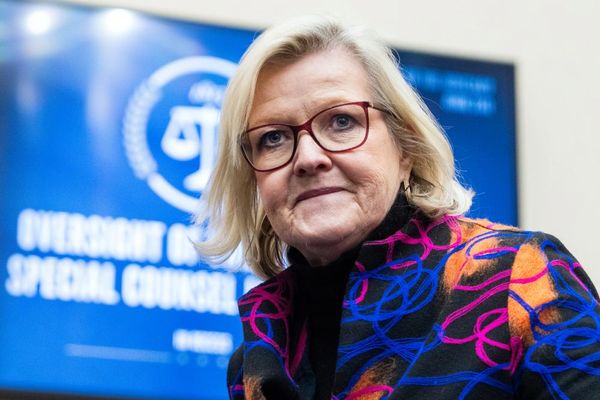
UK foreign secretary Yvette Cooper has said a “critical” moment is coming with the looming the expiry of the 14-day US-Iran truce.

She also reiterated the strait of Hormuz’s closure was buffeting the world economy amid an international effort to reopen the oil transit waterway.

Cooper said in a video message posted on X:

This is a critical diplomatic moment.

As we’re coming to the end of the two week agreed ceasefire on Iran, negotiations are starting, but the strait of Hormuz is still closed, so international shipping is still restricted. That is hitting the global economy.”

Cooper said that in the past week she had spoken to 12 foreign minters worldwide about the importance of getting the Hormuz strait open again, also talking to France about “the joint work we’re doing on how we would keep shipping safe once the conflict is finished”.

The UK and France chaired a conference of about 40 countries last Friday in Paris on an international plan to secure the strait.

But Trump later said he had rebuffed an offer from Nato to help and told them to stay away unless they wanted to load up ships with oil.

Updated

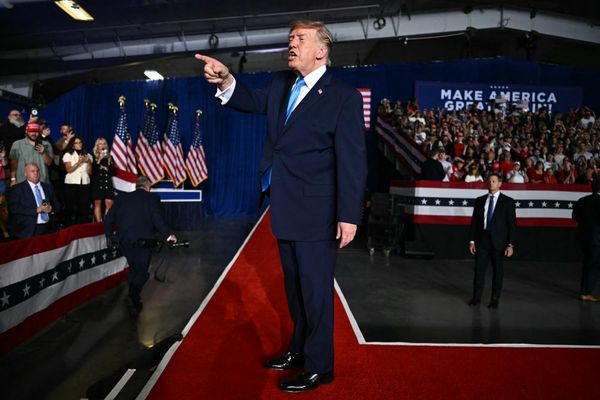
Donald Trump has given mixed messages on the way forward in the war against Iran, saying he’s in no rush to end the conflict while also expressing optimism that fresh talks with Tehran will soon take place in Pakistan.

With the 14-day truce to expire on Wednesday, Trump on Monday flitted in phone interviews and social media posts between measured optimism that a deal could soon be reached and warning that “lots of bombs” will “start going off” if there’s no deal before the ceasefire deadline.

The US president indicated he still expected to dispatch his negotiating team led by JD Vance to Islamabad for a second round of talks, the AP reports, even as Iran insisted it would not take part until Trump dialled back his demands.

As just mentioned, Iran’s chief negotiator and parliamentary speaker accused the US of wanting Iran to surrender, but added that Iran had “prepared to reveal new cards on the battlefield”.

“We do not accept negotiations under the shadow of threats,” Mohammad Bagher Ghalibaf said on X early on Tuesday.

Trump insisted he felt no pressure to end the war until Iran agreed to his terms, saying on his Truth Social platform:

I am under no pressure whatsoever, although, it will all happen, relatively quickly!”

Trump told Bloomberg News he was “highly unlikely” to renew the ceasefire.

Updated

The day so far

  • Iranian foreign minister Abbas Araghchi and Russian Foreign Minister Sergey Lavrov spoke on the phone on Monday to discuss the regional conflict. Lavrov reiterated the need to uphold the ceasefire and stressed the importance of continued diplomatic efforts, while Iran confirmed its readiness to do everything in its power to ensure the uninterrupted passage of Russian ships and cargo through the strait of Hormuz.

  • Oil prices rose on Monday as tensions rose between the US and Iran, though the market reaction remained more tame than during earlier stages of the war. Brent crude, the global oil benchmark, rose 5.6% to settle at $95.48 per barrel. US stocks edged down, with the S&P 500 closing 0.2% lower on Monday.

  • JD Vance is expected to fly to Islamabad at the head of a US diplomatic delegation on Tuesday if Iran agrees to further talks in the Pakistani capital as the deadline for the current ceasefire looms. The US vice-president will travel with Steve Witkoff, Donald Trump’s special envoy, and Jared Kushner, the president’s son-in-law – though Iran’s president warned there remained a “deep historical mistrust” of the US.

  • US president Donald Trump has said on a social media post that a deal with Iran will happen “relatively quickly”. He also said on Truth Social that the country would not lift its blockade of Iranian ports until Iran has agreed to a deal and that he believed a nuclear deal the US is currently negotiating with Iran will be better than a 2015 international agreement to curb Tehran’s nuclear program.

  • Iranian Parliament speaker Mohammad Bagher Ghalibaf said that Iran will not accept negotiations with the US while under threat. “Trump, by imposing a blockade and violating the ceasefire, seeks, in his view, to turn the negotiating table into a table of surrender or to justify renewed warmongering,” he wrote in a post on X. “We do not accept negotiations under the shadow of threat, and over the past 2 weeks we have prepared to reveal new cards on the battlefield.”

  • Qatari prime minister, Sheikh Mohammed bin Abdulrahman bin Jassim al-Thani, received a phone call from Oman’s foreign minister, Badr bin Hamad bin Hamood Albusaidi, on Monday, where they discussed cooperation between the two countries and the latest developments in the region. The discussion included talks on “the ceasefire between the US and Iran, and the efforts being exerted to reduce tension and promote regional peace and security,” reads a statement by the Qatari ministry.

Updated

Iranian Parliament speaker Mohammad Bagher Ghalibaf said that Iran will not accept negotiations with the US while “under the shadow of threat.”

“Trump, by imposing a blockade and violating the ceasefire, seeks, in his view, to turn the negotiating table into a table of surrender or to justify renewed warmongering,” he wrote in a post on X. “We do not accept negotiations under the shadow of threat, and over the past 2 weeks we have prepared to reveal new cards on the battlefield.”

Centcom: 27 vessels forced away from US blockade of Hormuz strait

In a post on X earlier today, US Central Command said that 27 vessels have been forced to turn around or return to Iranian ports under the current naval blockade of the strait of Hormuz.

“This blockade of Iranian ports will be enforced and applies to all vessels, regardless of flag,” a voiceover warned in a video posted on Monday, which shows a helicopter patrolling the waterway. “Any vessel with further intent to enter, exit an Iranian port will be subject to the right of visit and search in accordance with international law. If you attempt to run the blockade, we will compel compliance with force, over.”

The US naval blockade of Iranian ports will remain in place until a final deal with Iran is finalized.

Updated

Oil prices rise amid tensions between the US and Iran

Oil prices rose on Monday as tensions rose between the US and Iran, though the market reaction remained more tame than during earlier stages of the war.

Brent crude, the global oil benchmark, rose 5.6% to settle at $95.48 per barrel. US stocks edged down, with the S&P 500 closing 0.2% lower on Monday.

The surge comes amid fears that Iran may keep petroleum shipments pent up in the Persian Gulf if it continues to obstruct tankers at the Strait of Hormuz.

The volatility marks a reversal from Friday, when stocks rallied and oil prices dipped after Iran briefly suggested it would reopen the strait to commercial traffic. On Saturday, Iran reversed its decision.

Updated

The $2bn (£1.5bn) a week that Donald Trump was spending on his reckless war in Iran could have funded saving more than 87 million lives, the head of the UN’s humanitarian agency, Tom Fletcher, said on Monday.

He also warned the normalisation of violent language, such as threatening to bomb Iran back to the stone ages, was very dangerous since it encourages every “wannabe autocrat” to use similar threats and tactics, including the destruction of civilians and civilian infrastructure.

Speaking at Chatham House in London, Fletcher, a former UK diplomat and adviser on foreign policy to successive prime ministers, also accused British politicians of forming a circular firing squad for more than 10 years which has left the UK in a “defensive crouch”.

The scale of the recent UK aid cuts had been so severe that people giggle at conferences where the UK claims to be thought leaders on the subject, he said, before later adding the judgment might seem harsh.

Fletcher, the undersecretary-general for humanitarian affairs and emergency relief coordinator and head of the Office for the Coordination of Humanitarian Affairs, is wrestling with a humanitarian aid funding crisis he described as cataclysmic, amounting to a 50% cut in his budget.

This is driven not just by the US but also by international cuts to overseas aid driven by a mix of ideology and demands from defence budgets.

Read the full story:

Vance to lead US delegation in Pakistan if Iran agrees to talks

Earlier, we reported on the US vice-president’s upcoming trip to Islamabad. My colleagues Dan Sabbagh and Hannah Ellis-Petersen bring us the latest details:

JD Vance is expected to fly to Islamabad at the head of a US diplomatic delegation on Tuesday if Iran agrees to further talks in the Pakistani capital as the deadline for the current ceasefire looms.

The US vice-president will travel with Steve Witkoff, Donald Trump’s special envoy, and Jared Kushner, the president’s son-in-law – though Iran’s president warned there remained a “deep historical mistrust” of the US.

Masoud Pezeshkian said Tehran was concerned about “unconstructive and contradictory signals from American officials” and concluded they amounted to an effort to seek the country’s surrender. “Iranians do not submit to force,” he said.

However, one senior Iranian official told the Reuters news agency that Tehran is “positively reviewing” its participation, amid reports that its delegation would again be headed by parliamentary speaker Mohammad Bagher Ghalibaf if Vance attends.

Read the full report:

Updated

Reuters reports that Iran’s foreign minister Abbas Araqchi told his Pakistani counterpart Ishaq Dar that the US “continued violations of the ceasefire” are a major obstacle to the continuation of the diplomatic process, citing an Iranian foreign ministry statement.

Araqchi told Dar during a phone call that Iran, while taking all aspects of the matter into account, will decide on how to proceed further.

The Board of Peace’s lead envoy for Gaza told Reuters on Monday that he was “fairly optimistic” a plan for disarmament of Hamas and other militant groups in Gaza can be agreed but cautioned that it will still take time.

During an interview in Brussels, Nickolay Mladenov said: “We’ve had some very serious discussions with Hamas over the last few weeks, they’re not easy.

“I’m fairly optimistic that we will be able to come up with an arrangement that works for all sides and, most importantly, works for the people in Gaza.”

He also states that he believes Hamas’ disarmament is a sticking point in talks to implement the plan and cement an October ceasefire that halted two years of full-blown war. Violence has continued in the Palestinian territory, much of which remains in ruins.

Trump: blockade won't be lifted until Iran agrees to deal

In his latest Truth Social post, US president Donald Trump said the country would not lift its blockade of Iranian ports until Iran has agreed to a deal.

“THE BLOCKADE, which we will not take off until there is a ‘DEAL,’ is absolutely destroying Iran,” Trump wrote.

“They are losing $500m Dollars a day, an unsustainable number, even in the short run,” he said.

In a separate post, he criticised the US media – naming the “failing” New York Times, the “disgusting” Wall Street Journal and the “almost defunct” Washington Post. He accused these outlets of sabotaging the US war effort by causing Tehran to be “confused”.

Updated

Trump claims again an Iran deal will happen 'relatively quickly'

US president Donald Trump has said on a social media post that a deal with Iran will happen “relatively quickly”.

Writing on Truth Social, he said a deal with Iran will happen “relatively quickly!”.

He also denies that he is under “pressure” to make a deal. “THIS IS NOT TRUE!” he adds.

Updated

The Lebanese army has said that construction has been completed on an alternative bridge over the Litani river, after the original, the Tayr Falsiya, was destroyed by Israeli attacks.

As Al Jazeera reports, the bridge spans the Litani River, which Israel had previously set its sights on as the northern end of a desired “buffer zone” in Lebanon.

The Lebanese army has said that the newly constructed bridge is now open to vehicles.

In a post on Truth Social, US President Donald Trump said the deal the US is negotiating with Iran will be “far better” than the 2015 Joint Comprehensive Plan of Action (JCPOA), a deal signed by former President Barack Obama under which international sanctions were lifted in exchange for limitations on Tehran’s nuclear program. Trump withdrew the United States from the deal in 2018.

Trump claimed on Monday the new deal with Iran would “guarantee Peace, Security, and Safety, not only for Israel and the Middle East, but for Europe, America, and everywhere else.”

Qatari prime minister, Sheikh Mohammed bin Abdulrahman bin Jassim al-Thani, received a phone call from Oman’s foreign minister, Badr bin Hamad bin Hamood Albusaidi, on Monday, where they discussed cooperation between the two countries and the latest developments in the region.

The discussion included talks on “the ceasefire between the US and Iran, and the efforts being exerted to reduce tension and promote regional peace and security,” reads a statement by the Qatari ministry.

The officials “underlined the utmost necessity for all parties to respond to the ongoing mediation efforts.”

The day so far

  • A senior Iranian official has told the Reuters news agency that Tehran is “positively reviewing” its participation in potential peace talks with the US but stressed that no final decision has been made. The Iranian foreign ministry spokesperson, Esmaeil Baghaei, said that the US attack on the Iranian cargo ship this morning, the US naval blockade on Iranian ports and delays in implementing a ceasefire in Lebanon were all “clear violations of the ceasefire”.

  • A US delegation will head to Pakistan “soon” for a new round of peace negotiations with Iran, a source familiar with the plan told AFP on Monday, as Iran said it had yet to decide whether to attend. After initial talks in Islamabad ended without a deal earlier this month, both sides have accused the other of breaching a temporary truce that is now in its final days.

  • In a post to Truth Social, Donald Trump has said that Israel never “talked” him into the war with Iran, after reports that the Israeli prime minister, Benjamin Netanyahu, put pressure on him into launching their joint assault on Iran in late February. Justifying his military action, widely seen as being launched illegally, the US president claimed that the “results of Oct. 7th” added to his “lifelong opinion” that Iran can never possess a nuclear weapon.

  • Reuters is reporting that Israeli and ‌Lebanese representatives will hold talks in Washington ​on Thursday. Israel will be represented by its ​ambassador to ​the US, Yechiel Leiter, ‌the ⁠source told the news agency.

  • Lebanese official media said an Israeli strike hit a town in the country’s south on Monday despite a 10-day ceasefire in force between Israel and Iran-backed militant group Hezbollah. The state-run National News Agency said that “an enemy drone targeted the vicinity of the Litani River in the town of Qaqaiyat al-Jisr”, without immediately reporting casualties.

  • Iran’s president Masoud Pezeshkian attempted to temper down tensions after escalations over the weekend between the US and Iran. “War is not in anyone’s interest, and while resisting threats, every rational and diplomatic path should be used to reduce tensions”, the state-affiliated IRNA reported him saying.

  • Russian foreign minister Sergei Lavrov held a phone conversation with his Iranian counterpart Abbas Araghchi on Monday, Russia’s foreign ministry said. Lavrov reiterated the need to uphold the ceasefire and stressed the importance of continued diplomatic efforts, while the Iranian side confirmed its readiness to do everything in its power to ensure the uninterrupted passage of Russian ships and cargo through the strait of Hormuz.

  • French president Emmanuel Macron on Monday called for the United States and Iran to de-escalate amid increased tensions over the weekend over the strait of Hormuz. “Our position remains the same. We need to settle things through diplomacy. Everyone must calm down,” Macron said during a joint press conference with Polish prime minister Donald Tusk.

  • Israeli strikes killed at least two Palestinians in separate incidents in the Gaza Strip on Monday, health officials said, and fighters from Hamas clashed with gunmen from an Israeli-backed militia, witnesses have told Reuters news agency. Medics said one man was killed in an Israeli airstrike in the Bureij camp in the central area of the territory, while another strike killed one person and wounded others in Gaza City.

  • Joseph Aoun, the Lebanese president, said he had appointed Simon Karam, a former ambassador to the US, to lead bilateral talks with Israel. “The objective of the negotiation option is to halt hostile actions, end the Israeli occupation of southern areas, and deploy the army up to the internationally recognised southern borders,” a statement from the Lebanese presidency reads.

  • Iraq has reopened the Rabia border crossing with Syria after more than a decade to accelerate overland fuel oil exports and revive cross-border trade amid disruption to Gulf shipping following the Iran war, Iraqi border officials said on Monday. The crossing, located in Iraq’s northern Nineveh province, will allow fuel oil shipments to be trucked through Syria while also reopening the route to commercial trade traffic that has been halted since the conflict that followed Syria’s civil war, officials said.

  • Spain’s prime minister, Pedro Sánchez – who has been among the most vocal European critics of Israel’s war in Gaza – has said he will ask the European Union to end its association agreement with Israel on Tuesday. “The time has come for the EU to break its association agreement with Israel,” Sánchez said on Sunday.

  • Ratcheting up the tension, the US said it had seized an Iranian cargo ship, the M/V Touska, that tried to run its blockade. Iran has vowed to retaliate. Hours after the announcement, the US military released footage of incident, including video of US Marines rappelling onto the vessel.

Oil and gas prices have jumped again as shipping through the strait of Hormuz came to a virtual standstill after Iran closed the waterway over the US blockade and Donald Trump announced an Iranian cargo ship had been seized trying to get past.

Tehran has accused Washington of violating the fragile ceasefire agreement. With uncertainty over a second round of peace talks, fears continue to grow about the scale of the energy shock caused by the war.

Lucy Hough speaks to the Guardian’s energy correspondent Jillian Ambrose…

Lebanese official media said an Israeli strike hit a town in the country’s south on Monday despite a 10-day ceasefire in force between Israel and Iran-backed militant group Hezbollah.

The state-run National News Agency said that “an enemy drone targeted the vicinity of the Litani River in the town of Qaqaiyat al-Jisr”, without immediately reporting casualties.

Under the ceasefire, Israel reserves the right to act against “planned, imminent or ongoing attacks”.

Russian foreign minister Sergei Lavrov held a phone conversation with his Iranian counterpart Abbas Araghchi on Monday, Russia’s foreign ministry said.

Lavrov reiterated the need to uphold the ceasefire and stressed the importance of continued diplomatic efforts, while the Iranian side confirmed its readiness to do everything in its power to ensure the uninterrupted passage of Russian ships and cargo through the strait of Hormuz.

French president Emmanuel Macron on Monday called for the United States and Iran to de-escalate amid increased tensions over the weekend over the strait of Hormuz.

“Our position remains the same. We need to settle things through diplomacy. Everyone must calm down,” Macron said during a joint press conference with Polish prime minister Donald Tusk.

A US delegation will head to Pakistan “soon” for a new round of peace negotiations with Iran, a source familiar with the plan told AFP on Monday, as Iran said it had yet to decide whether to attend.

After initial talks in Islamabad ended without a deal earlier this month, both sides have accused the other of breaching a temporary truce that is now in its final days.

Iraq has reopened the Rabia border crossing with Syria after more than a decade to accelerate overland fuel oil exports and revive cross-border trade amid disruption to Gulf shipping following the Iran war, Iraqi border officials said on Monday.

The crossing, located in Iraq’s northern Nineveh province, will allow fuel oil shipments to be trucked through Syria while also reopening the route to commercial trade traffic that has been halted since the conflict that followed Syria’s civil war, officials said.

The head of Iraq’s Border Ports Commission, Omar al-Waeli, said reopening Rabia would ease pressure on fuel shipments to Syria by allowing more fuel oil trucks to cross, with most convoys currently backed up at the al-Waleed crossing in western Iraq, the only operating border point.

Trump claims that Israel never 'talked' him into launching a war on Iran

In a new post to Truth Social, Donald Trump has said that Israel never “talked” him into the war with Iran, after reports that the Israeli prime minister, Benjamin Netanyahu, put pressure on him into launching their joint assault on Iran in late February.

Justifying his military action, widely seen as being launched illegally, the US president claimed that the “results of Oct. 7th” added to his “lifelong opinion” that Iran can never possess a nuclear weapon.

As my colleague Julian Borger notes in this story, Trump has repeatedly claimed, since starting the war, that Iran had been two to four weeks from making a nuclear weapon and firing it at the US and Israel, a claim rejected as absurd by most experts.

Trump signed off his Truth Social post by saying if Iran’s new leaders are “smart” then the country can have a “great and prosperous” future.

He has previously said the US has been negotiating with figures inside of Iran other than the new supreme leader, Mojtaba Khamenei, who has reportedly been recovering from severe facial and leg injuries suffered in the airstrike that killed his father at the beginning of the war.

Updated

Reuters is reporting that Israeli and ‌Lebanese representatives will hold talks in Washington ​on Thursday. Israel will be represented by its ​ambassador to ​the US, Yechiel Leiter, ‌the ⁠source told the news agency.

Joseph Aoun, the Lebanese president, has expressed optimism over future negotiations, which he hopes will bring an end to the war and achieve a complete Israeli withdrawal from the southern parts of his country.

Hezbollah, which operates independently of the Lebanese state, has said it opposes direct talks with Israel and its lawmakers have criticised the government for agreeing to hold such negotiations.

The Lebanon-Israel ceasefire, which came into effect on 16 April, is set to last ten days. In an outline issued by the US state department, it said both parties, having met for face-to-face talks in Washington last week, “affirm that the two countries are not at war and commit to engaging in good-faith direct negotiations, facilitated by the United States”.

The ceasefire is described as “a gesture of goodwill by the government of Israel, intended to enable good-faith negotiations toward a permanent security and peace agreement between Israel and Lebanon”.

However, it reiterates Israel’s right “to take all necessary measures in self-defense, at any time, against planned, imminent, or ongoing attacks”.

Crucially though, the 10-day ceasefire agreement does not demand Israel withdraw soldiers occupying parts of southern Lebanon, where Israel’s defence minister, Israel Katz, said Israeli troops would continue to demolish homes he ​claimed, without evidence, were being used by Hezbollah.

Israel on Monday told residents of south Lebanon to stay out of a belt of territory running ​the length of the border and not to approach the area of the Litani river, about 30km from the border with Israel.

Updated

US delegation to land in Islamabad for talks within hours - report

The New York Post is reporting that vice-president JD Vance and the rest of the US delegation is set to land in Pakistan within hours for talks on Iran.

“We’re supposed to have the talks,” Trump said. “So I would assume at this point nobody’s playing games.”

The US president told the Post that US delegation – which also includes envoy Steve Witkoff and Trump’s son-in-law/adviser Jared Kushner – is on its way to Islamabad, despite Tehran saying t has “no plans for the next round” of peace talks.

“They’re heading over now,” Trump said just after 9am EST. “They’ll be there tonight, (Islamabad) time.” He suggested he would be ready to meet top Iranian leaders if a breakthrough in negotiations is achieved. We have not yet been able to independently verify any of the claims made in the New York Post’s story.

Vance left Islamabad last Sunday after 21 hours of failed peace talks with Iranian officials. He blamed the failure on Iran’s apparent refusal to abandon its nuclear weapons programme, while Iranian delegates claimed the US needed to do more to win their trust.

Updated

Iran 'positively' reviewing US peace talks participation - but no decision yet, official says

A senior Iranian official has told the Reuters news agency that Tehran is “positively reviewing” its participation in potential peace talks with the US but stressed that no final decision has been made.

As we have been reporting, Iran said earlier that it has no plans for a new round of talks with the US, ahead of the end of the ceasefire on Wednesday (see post at 08.59 for more details).

The Iranian foreign ministry spokesperson, Esmaeil Baghaei, said that the US attack on the Iranian cargo ship this morning, the US naval blockade on Iranian ports and delays in implementing a ceasefire in Lebanon were all “clear violations of the ceasefire”.

It is unclear whether a second round of negotiations scheduled to take place in the Pakistani capital of Islamabad today will go ahead as planned.

Updated

Only three ships crossed the strait of Hormuz on Monday, according to data from Kpler, after only one made it through yesterday. The average number of vessels crossing the vital waterway before the war was over 120 per day.

In response to US-Israeli attacks on Iran in late February, Tehran effectively closed the strait to vessels, only allowing a relatively small number of ships from “friendly” countries like China, Malaysia and Pakistan through.

Iranian authorities have since demanded the right to impose tolls on vessels transiting the vital waterway, where roughly 20% of the world’s oil and liquefied natural gas usually passes through, including after the war ends. This is something that the US says it won’t accept.

On Friday, Iran said it would be “completely open” to commercial vessels for the remainder of the ceasefire between the US and Iran, which is due to end on Wednesday.

Iran’s military headquarters, however, subsequently accused the US of a violation of the agreement after the American military attacked and seized an Iranian-flagged container ship that attempted to get past a US blockade.

The effective closure of the strait have sent global energy prices soaring and has prompted countries to implement fuel rationing and place restrictions on electricity consumption.

Updated

Israeli strikes killed at least two Palestinians in separate incidents in the Gaza Strip on Monday, health officials said, and fighters from Hamas clashed with gunmen from an Israeli-backed militia, witnesses have told Reuters news agency.

Medics said one man was killed in an Israeli airstrike in the Bureij camp in the central area of the territory, while another strike killed one person and wounded others in Gaza City.

The two deaths were the latest violence to overshadow the ceasefire deal signed in October after two years of full-blown war between Israel and Hamas. Progress on moving forward with parts the deal, which include the disarmament of Hamas and Israeli army pullouts, has stalled.

The Israeli military didn’t immediately comment on either incident. The Guardian has not independently verified this report.

The war in Iran looks like it has pushed sales of electric vehicles in continental Europe in the past month.

Sales of electric cars soared 51% in the last month, amid a rise in petrol and diesel costs driven by the Iran war.

Data shows that 224,000 new electric vehicles (EVs) were registered in March, and 500,000 across the first three months of the year – a 33.5% increase on a year earlier, according to analysis of national sales data in 15 countries by New AutoMotive and E-Mobility Europe, a trade body.

Full story here:

Updated

Shortly after announcing a ceasefire between Israel and Lebanon last week, Donald Trump said he’d be inviting Israeli prime minister Benjamin Netanyahu, a close ally, and Lebanese President Joseph Aoun to the White House “for the first meaningful talks between Israel and Lebanon since 1983”, during the Lebanese civil war.

Trump said he expected the two leaders to arrive in the US for talks “over the next week or two”, although no exact date was confirmed.

Relations between the Lebanese government and Hezbollah – which is a political party with a parliamentary bloc and a provider of services including schools and hospitals (in some areas), as well as a militant group – have grown increasingly tense.

The government last year approved a plan to remove all weapons that are not property of the state – its security forces or military. After 2 March, the government went further, declaring Hezbollah’s armed wing illegal.

Israel and Lebanon held a historic summit on Tuesday in Washington DC, as Israel’s ambassador to the US Yechiel Leiter and his Lebanese counterpart Nada Hamadeh Moawad met for what Beirut framed as a “preparatory meeting” for future negotiations between the two countries.

After participating in Tuesday’s rare direct talks, which included US secretary of state Marco Rubio, Moawad said she had “underscored the need to preserve our territorial integrity and state sovereignty”.

“I called for a ceasefire and the return of displaced persons to their homes,” she said in brief comments released by the Lebanese embassy in Washington.

Hezbollah leader Naim Qassem said the talks were a ruse to pressure Hezbollah into laying down its weapons.

Updated

Lebanon's president says he is hopeful talks with Israel could help 'save' his country

Joseph Aoun, the Lebanese president, said he had appointed Simon Karam, a former ambassador to the US, to lead bilateral talks with Israel.

“The objective of the negotiation option is to halt hostile actions, end the Israeli occupation of southern areas, and deploy the army up to the internationally recognised southern borders,” a statement from the Lebanese presidency reads.

“The upcoming negotiations are separate from any other negotiations because Lebanon faces two options: either the continuation of the war with all its humanitarian, social, economic, and sovereignty repercussions, or negotiation to put an end to this war and achieve sustainable stability, and I have chosen negotiation, and I am full of hope that we will be able to save Lebanon.”

Donald Trump announced on Thursday that Israel and Lebanon agreed to a 10-day ceasefire, which took effect from midnight on 16 April. Within hours, Israeli forces reportedly started carrying out artillery shelling in several border areas in violation of the agreement.

The terms of the ceasefire prohibit Israel from offensive attacks on Lebanon. But they appear to leave more room for “self-defense,” including “against planned, imminent, or ongoing attacks”.

Israel started a war on Lebanon on 2 March when Hezbollah, the Iranian backed Lebanese militant group and political party, launched rocket fire at Israel after US-Israeli airstrikes killed former Iranian supreme leader, Ali Khamenei, in Tehran. The IDF responded with a wave of intense strikes across Lebanon, targeting what it claimed was Hezbollah infrastructure, though many civilians were killed, homes destroyed and over 1.2 million people displaced across the country.

During the war, Israel also launched a ground invasion several kilometres into Lebanese territory, with a stated goal to push Hezbollah back from the border in order to stop the ability of the group to fire rockets into communities in northern Israel. Israeli officials now say Israel will stay in control of dozens of towns and villages as part of what it describes as a security buffer zone – but from the ground this looks like a prelude to long term occupation.

Updated

You can keep up with all the latest developments from the EU and beyond in our Europe live blog:

The European Commission has also insisted that there is no jet fuel shortage in the EU, despite the continuing impact of the Middle East disruption.

Commission spokesperson Eva Hrncirova said that as “part of the preparedness, we talk to the citizens and inform them … as we know the situation is not ideal” with the crisis in the Middle East.

Our role is mainly to coordinate and to prepare for different scenarios. We have the oil coordination group that has met last week, and the group will also meet at the end of this week.

The availability of the jet fuels, obviously, is a priority, and it’s important to say that here in the European Union, we have also a significant capacity to refine the crude oil and to produce the jet fuel, so we are preparing for possible actions, but everything depends on the development of the situation. At this stage, there are no fuel shortages in the EU.

Asked directly if Europeans should book their summer holidays without worrying about potential disruptions, she said:

“I cannot give you such an advice from the podium. It’s totally up to you where do you want to go during the summer.”

She added there are some flexibilities that the EU could explore to help with the situation, and confirmed that the bloc’s upcoming energy package – set to be presented on Wednesday – “will address different elements that are connected to the current crisis.”

Sam Jones in Madrid and Jennifer Rankin in Brussels

Spain’s prime minister, Pedro Sánchez – who has been among the most vocal European critics of Israel’s war in Gaza – has said he will ask the European Union to end its association agreement with Israel on Tuesday.

“The time has come for the EU to break its association agreement with Israel,” Sánchez said on Sunday. “We have nothing against the people of Israel – quite the contrary. But a government that breaks international law – and thus breaks the values and principles of the EU – cannot be our partner.”

The Israeli government has hit back at Sánchez, accusing him of hypocrisy and double standards.

“We won’t accept a hypocritical lesson from someone who has a relationship with totalitarian regimes that violate human rights, such as Erdoğan’s Turkey and Maduro’s Venezuela,” Israel’s foreign minister, Gideon Sa’ar, posted on X, alongside a photograph that apparently showed a poster of Sánchez’s face and his criticisms of Israel’s war on Iran on an Iranian missile.

In a reference to the poster, Sa’ar said the Spanish government had received thanks “from Iran’s brutal regime and terrorist organisation”, adding that it has “dedicated itself to spreading antisemitism”.

He then threw Sánchez’s words back at him: “We have nothing against the citizens of Spain – quite the contrary – but we do against the double standard of the government of [Pedro Sánchez].”

Updated

The internet blackout in Iran has entered its 52nd day, according to internet monitoring group NetBlocks. It said in a social media post:

Iran’s internet shutdown has entered its 52nd day after 1224 hours. Metrics show that the general public remain cut off from international networks, while authorities continue efforts to segregate users and provide selective access to favored groups.

Those without access to Starlink or alternative ways to communicate – which are often expensive – are cut off, not only from the outside world but the blackout also severely curtails Iranian’s ability to communicate with each other, making mobilisation, for example, much more difficult.

A select number of officials are still able to use the internet and post regularly on social media about the US-Israeli war on Iran. There was an earlier internet shutdown in January during nationwide protests, which helped obscure extreme violence against Iran’s population.

China’s foreign ministry spokesperson, Guo Jiakun, has said Beijing is concerned over the “forcible interception” of the Iranian-flagged Touska ship by US forces that happened over the weekend.

“We express concern over the US side’s forcible interception of the relevant vessel,” Jiakun told reporters when asked about the seizure.

The US military said it had fired on the cargo ship headed towards Iran’s Bandar Abbas port on Sunday after a six-hour standoff, disabling its engines.

Iran’s military said the ship had been travelling from China and accused the US of “armed ​piracy”. They said they were ready to confront US forces over the “blatant aggression”, but were constrained by the presence of crew members’ families on board.

Donald Trump said the ship was under US treasury sanctions because of “prior history of illegal activity”. The ship is on the treasury department’s list of sanctioned vessels.

Iran officially closed the strait of Hormuz on 4 March in response to US-Israeli airstrikes on the country which killed its former supreme leader, and declared it back open on Friday after a 10-day ceasefire deal was agreed between Israel and Lebanon. Trump said on Friday that the naval blockade of Iranian ports would continue until a deal was reached.

Updated

Here is an extract from some useful analysis by the Guardian’s diplomatic editor, Patrick Wintour, in which he identifies key sticking points in the negotiations with Iran so far:

Iran’s three demands before entering another round of talks were a ceasefire in Lebanon, an end to the US blockade on Iranian ports and progress on Iranian asset releases.

Iran and the mediators in Pakistan saw this as a traditional diplomatic step-by-step reciprocal process whereby one confidence-building measure from one side would lead to another on the other side.

As a result, the imposition on Israel of the two-week ceasefire in Lebanon by Trump was regarded as significant by Iran, and was due to lead to a reciprocal partial lifting of the Iranian chokehold on the strait of Hormuz – a step announced somewhat clumsily by the Iranian foreign minister, Abbas Araghchi, in a tweet on Friday morning. In return it was expected that Trump would lift the US blockade of Iranian ports, and the momentum surrounding the virtuous circle would build.

But in a series of tweets on Friday Trump kept the blockade in place, claimed Iran had completely lifted the restrictions on tanker traffic in the strait, and for good measure said Iran had agreed to hand over Iran’s stockpile of highly enriched uranium to the US for safe keeping.

In short, he gave the impression that Iran had surrendered. The backlash that followed in Tehran on Friday was inevitable.

We can bring you some more comment from the Iranian foreign ministry spokesperson, Esmaeil Baghaei, who has been speaking at a weekly press briefing. “While claiming diplomacy and readiness for negotiations, the US is carrying out behaviours that do not in any way indicate seriousness in pursuing a diplomatic process,” he said.

Baghaei said a US attack on an Iranian cargo ship this morning, the US naval blockade on Iranian ports and delays in implementing a ceasefire in Lebanon were all “clear violations of the ceasefire”.

The US is expected to send a delegation to Pakistan led by vice-president JD Vance for talks planned for Monday evening – but these now look unlikely to happen, at least in the form they were scheduled.

Iran would make “an appropriate decision regarding the continuation of the negotiation process”, Baghaei added. Iranian officials appear suspicious that Donald Trump’s talking up of a possible deal could be cover for a surprise attack.

Updated

Iran has no plans for second round of talks with the US, foreign ministry spokesperson says

Esmail Baghaei, Iran’s foreign ministry spokesperson, has been quoted by Al Jazeera as having said that Iran has no plans for a new round of talks with the US, saying Washington has violated the agreement from its implementation.

The spokesperson also said Tehran can’t forget US attacks on Iran during previous diplomatic talks as he insisted that Iran will continue defending its national interests.

As a reminder, the US-Israeli war on Iran, which began on 28 February, and the 12-day war last year both were launched when Iran and the US were in talks over Iran’s nuclear programme.

Baghaei also said the US proposals have been “unserious” and its demands “unrealistic” and said Tehran does not believe in ultimatums.

Donald Trump has threatened to destroy civilian infrastructure in Iran if Tehran doesn’t accept the terms of the deal the US is laying out.

He told Fox News on Sunday that the deal the US is offering, which entails reopening the strait of Hormuz and ensuring Iran does not have enriched uranium, was a “very fair and reasonable deal” and unless Iran accepts, he vowed to knock out “every single Power Plant” and “every single Bridge”. Iran has refused to give into what it describes as “maximalist” demands from the US.

Updated

Thousands of Lebanese people returned to their villages in southern Lebanon on Friday in the hours after the shaky 10-day ceasefire between Israel and Lebanon took effect.

In this powerful piece, my colleagues report on the bittersweet emotions they felt as many returnees found their homes destroyed or damaged beyond habitation by Israeli attacks which persisted despite the truce:

Pezeshkian says that 'every rational and diplomatic path should be used to reduce tensions'

Iran’s president Masoud Pezeshkian attempted to temper down tensions after escalations over the weekend between the US and Iran.

“War is not in anyone’s interest, and while resisting threats, every rational and diplomatic path should be used to reduce tensions”, the state-affiliated IRNA reported him saying.

Still, Iran has not committed to joining US negotiators for another round of talks in Pakistan, and the president said “distrust of the enemy and vigilance in interactions are an undeniable necessity.”

The US and Iran were in the middle of negotiations when Israel and US launched a military attack on Iran in February.

On Sunday, the US president, Donald Trump,. accused Iran of firing on ships passing through the strait of Hormuz in what he claimed was in violation of the ceasefire agreement. A spokesperson for Iran’s foreign ministry, however, said it was Washington’s blockade of the waterway that was a violation of the agreement.

Iranian negotiators have reportedly said that no further talks will take place unless the US ended its blockade of Iranian ports.

Updated

IDF demolishing homes in Lebanon, paying bulldozers based on how many building are destroyed, reports say

The IDF has continued to demolish homes and other buildings including educational institutions in villages in southern Lebanon, even after the ceasefire agreed between the countries last week.

The army has hired civilian contractors to destroy homes, with some operators paid a daily rate while others are paid based on the number of buildings they destroy, according to Haaretz. As many as 20 excavators are running operations in a single village, the Israeli newspaper reported based on conversations with army commanders.

Academics have described the operations as domicide, a strategy that is used to systematically destroy and damage civilian housing to render entire areas uninhabitable.

Buildings in villages, including educational institutions, homes and others are destroyed after receiving permission, in a policy the IDF refers to as the “money plow”, according to the newspaper.

Israel Katz, the country’s defence minister, previously said that “all houses in villages near the border in Lebanon will be demolished in accordance with the Rafah and Beit Hanoun models in Gaza” and said that 600,000 residents of southern Lebanon will not be allowed to return to their homes until Israelis living on the northern border are safe. Academics have questioned whether many will ever be able to return – or whether their homes will still exist.

The IDF did not give any comment to Haaretz. On Sunday, the force said it had verified a viral image that showed a IDF soldier destroying a statue of Jesus with a hammer in the Christian town of Debel. An official account distanced itself from the solider and said that “the IDF is operating to dismantle the terrorist infrastructure established by Hezbollah in southern Lebanon”.

Updated

Interim summary

In case you’re just joining us, here’s today’s main developments. It is 9.30am in Tehran, 9am in Jerusalem, 11am in Islamabad and 2am in Washington DC.

  • Iranian state media reported that Tehran was not planning to take part in peace talks with the US, hours after Trump said he was dispatching negotiators to Islamabad for the scheduled Monday meeting. “There are currently no plans to participate in the next round of Iran-US talks,” state broadcaster IRIB said, citing Iranian sources.

  • Donald Trump said US negotiators will be in Pakistan on Monday, and he again threatened to destroy its power plants and bridges if no deal is reached. Trump did not say who would lead the delegation, but a White House official said it was vice-president JD Vance.

  • Ratcheting up the tension, the US said it had seized an Iranian cargo ship, the M/V Touska, that tried to run its blockade. Iran has vowed to retaliate. Hours after the announcement, the US military released footage of incident, including video of US Marines rappelling onto the vessel.

  • Despite all the uncertainty, host Pakistan appeared to be preparing for the US-Iran talks to proceed. Two giant US C-17 cargo planes landed at an airbase on Sunday afternoon, carrying security equipment and vehicles in preparation for the US delegation’s arrival, two Pakistani security sources said. Barbed wire was rolled out near the Serena Hotel, where last week’s talks were held, and the hotel has told all guests to leave.

  • Oil prices surged after Iran closed the strait of Hormuz at the weekend, just a day after reopening it. Brent crude climbed to $95.64 per barrel and West Texas Intermediate increased to $87.90 per barrel. However, equities across Asia rose in early trading on Monday.

  • The Israeli army has confirmed an image circulating on social media that shows a soldier in Lebanon hitting a statue of Jesus Christ is authentic. The image appears to show an Israeli soldier using a sledgehammer to strike the head of a statue of a crucified Jesus that had fallen off of a cross.

  • The Israel army said it viewed the incident with “great severity”, adding that the “soldier’s conduct is wholly inconsistent with the values expected of its troops”.

  • Iran will resume international flights on Monday from Mashhad airport in the country’s north-east, its civil aviation authority said.

Iran will resume international flights on Monday from Mashhad airport in the country’s north-east, its civil aviation authority said.

IDF warns Lebanese residents to not cross specified line

The Israeli military has just now warned residents in southern Lebanon not to move south of a specified line of villages or approach areas near the Litani River, saying its forces remain deployed in the area during a ceasefire due to what it described as continued Hezbollah activity.

In a statement, military spokesperson Avichay Adraee also urged civilians not to return to multiple border villages until further notice, citing security risks.

Further to this, the Israeli military on Sunday published for the first time a map of its new deployment line inside Lebanon, bringing dozens of mostly abandoned Lebanese villages under its control. You can see that map below:

Stretching east to west, the deployment line on the map runs 5-10km (about 3-6 miles) deep from the border into Lebanese territory, where Israel has said it plans to create a so-called buffer zone.

Israeli forces have destroyed Lebanese villages in the area, saying their aim is to protect northern Israeli towns from Hezbollah attacks. It has created buffer zones in Syria and in Gaza, where it controls more than half the enclave.

Updated

Israel’s defence minister, Israel Katz, said his military will use “full force” in Lebanon – even during the ongoing ceasefire – should Israeli troops face any threat from Hezbollah.

Lebanon’s military said meanwhile it has reopened a road and bridge between the city of Nabatieh and Khardali that was damaged by Israeli strikes in the south.

Meanwhile, French president Emmanuel Macron will on Tuesday meet with Lebanese prime minister Nawaf Salam in Paris, his office announced, a day after a French peacekeeper was killed in Lebanon.

Donald Trump’s decision to send US officials to Islamabad for further talks on Monday with Iran just 24 hours after Iran once again closed the strait of Hormuz will signal to Tehran that the strategic waterway remains a bargaining asset beyond parallel, writes Patrick Wintour, the Guardian’s diplomatic editor.

In his analysis, Wintour says that with the strait in effect closed, Trump has clearly examined his array of bad options and decided to try diplomacy again.

Iran’s Mizan news outlet is reporting that Iran has executed two individuals accused of involvement in a “spy network linked to Israel”.

Mizan claimed the two men were accused of belonging to a spy network linked to Mossad and had received training abroad, including in Iraq’s Kurdistan region, Reuters reported.

They had been convicted on charges including “enmity against God” and cooperation with hostile groups, and their death sentences were upheld by the supreme court before being carried out, Mizan reported.

Updated

Footage of US Marines rappelling onto Iranian vessel released

The US has just released some more footage of the encounter with the Iranian flagged vessel, the M/V Touska.

In a post on X, US Central Command said US Marines had departed the amphibious assault ship USS Tripoli by helicopter and rappelled onto the Iranian-flagged vessel.

It said the US had “disabled Touska’s propulsion when the commercial ship failed to comply with repeated warnings” over a six-hour period.

Iran has since vowed to retaliate.

Updated

UK police are investigating whether a string of arson attacks on Jewish sites in London are the work of Iranian proxies, as the country’s chief rabbi said British Jews are facing a campaign of violence and intimidation.

The Metropolitan police says officers are probing fires at synagogues and other sites linked to the Jewish community, as well as an attack on a Persian-language media company.

No one has been injured in the blazes, the latest of which caused minor damage to a north London synagogue on Saturday night.

Deputy assistant commissioner Vicki Evans said the attacks had been claimed online by a group calling itself Harakat Ashab al-Yamin al-Islamia.

We are aware of public reporting that suggests this group may have links to Iran. As you would expect, we will continue to explore that question as our investigation evolves … I’ve spoken previously about the Iranian regime’s use of criminal proxies, and we’re considering whether this tactic is being used here in London.”

Footage of US destroyer firing at Iranian vessel released

In case you’re just joining us, the US military has released footage of their destroyer USS Spruance firing at an Iranian-flagged tanker, which Iran later vowed it would retaliate for.

US Central Command released a video of the warning message sent by the Spruance to the M/V Touska, saying it shows the moments before the Touska was seized for crossing the US-imposed blockade line in the Gulf of Oman.

“Motor vessel Touska, Motor vessel Touska. Vacate your engine room. Vacate your engine room. We are about to subject you to disabling fire,” can be heard in the video. Later, three rounds are fired, leaving smoke in their wake.

Central Command said its fire targeted the vessel’s engine room before forces seized the ship. It said Touska was headed to the Iranian port of Bandar Abbas and ignored multiple US warnings over six hours to evacuate the engine room. The Spruance then fired, after which Marines boarded and took hold of the ship.

Updated

British foreign secretary Yvette Cooper has said that any talks between the US and Iran must result in a toll-free passage for vessels through the strait of Hormuz.

Cooper is travelling to Japan on Sunday on the final leg of a diplomatic mission ahead of the US-Iran ceasefire expiring this week, which she has called a “critical diplomatic moment”.

This is a critical diplomatic moment with the end of the ceasefire looming. Further talks on a lasting settlement are welcome – they must lead to a toll-free strait of Hormuz … it is about the precedent this will set for freedom of navigation all over the world. If the wrong precedent is set, it would be deeply damaging not just for the global economy, but for global security, and that is why it is an argument we must win.”

The strait of Hormuz, through which a fifth of the world’s oil normally flows, has been closed by Iran as a response to America and Israel’s strikes, and the foreign secretary has said that proposals have been circulating from Tehran to introduce tolls on the crucial waterway once the conflict concludes.

Oil prices surge amid uncertainty over strait and peace talks

Oil prices surged on a re-escalation of hostilities in the Middle East war after Iran closed the strait of Hormuz at the weekend, just a day after reopening it.

In early trading on Monday, the price of Brent crude climbed 5.8% to $95.64 per barrel. Meanwhile, West Texas Intermediate increased 6.4% to $87.90 per barrel.

S+P 500 futures fell around 0.6% and European futures fell 1.1%. But equity benchmarks in Seoul, Taipei and Tokyo shrugged off risks to advance, with Taiwan’s shares touching a record high and the other two not far behind.

Hong Kong’s Hang Seng rose 0.8%, Japan’s Nikkei climbed 1% and South Korea’s Kopsi rose 1.4%.

However, one of the strongest notes of caution in markets on Monday came from Australia’s largest business lender, National Australia Bank, which flagged a $500m impairment charge as it expects the war to drive up bad debts.

Updated

Despite all the uncertainty, Pakistan appears to be preparing for talks between the US and Iran to proceed.

Two giant US C-17 cargo planes landed at an airbase on Sunday afternoon, carrying security equipment and vehicles in preparation for the US delegation’s arrival, two Pakistani security sources said.

Municipal authorities in the Pakistani capital of Islamabad halted public transport and heavy-goods traffic through the city.

Barbed wire was rolled out near the Serena Hotel, where last week’s talks were held. The hotel told all guests to leave.

Bahrain to review citizenship for those deemed threat to its security

Bahrain’s king has ordered a review of citizenship of those deemed a threat to the island kingdom, amid an intensified crackdown on dissent during the war in the Middle East.

According to the state-run Bahrain News Agency, Hamad bin Isa Al Khalifa ordered the government to immediately take measures against “those who have betrayed the nation or undermined its security and stability”, including stripping Bahraini citizenship from those “who don’t deserve it”.

“The situation is still delicate,” the king was quoted as saying.

Bahrain, which hosts the US Navy’s 5th Fleet, has been one of the hardest hit by Iranian missile and drone attacks during the war.

Authorities in the small Shiite-majority island, which is ruled by a Sunni monarchy, have detained many people over the course of the war.

More than 5,000 killed since war began: report

Now in its eighth week, the Iran war has killed more than 5,000 people across several countries.

At least 3,000 people have been killed in Iran, more than 2,290 in Lebanon, 23 in Israel and more than a dozen in Gulf Arab states, the Associated Press has reported. Fifteen Israeli soldiers in Lebanon and 13 US service members throughout the region have also been killed.

Updated

Just to recap the latest peace talks news, and whether or not Iran will attend negotiations in Pakistan.

State broadcaster IRIB on Sunday cited Iranian sources as saying “there are currently no plans to participate in the next round of Iran-US talks”.

The Fars and Tasnim news agencies had earlier cited anonymous sources as saying “the overall atmosphere cannot be assessed as very positive”, adding that lifting the US blockade was a precondition for negotiations.

President Donald Trump ordered US negotiators to travel to Pakistan on Monday, just days before a ceasefire in the Middle East expires.

Updated

Summary

Hello and welcome to the Guardian’s continuing coverage of the crisis in the Middle East.

The shaky two-week ceasefire between the US and Iran was under further pressure on Monday morning, after the US said that it had seized an Iranian cargo ship that tried to run its blockade, and Iran said it would retaliate.

Efforts to build a more lasting peace in the region likewise appeared to be on uncertain ground, as Iranian state media said Tehran would not participate in a second round of negotiations that the US had hoped to kick off before the ceasefire expires this week.

Trump had earlier warned Iran that the US would destroy every bridge and power plant in Iran if Tehran rejected his terms, continuing a pattern of such threats throughout the war.

  • Iran has reportedly rejected participation in a second round of peace talks with the US in Pakistan, citing “Washington’s excessive demands, unrealistic expectations, constant shifts in stance, repeated contradictions, and the ongoing naval blockade, which it considers a breach of the ceasefire”, according to the official IRNA news agency.

  • Hours before Iran’s statement, Trump said his negotiators would arrive in Islamabad on Monday evening. A White House official said the delegation would be led by vice-president JD Vance and include Middle East envoy Steve Witkoff and Trump’s son-in-law Jared Kushner.

  • Donald Trump said in a post on Sunday that the US marines have taken custody of a vessel that tried to get past the American blockade on Iranian ports, adding that US forces stopped the ship by blowing a hole in its engine room.

  • The US military confirmed that the US destroyer fired “several rounds” towards an Iranian-flagged ship that was attempting to pass through its naval blockade. In a statement released on Sunday, US Central Command said the USS Spruance intercepted the Iranian-flagged Touska ship as it travelled towards an Iranian port “in violation of the US blockade.”

  • The US blockade of Iran’s ports is a violation of the ceasefire agreement and is “both unlawful and criminal”, Esmaeil Baqaei, a spokesperson for Iran’s foreign ministry, said on Sunday.

  • Oil prices jumped, the US dollar rose and stock futures fell on Monday as investors dealt with conflicting messages about the Iran war and news that the strait of Hormuz was closed again. In early Asian trading Brent crude futures jumped about 7% to $96.85 a barrel and S+P 500 futures fell about 0.9%. The euro was down 0.3% at $1.1735 and the yen eased about 0.2% to 158.95 per dollar.

Sign up to read this article
Read news from 100's of titles, curated specifically for you.
Already a member? Sign in here
Related Stories
Top stories on inkl right now
One subscription that gives you access to news from hundreds of sites
Already a member? Sign in here
Our Picks
Fourteen days free
Download the app
One app. One membership.
100+ trusted global sources.