Get all your news in one place.
100’s of premium titles.
One app.
Start reading
Tom’s Hardware
Tom’s Hardware
Technology
Jowi Morales

Microsoft turns to superconductors for distributing power to its AI data centers — zero-resistance cables could reduce power losses and produce zero heat

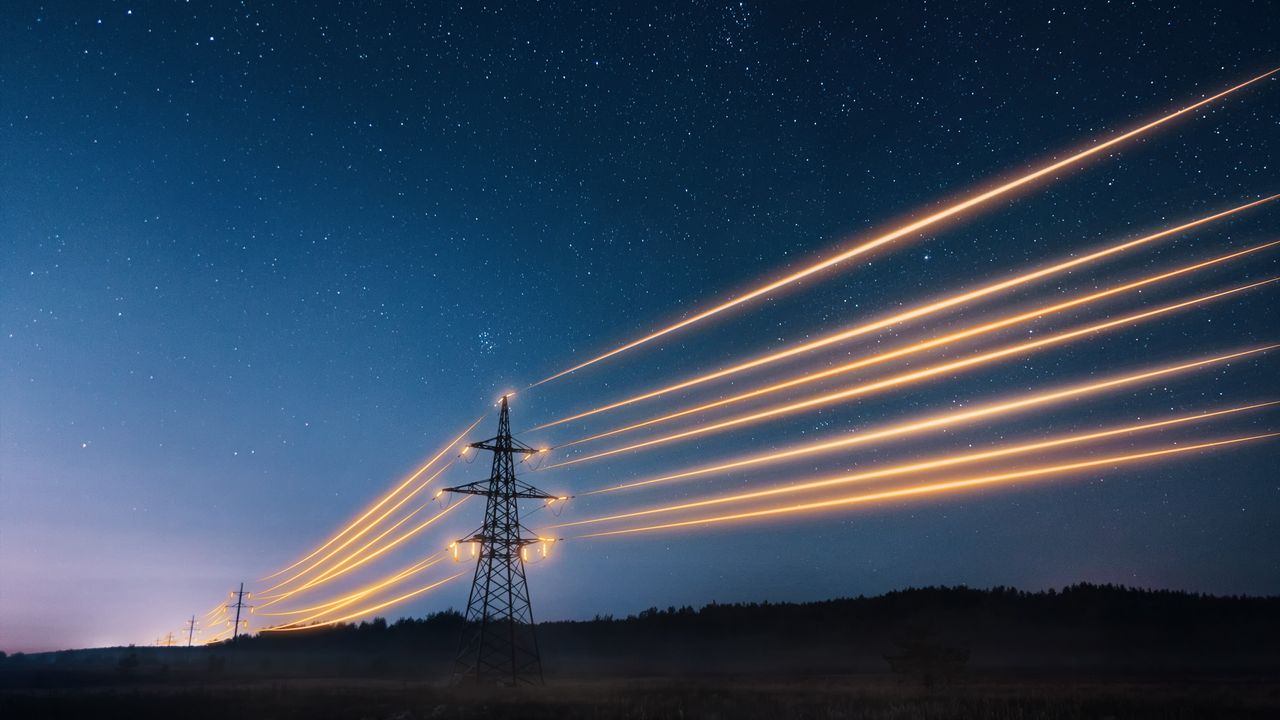
Power lines.

Microsoft is currently looking at high-temperature superconductors (HTS) for transmitting the massive amounts of electricity that it needs for its data centers. According to the company blog, since superconductors have zero resistance, adoption of that exotic tech would mean that the HTS cables would not suffer voltage drops or generate heat as electricity travels through them.

The advantages of HTS cables means that they can be lighter and take up less space compared to traditional copper and aluminum wires. For example, overhead lines typically need 70 meters of space to prevent the electrical fields of the individual cables from interfering with each other, among other reasons. HTS cables, on the other hand, only requires a 2-meter-wide trench.
HTS has been studied for several decades now, but it seems that recent advancements have made it more viable to deploy at scale. The biggest challenge that this technology faces is the cryogenic technology required to keep the conductors at their optimal temperature. Classic elemental superconductors, like mercury, need to operate below 10 Kelvin — that’s around -263 degrees C or less than -440 degrees F. And even though HTS do not need to stay as cool as traditional ones, conductors made with those materials still require temperatures around -200 degrees C or less than -320 degrees F.

As Mark Zuckerberg predicted a couple of years ago, power constraints are one of the biggest constraints hampering AI growth. Even Microsoft CEO Satya Nadella has said that the company has idle AI GPUs in its inventory because it did not have enough electricity to install them all.

AI data centers’ massive demand for power has started affecting ordinary users, with politicians taking notice of the toll it has put on ordinary Americans. Because of this, President Donald Trump has called on AI tech companies to “pay their own way” when it comes to their power consumption.

Microsoft was the first AI hyperscaler to respond to this promising the public that it will follow its “Community-First AI Infrastructure” framework when building its data centers. The company’s first and biggest promise in this framework is “We’ll pay our way to ensure our datacenters don’t increase your electricity prices.” This means that the company will have to spend more to carry the burden of investing in the power plants and other infrastructure required for its planned data centers. But aside from just building more and more power lines and facilities, Microsoft has apparently decided that it wants to reduce the waste brought about by inefficiencies in the system

It seems that data centers’ massive electrical demand is making HTS technology economically viable to deploy, especially if it will reduce the massive amounts of space that substations and other conventional power infrastructure require. More importantly, it would allow Microsoft to build more data centers without needing more electricity from the grid as it’s still working on the research and development of small-modular reactors (which isn’t even guaranteed to work). If high-temperature superconductors become viable, it would be yet another example of the mind-boggling economics of AI expanding the frontiers of every part of the technology stack.

Follow Tom's Hardware on Google News, or add us as a preferred source, to get our latest news, analysis, & reviews in your feeds.

Sign up to read this article
Read news from 100’s of titles, curated specifically for you.
Already a member? Sign in here
Related Stories
Top stories on inkl right now
Our Picks
Fourteen days free
Download the app
One app. One membership.
100+ trusted global sources.