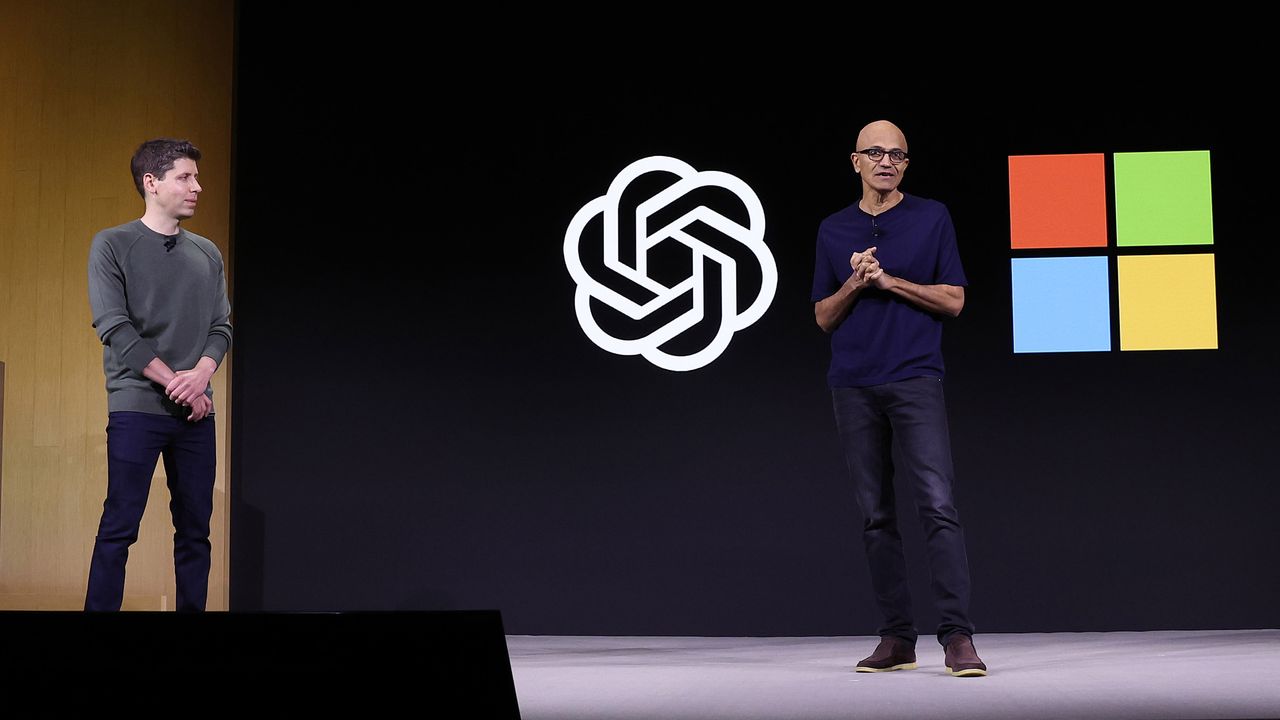
“We are pushing the frontier across our entire AI stack to drive new value for our customers and partners," indicated Microsoft CEO Satya Nadella while reporting on the company's financial results for FY26 Q2.
The software giant's superseded Wall Street estimates on revenue and earnings, reporting $81.3 billion in revenue (up 17% YoY) and $38.3 billion in operating income (up 21% YoY). However, its shares fell about 6% in after-market trading after the company reported on its financials.
This could be partly attributed to its higher-than-expected spending on data centers and AI infrastructure, which doesn't necessarily match growth in its cloud business.

Perhaps more interestingly, the software giant revealed that it is facing immense capacity constraints, which have primarily contributed to a backlog in commercial bookings. For context, the backlog in its cloud computing business has surged 110% year over year to $625 billion.
Microsoft disclosed that OpenAI accounts for approximately 45% of the highlighted commitments. However, it didn't indicate how much the ChatGPT maker contributed in the previous quarter (via Business Insider).
Microsoft and OpenAI renewed their vows under a new definitive agreement, allowing the ChatGPT maker to restructure into a for-profit entity. The restructuring has positioned OpenAI in a unique position to raise more funds from investors amid bankruptcy reports.
As such, Microsoft, its largest backer, is also positioned to benefit greatly from OpenAI's revenue growth. According to Microsoft's recent financial earnings report, its net income increased by $7.6 billion from its investment in OpenAI (via TechCrunch).

While neither Microsoft nor OpenAI has ever confirmed this, the ChatGPT maker reportedly has a 20% revenue share agreement with the software giant. Nadella highlighted the importance of getting more Azure clients, but not at the cost of abandoning other services.
If you think about it, acquiring an Azure customer is super important to us, but so is acquiring an M365 or a GitHub or a Dragon Copilot, which are all, by the way, incremental businesses and TAMs for us. And so we don't want to maximize just one business of ours.
Microsoft CEO, Satya Nadella
The company's CFO, Amy Hood, indicated that Microsoft has to make many considerations before allocating the GPUs and CPUs that come online, citing capex spending as the main cause. It also has to consider investing in the development of first-party apps like Copilot, alongside GPUs allocated for R&D, and talent acquired.

Microsoft cashes in billions from OpenAI, Azure sweats it out. Who’s really winning? Share your thoughts in the comments and cast your vote!

Follow Windows Central on Google News to keep our latest news, insights, and features at the top of your feeds!