
Get all your news in one place.
100’s of premium titles.
One app.
Start reading
Windows Central
Windows Central
Technology
Cale Hunt

Microsoft just pulled off a breakthrough in glass‑based data storage — and the implications are way bigger than you think

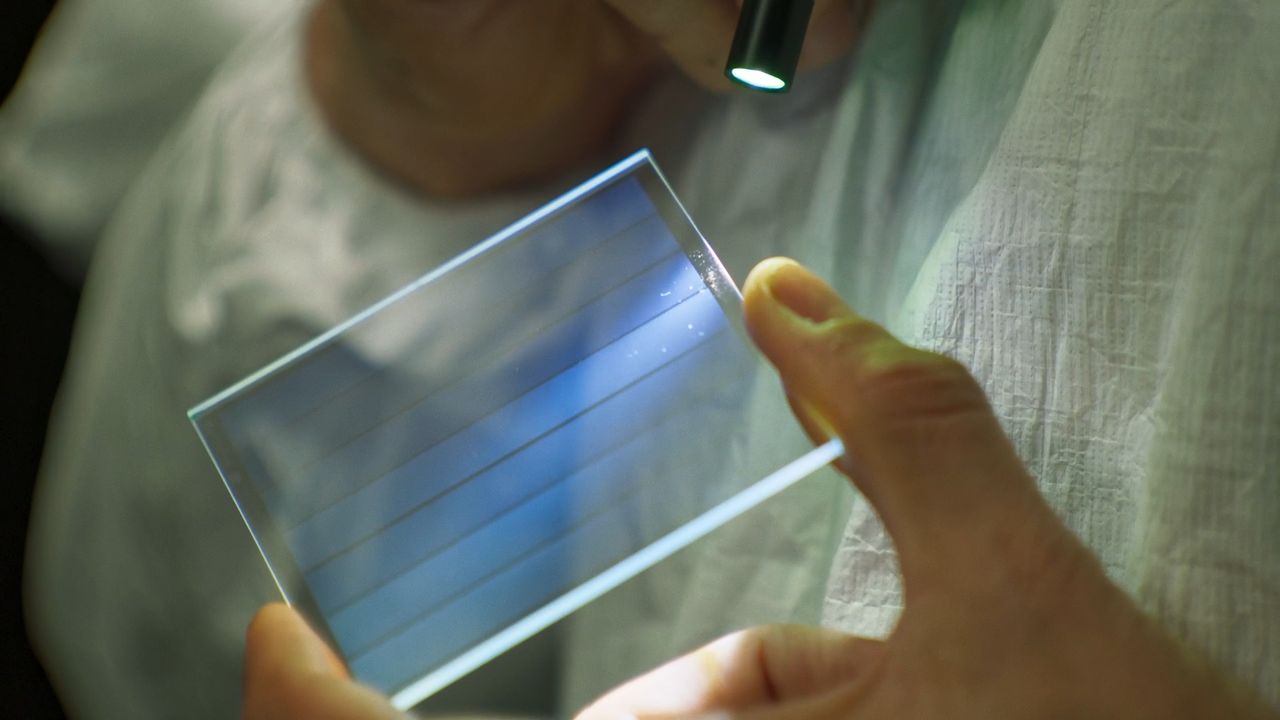
Microsoft Project Silica.

Microsoft knows that the traditional methods for long-term data storage are nowhere near perfect, and in response, it created "Project Silica" in 2019.

This venture from the Microsoft Research team, which explores ways to safely store digital data in glass, blew us away when we first saw it, and the team has now returned with a major update after a half-decade of research.

The breakthrough hinges on the discovery that "ordinary borosilicate glass" — heat-resistant stuff that makes up kitchen cookware — can be used for data storage. These findings have now been published in the Nature science journal.

Until this revelation, fused silica was being used by the team. The problem? It's expensive and not as easy to source as regular borosilicate. The move to a much more common type of glass solves cost and availability concerns, putting Project Silica one step closer to commercial success.

According to Partner Research Manager Richard Black, in a separate statement on the Microsoft Research blog, the team has also developed a way to test the longevity of its glass-based storage system with accelerated aging. The result? It looks like this sort of data storage can last for up to 10,000 years, even when using the more affordable and common borosilicate glass.

We have unlocked the science for parallel high-speed writing and developed a technique to permit accelerated aging tests on the written glass, suggesting that the data should remain intact for at least 10,000 years.

Richard Black, Microsoft Partner Research Manager

The research paper published in Nature details how the team can store hundreds of layers of data on a piece of glass that's just 2mm thick. When we first saw Project Silica in 2019, the machinery involved in writing data to glass was massive. Microsoft said it was working on miniaturizing the process.

That claim is now a reality. Reading data from glass used to require three or four cameras; now it only needs one. On the right side, the devices have been simplified to the point where they're easier to create and calibrate, speeding up the entire writing process.

As an example of Project Silica's progress, Microsoft's team was able to fit 4.8TB of data onto a piece of glass measuring 2mm by 120mm (or about 0.08 x 4.72 inches). The data is separated into 301 layers and was written at a speed of about 3.13MB/s.

That's certainly not a blistering speed compared to the 14,000+ MB/s speeds we get from modern solid-state drives, but when the data can last for 10,000 years, it's hard to be picky.

This might come as a surprise to some, but the traditional ways we store data are not a guarantee that the bits and bytes will be around forever. Even data centers struggle with preservation, as traditional methods typically expire within one or two decades.

(via Live Science)

Windows Central's take

A look at a sample piece of glass that's storing 1978's Superman movie. (Image credit: Microsoft)

Changing the way we store data, which is a commodity that grows at an alarming rate each day, is not only good for business, but it's also good for the environment.

Traditional magnetic storage requires a lot of care and energy, and being able to tuck away a piece of glass safely for the next 100 centuries is a huge step in the right direction.

Share your thoughts about Project Silica

What do you think about Microsoft's advancements in glass-based storage? Do you think it's the future of long-term data storage?

Let me know in the comments section!


Join us on Reddit at r/WindowsCentral to share your insights and discuss our latest news, reviews, and more.


Sign up to read this article
Read news from 100’s of titles, curated specifically for you.
Already a member? Sign in here
Related Stories
Top stories on inkl right now
One subscription that gives you access to news from hundreds of sites
Already a member? Sign in here
Our Picks
Fourteen days free
Download the app
One app. One membership.
100+ trusted global sources.