Get all your news in one place.
100's of premium titles.
One app.
Start reading
The Independent UK
The Independent UK
Technology
Anthony Cuthbertson

Meta’s smart glasses feature hidden surveillance code within its app

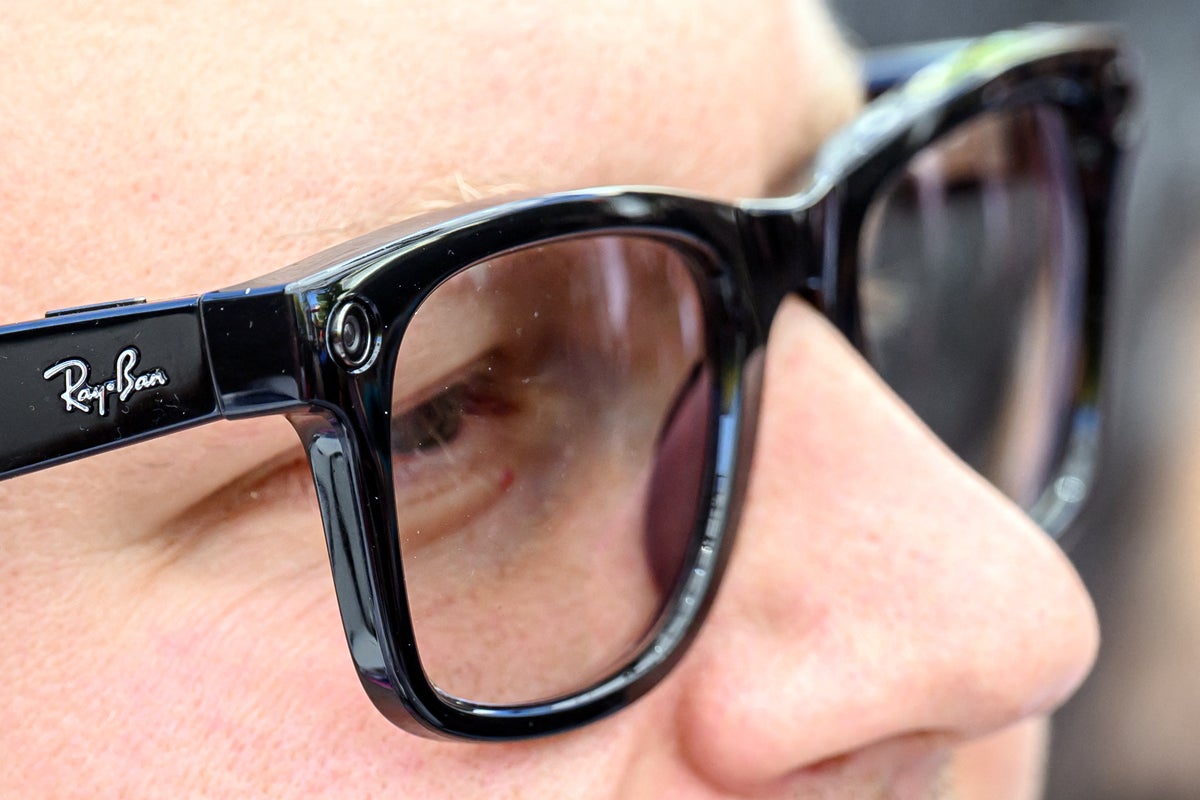
An audience member wearing Ray-Ban Meta 2nd generation smart glasses at Meta's headquarters in Menlo Park, California on 27 September, 2023 - (AFP/Getty)

Meta has introduced facial recognition functionality to its smart glasses platform that is designed to identify strangers through their biometric data, security researchers have warned.

The surveillance code has been quietly added to Meta’s AI app that has reportedly been downloaded to millions of phones, though it is yet to be switched on. Meta told The Independent it has not made a final decision on whether to activate it.

The so-called ‘NameTag’ feature, first reported by Wired, uses the in-built cameras on Meta’s Ray-Ban and Oakely models to cross reference people’s faces with biometric data stored in the Meta AI companion app.

“This dangerous new Meta functionality stores faceprints as a series of 2,048 numbers uniquely representing the positioning of a person’s facial features,” Cooper Quintin, a security researcher at the Electronic Frontier Foundation (EFF) who helped confirm the presence of the facial recognition code, wrote in a blog post.

“When this feature is activated, it will convert every new face in the sightlines of the surveillance glasses into a series of numbers, and compare it to all the existing faceprints in the user’s database.”

Meta first revealed an interest in adding facial recognition capabilities to its smart glasses in an internal memo last year, according to a separate report from the New York Times.

The document reportedly stated that the US tech giant was considering launching the feature “during a dynamic political environment where many civil society groups that we would expect to attack us would have their resources focused on other concerns”.

In 2021, facing public pressure about its controversial photo-tagging system, the Facebook owner announced that it would delete more than a billion faceprints belonging to users of the social media platform.

The company was ordered to pay $650 million to settle a class-action lawsuit centred around Illinios’Biometric Information Privacy Act (BIPA) law.

It is not clear whose faces would be identifiable through the new NameTag feature, and whether it will be possible for people to opt out of it.

“We've said before we're exploring these types of features, and what you're seeing is just evidence of that exploration,” Meta Spokesperson Ryan Daniels told The Independent.

“Nothing has shipped to consumers and no final decision has been made on what to do here, if anything. If we do decide to roll something out, we will take a thoughtful approach and do so with full transparency. One decision we can be clear about – we are not building a central face database.”

In April, more than 70 organisations called for Meta to abandon plans to add facial recognition technology to its smart glasses, claiming it could be used by stalkers and abusers.

Sign up to read this article
Read news from 100's of titles, curated specifically for you.
Already a member? Sign in here
Related Stories
Top stories on inkl right now
One subscription that gives you access to news from hundreds of sites
Already a member? Sign in here
Our Picks
Fourteen days free
Download the app
One app. One membership.
100+ trusted global sources.