Get all your news in one place.
100’s of premium titles.
One app.
Start reading
LiveScience
LiveScience
Victoria Atkinson

Metal compounds identified as potential new antibiotics, thanks to robots doing 'click chemistry'

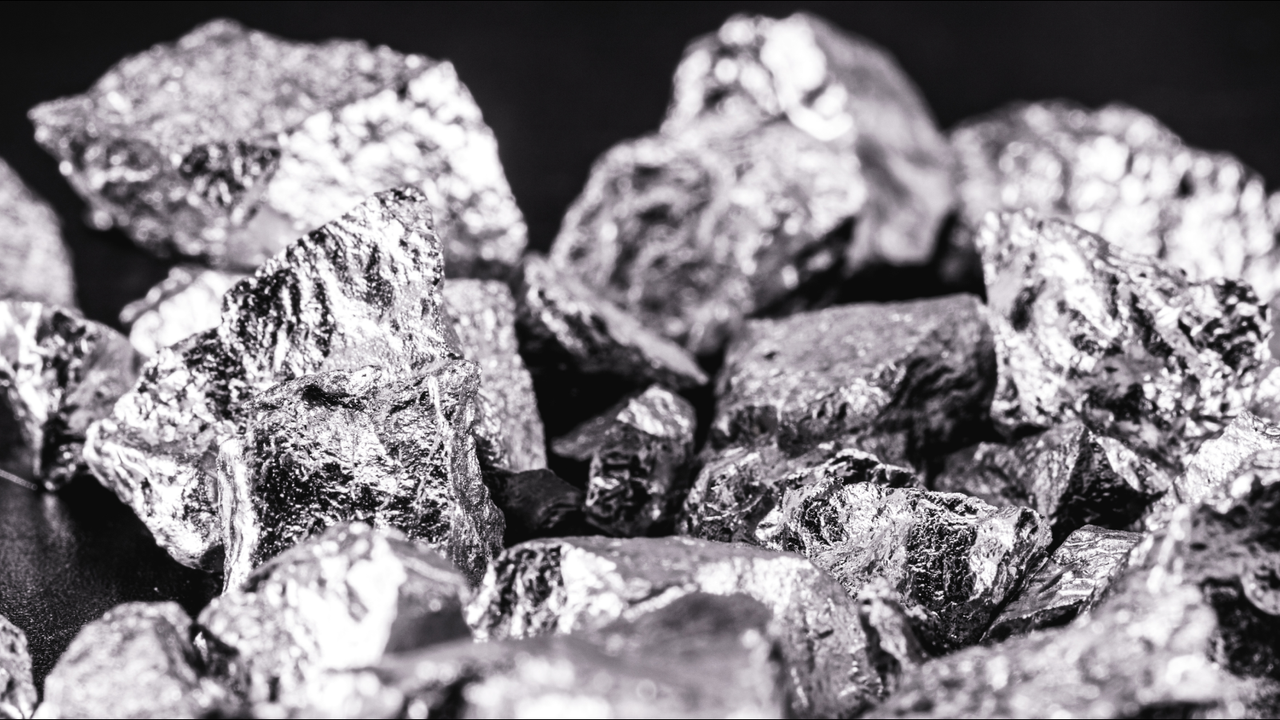
Iridium photographed on a black surface. Iridium is a metallic chemical element belonging to the class of transition metals, silver. Used in high strength alloys that can withstand high temperatures.

An iridium metal complex has been identified as a promising, if unconventional, new antibiotic drug, a new study finds.

The compound is one of more than 600 produced in a study published in December in the journal Nature Communications. The researchers used a robot to synthesize the compounds, combining metal and organic molecule building blocks to generate a huge chemical library in just a week.

This streamlined approach, which also produced five other potential antibiotics, could dramatically accelerate both drug discovery and parallel areas of chemical research, study lead author Angelo Frei, an inorganic chemist at the University of York in the U.K., told Live Science.

As the prevalence of drug-resistant bacterial infections increases, there's a need for new, effective antibiotics that can kill germs that no longer respond to existing drugs. So far, the search has focused on organic — meaning carbon-based — molecules, leaving metal complexes almost completely unexplored.

These metal-containing compounds significantly differ in shape compared to their flatter organic alternatives; and their three-dimensional shapes give rise to distinct chemical and biological properties. This attribute, combined with their ease of synthesis, makes these molecules an exciting potential source of future antibiotics, the study authors say.

But as there's little existing data on the antimicrobial properties of metal complexes, Frei's team needed an efficient method to rapidly make and test as many compounds as possible. Their solution was to merge straightforward and robust chemistry with state-of-the-art automation.

The team began by creating a panel of 192 different ligands, the organic molecules that bind to the metal center and determine the overall complex's final properties. They did so by using a liquid-handling robot to perform "click chemistry." This robust reaction fuses two types of starting materials — called azides and alkynes — to construct nitrogen-containing rings known as triazoles. These nitrogen rings bond strongly to metals.

In the next step of the process, the robot combined each of the 192 ligands with five different metals to generate a total of 672 metal complexes.

"We opted to use liquid-handling robots to do the chemistry because it's just combining different reagents in the right ratios," Frei said. After making the azides, "then we added the alkynes and the catalyst to do the click reaction, and then we used those ligands on different metals. It can all be done in one pot with robots," he said.

Each product was analyzed to confirm the expected complex had formed and then immediately tested for antibacterial activity and potential toxicity to human cells. In this way, the team quickly identified the safest and most potent compounds, without wasting time on lengthy purification steps.

"It allows us to go from hundreds of compounds to maybe dozens of compounds that are interesting," Frei explained.

Complexes containing iridium and rhenium exhibited particularly high levels of antibacterial activity. Overall, 59 of the iridium compounds and 61 of the rhenium compounds inhibited the growth of Staphylococcus aureus, an important cause of hospital-associated infections that can range from mild to deadly. For both metals, the toxicity toward human cells was variable. From these initial screening results, the team selected the six compounds that most effectively balanced antibacterial activity with low toxicity for further study.

"When we have identified those really promising ones, we can then go back to the bench and remake them, isolate them, and characterize them, to confirm what we saw previously with the [unpurified] mixture," Frei said.

In this second round of tests, one of the iridium complexes was the clear standout winner. The compound was about 50 to 100 times more active against bacteria than it was toxic to human cells. This large difference is vital to ensure that the complex is simultaneously effective in treating an infection but safe to use on human tissues.

Mark Blaskovich, a molecular bioscientist at the University of Queensland in Australia who wasn't involved in the work, was impressed by the efficiency of Frei's approach and the diversity of the compounds created by the automated synthesis. However, substantial work remains to transform their antibiotic candidates into viable clinical drugs, he said.

The "most important next steps" are to show that the most promising compounds have drug-like properties, meaning they are chemically stable and don't have a lot of off-target effects on the body, he told Live Science in an email. In addition, research needs to demonstrate how these compounds work in a living body, "ideally in the 'gold standard' mouse models of infection," he said.

In order to get these potential antibiotics approved for clinical use, eventually, studies in lab animals would be followed by clinical trials that could definitively show the drugs are both safe and effective for people.

For the time being, though, Frei intends to build upon this initial library of compounds, leveraging artificial intelligence to help target specific properties.

"We can use this data to make smarter decisions," he said. "So we can do machine learning and train models to correlate which structural features lead to good activity and low toxicity and then have the model predict for us which compounds we should make next."

Sign up to read this article
Read news from 100’s of titles, curated specifically for you.
Already a member? Sign in here
Related Stories
Top stories on inkl right now
One subscription that gives you access to news from hundreds of sites
Already a member? Sign in here
Our Picks
Fourteen days free
Download the app
One app. One membership.
100+ trusted global sources.