Get all your news in one place.
100’s of premium titles.
One app.
Start reading
International Business Times UK
Vinay Patel

Meta, TikTok, YouTube on Trial in US as 19-Year-Old Claims Addiction Sparked Depression

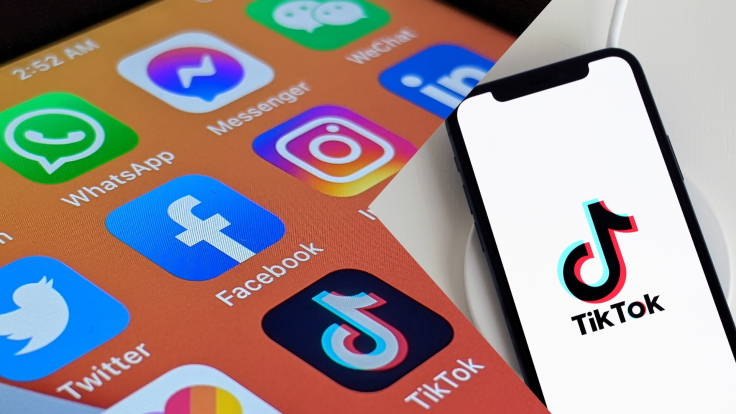
Meta and TikTok are heading to court this week as a high-profile lawsuit challenges the legal shield protecting social media giants. (Credit: Pixabay)

A nineteen-year-old has taken legal action against several social media giants, alleging their platforms caused a downward spiral into depression and self-harm.

The case brings Meta, TikTok, and YouTube under intense scrutiny regarding the psychological impact of their algorithms on young users. This high-profile trial highlights growing concerns over how digital addiction may be damaging the mental health of a generation.

Meta Platforms, TikTok, and YouTube are set to undergo intense legal evaluation this week regarding claims that their services are driving a psychological crisis among minors. This courtroom appearance occurs as the national dialogue concerning the amount of time children spend on digital devices enters a significant new phase.

The Legal Battlefield in California

This legal proceeding in the Los Angeles County branch of the California Superior Court serves as a bellwether for thousands of similar claims requesting compensation for digital injuries, potentially weakening the enduring protections traditionally enjoyed by major technology firms.

Legal documents identify the claimant as a 19-year-old Californian woman, K.G.M., who asserts that the captivating layout of these services led to a dependency during her childhood. As reported by The Straits Times, she contends that these applications intensified her feelings of despair and self-harm, and she now aims to establish legal responsibility for the providers.

This litigation marks the beginning of a series of trials scheduled for this year that focus on the phenomenon claimants describe as 'social media addiction' in young people. According to the claimant's lawyer, Matthew Bergman, this proceeding represents the very first occasion these technology firms have been forced to answer in court for the purported damage their software has caused.

Challenging the Shield of Immunity

Central to the litigation is a federal law that typically grants platforms like Instagram and TikTok immunity from liability for content shared by their users. These technology corporations have maintained that this specific statute provides them with legal protection against the claims raised in K.G.M.'s lawsuit.

If the jury rules against these social media giants, it would shatter the long-standing legal shield that has kept them safe from lawsuits for decades. Such a result would prove that the public is finally ready to hold these platforms responsible for their actions. Bergman told Reuters that the matter will likely end up before the Supreme Court, whether through this case or another, noting that they are currently 'writing on a legal tabula rasa.'

Meta's chief executive, Mark Zuckerberg, is slated to testify during the proceedings as the company prepares to fight the allegations. In statements made to Reuters before the trial, Meta's legal team insisted they will prove that their platforms were not the cause of K.G.M.'s psychological struggles.

As a defendant in the suit, Snap CEO Evan Spiegel was originally expected to testify until the company settled with K.G.M. on 20 January. A representative for the firm refused to provide any specific information regarding the terms of that deal.

Ahead of the proceedings, a YouTube executive explained that the company intends to distinguish its services from platforms like Instagram and TikTok, arguing that they are fundamentally different and should be treated separately by the court. Meanwhile, TikTok has remained silent on its specific legal strategy and has not commented on its upcoming defence.

Influencing the Public Narrative

With the trial now underway, these technology firms are conducting a countrywide campaign to reassure sceptics that their services pose no risk to teenagers. They have introduced various parental oversight features and invested millions of pounds in advertising campaigns to highlight these safety measures.

Since 2018, Meta has backed nationwide workshops teaching parents how to keep their teenagers safe online, with dozens of schools hosting them. One such event, titled Screen Smart, took place in Los Angeles in 2024 and brought together Meta's safety lead, Antigone Davis, and the National PTA's president, Yvonne Johnson, whose charity focuses on child advocacy.

According to its website, TikTok funded a series of comparable events across 100 local and regional PTA branches under the banner 'Create with Kindness'. The project's syllabus provided parents with guidance on using the app's various safety tools, including settings that restrict use during late-night hours.

A Strategic Alliance for Safety

In a bid to demonstrate its commitment to child safety, Google—YouTube's parent firm—has recently partnered with the Girl Scouts to promote digital well-being. According to the Girl Scouts' website, members can now earn a special patch featuring the Google logo by completing a series of modules focused on password security, online etiquette, and the importance of digital privacy.

The tech firms have bolstered their legal teams by recruiting solicitors who previously defended major corporations in prominent lawsuits centred on dependency and addiction.

Meta has secured counsel from Covington & Burling—the same firm that represented McKesson in the massive opioid epidemic litigation—just as TikTok has hired attorneys known for defending Activision Blizzard and Microsoft against claims that their video games were designed to be addictive.

The Human Cost and Parental Confusion

Julie Scelfo, the founder of Mothers Against Media Addiction—an organisation that campaigns for phone-free schools—claims that these tech giants are pulling every possible lever of influence to protect their image. She noted that this flood of corporate messaging makes it incredibly difficult for parents to figure out who they should actually trust when it comes to their children's safety.

Sign up to read this article
Read news from 100’s of titles, curated specifically for you.
Already a member? Sign in here
Related Stories
Top stories on inkl right now
One subscription that gives you access to news from hundreds of sites
Already a member? Sign in here
Our Picks
Fourteen days free
Download the app
One app. One membership.
100+ trusted global sources.