Get all your news in one place.
100’s of premium titles.
One app.
Start reading
Android Central
Android Central
Technology
Nicholas Sutrich

Meta isn't giving up on VR, but it just evaporated any goodwill it had left

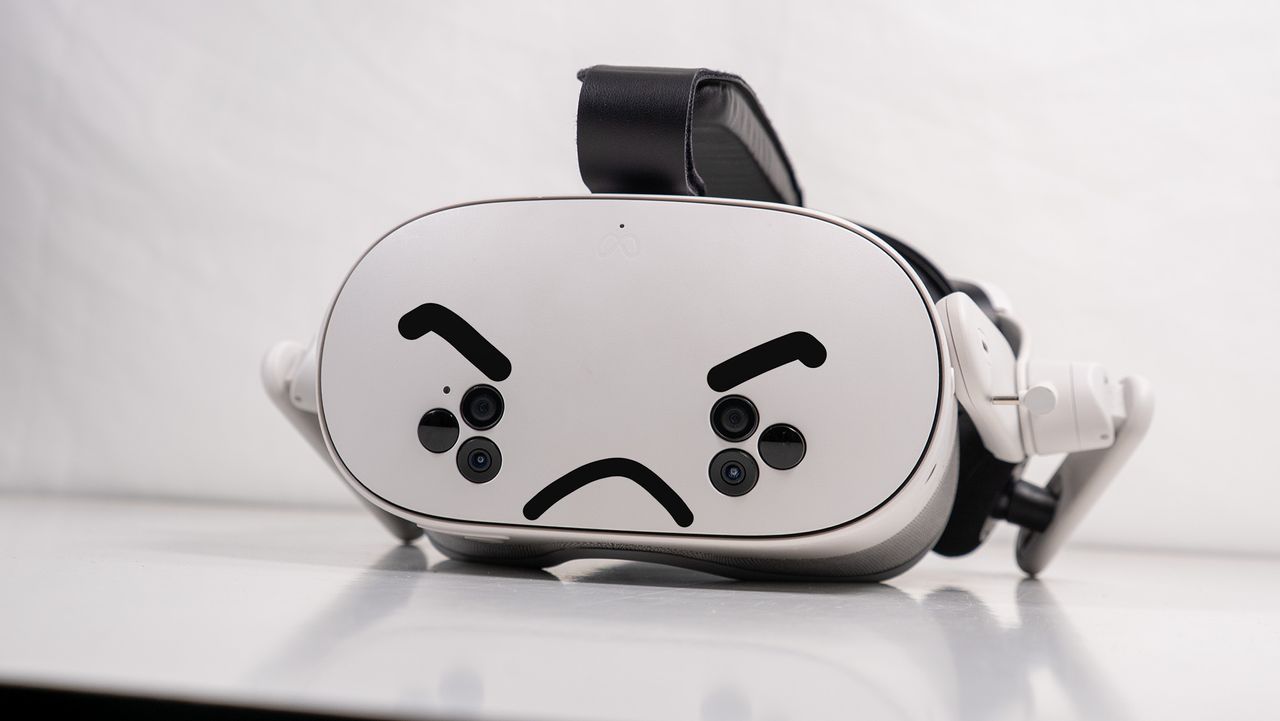
A Meta Quest 3S headset with an angry face drawn on it.

From 2019 to 2024, Meta's app store was a world-class effort. It took the best pieces from every digital gaming marketplace on the planet — the consumer-friendly return policies from Steam, developer relations and Q&A teams from companies like Sony and Nintendo, plus several other traits — and made the Quest a platform worth investing in as a VR gamer and developer.

AC thVRsday

In his weekly column, Android Central Senior Content Producer Nick Sutrich delves into all things VR, from new hardware to new games, upcoming technologies, and so much more.

That all began changing the moment Meta opened the floodgates for App Lab in mid-2024. I spoke with DrakkenRidge developer Cyril Guichard about the changes over the years, something he knows a lot about, as he's shipped 5 games since the days of the Oculus Go. Guichard shared that developing for Meta's Start Program from 2019-2022 was "the best experience I've ever had working with a publisher." But, since then, things have gone downhill.

Meta's goals began shifting after this time, and continued to change seemingly every six months, never long enough to see any goal properly executed. Meta is known for chasing trends as fast as it can and often moving without understanding the true repercussions of its actions. As Meta's Mark Zuckerberg once said about new Facebook features back in 2014, "move fast and break things."

And broke things, they have. January 13, 2026, will go down as a date that no one in the VR community will likely forget. Android Central reached out to Meta for comment on this article, but didn't receive a response in time for publishing.

A virtual bloodbath

(Image credit: Nicholas Sutrich / Android Central)

On January 13, 2026, Meta closed most of its first-party game development studios. The few employees remaining at studios like Within and Camouflaj will likely be holding "maintenance" duty on live service titles like Supernatural, while Camouflaj's remaining developers are said to be working on an onboarding tutorial that users will experience when they start up the next Meta Quest headset.

After speaking with many developers, many of whom wanted to remain anonymous for this story, I was told that Oculus Publishing has also seen substantial cuts. Many developer relations contacts within the Meta Horizon Start Program, a developer incubation and funding program, have been laid off, with "just a handful" remaining, per one source. Almost certainly, this means that the $60 million Meta has allegedly spent to fund VR games so far in 2026 is the last we'll see from the program.

As such, the massive shift didn't just affect first-party Oculus Studios development. Cloudhead Games, maker of the uber-popular Pistol Whip rhythm shooter VR game, laid off 70% of its workforce. Skydance Games has reportedly also canceled an official Harry Potter VR game due to funding program shifts within Meta. The total extent of the fallout remains to be seen, but it's not looking pretty.

As Anshel Sag, Principal Analyst at Moor Insights & Strategy, told me, "I think Meta is destroying all of the goodwill it created as the 'savior' of VR gaming. I think Meta is causing irreparable damage to the industry, both in how it acquired these companies and how it's run them and their properties."

The VR gaming recession has begun

(Image credit: Nicholas Sutrich / Android Central)

What does all this mean for VR gamers and developers? For starters, Meta no longer seems to be interested in making first-party games, but there's no evidence that Meta is abandoning VR altogether or even exiting the hardware market. If anything, Meta seems to be taking a "Valve approach" to gaming, which means it'll focus on a wild west-style digital marketplace and only develop hardware.

Valve rarely invests in projects unrelated to its own ambitions, mostly of which comprise its IPs like Half-Life and Counter-Strike, plus software investment into tools like Proton and FEX, the latter of which makes the upcoming Steam Frame standalone VR headset possible. Valve has publicly stated it does not have any VR games in development, and Meta seems to be following the same tactic.

Meta recently announced that Horizon OS, which powers Quest headsets, will no longer be going third-party, which means it'll only be built for Meta's own hardware. Project Phoenix, pictured in a mockup below, is said to be the Quest 4's form factor, favoring a more smart-glasses-like size and shape with VR headset capabilities.

(Image credit: @Lunayian on X)

When I made predictions about the XR market in 2026, I didn't expect the industry to shift focus so hard and fast, particularly for Meta. Not only is Meta seemingly abandoning the idea of becoming the next Nintendo or Sony, but it's pivoting hard to trying to become the first company to produce truly mass-market smart glasses by doubling or tripling the output of its Ray-Ban and Oakley glasses this year.

The result is that we're almost certainly not going to see big-name titles hit VR headsets for a long while. Meta-funded AAA titles like Assassin's Creed Nexus VR, Batman Arkham Shadow, Asgard's Wrath 2, Deadpool VR, and many others of its caliber relied entirely on Meta funding, which has now significantly dried up.

Even indie games will be affected, as several developers have historically relied on the Meta Start Program to fund their salaries during development. "Nearly every indie megahit in the last 5 years came from the Start program first," VR developer RJ told me in a written interview on X (formerly Twitter), and that spells trouble for future releases.

Cutting off your nose to spite your face

(Image credit: Nicholas Sutrich / Android Central)

Many people are, understandably, pissed off at Meta, and with good reason. More than one developer has now told me that they're considering dropping future development for all Meta hardware, including any potential smart glasses apps, because of the way Meta has handled things over the past 2-3 years. January 13 was just the straw that broke the camel's back.

One developer simply said, "Give me one reason to keep building for Meta Quest and/or Meta wearables." While some responses have been positive, most people seem to feel like Meta just blew its last ounce of goodwill with this move. Meta has, essentially, put itself in Google's unenviable position of being accused of killing projects too early.

While some investors and financial publications have been calling for these moves for years, Meta has largely resisted full-on cuts like this because it seemed to be aiming for a specific vision of the future, but never truly stuck with a plan long enough to bear fruit.

(Image credit: Nicholas Sutrich / Android Central)

Circling back around to Guichard and his development experience over the lifetime of the Quest family since 2019, it's clear the "wonder years" were from 2019-2022. Once Meta began changing tactics and laying off staff, things (unsurprisingly) got worse.

The magic of the curated Quest store started evaporating overnight when Meta got rid of its curation system in Summer 2024. Games that used to have to pass rigorous QA processes were now greenlit after "the most basic of VR tests," according to several developers I've spoken to. Swaths of Gorilla Tag clones suddenly flooded the market, and Meta started prioritizing Horizon Worlds over paid content, causing legitimately good games to be drowned out.

Several months later, developers banded together to help solve the "visibility crisis." While Meta has somewhat helped clean up the curation process in the 18 months since these choices were made, the damage was irreparable. Despite delivering the bigger, better games Meta was calling for from its Start Program developers, the company seemed to have forgotten to follow through on its promises.

(Image credit: Microsoft / Meta)

Of course, the reason we have so many VR releases these days is because of Meta's Start Program. As VR analyst Brad Lynch said, "The market has been inorganic and propped up. Everyone was fooled."

Meta has long provided excellent opportunities for VR developers to make games people care about and want to play, and for its part, deserves credit in attempting to solve the "chicken and egg" scenario VR has been in for years.

In other words, without Meta's critical funding, we likely never would have seen the AAA titles we got, but years of fiddling with the Quest's digital marketplace may very well have driven out any real chance of long-term success.

(Image credit: Nicholas Sutrich / Android Central)

While Batman Arkham Shadow exceeded internal sales expectations, even those numbers are substantially lower than what's needed to sustain a thriving AAA ecosystem like what's enjoyed on the PS5. Even big indie games like DrakkenRidge are selling 15x lower numbers of units than the developer's previous games, a direct result of Meta's toying with things rather than trying to maintain stability.

From here on out, it's clear that VR developers will need to be cautious about investments and which platforms to prioritize. Without Meta's financial backing, projects that were once zero risk will now suddenly face big stakes. If boutique VR publishers also pull out, as some fear they might, it's going to be another long, quiet road for VR until the next round of funding hits in a few years from now.

Until then, I'll keep enjoying excellent VR games like Walkabout Mini Golf and Deadly Delivery with friends.

Sign up to read this article
Read news from 100’s of titles, curated specifically for you.
Already a member? Sign in here
Related Stories
Top stories on inkl right now
One subscription that gives you access to news from hundreds of sites
Already a member? Sign in here
Our Picks
Fourteen days free
Download the app
One app. One membership.
100+ trusted global sources.