On Friday, somewhere in Middle America, eight teams will begin their journey toward college baseball’s ultimate prize.
The lineup of squads in this year’s Men’s College World Series ranges from Texas—a team whose legendary former coach, Augie Garrido, frequently reminded his players that “Omaha is mandatory”—to Troy and West Virginia, both on their maiden MCWS voyages. At Rocco’s Pizza, jello shots will be consumed. Summer on the banks of the Missouri River will seem endless.
For all the nostalgia Omaha encourages, however, baseball is a game of numbers. With that in mind, here are eight to attach to the teams gunning for the national championship.
Alabama: 299
That’s the number of career games won by Rob Vaughn, who at 38 has already established himself as one of the best young coaches in the country. The ex-Kansas State catcher took charge at Maryland in 2018 and turned the Terrapins, a team with a fairly barren diamond history, into two-time Big Ten regular-season champions. It has not taken long for Vaughn to replicate his success with the Crimson Tide, who are in the MCWS for the first time since 1999.
Georgia: .439
That’s the Bulldogs’ on-base percentage as a team this season per D1Baseball.com, fourth in the country behind Georgia Tech, Miami (Ohio) and Fairleigh Dickinson. Catcher Daniel Jackson, whose go-ahead home run won in the 10th inning of Game 2 of Georgia’s super regional against Mississippi State paved the way for the Bulldogs’ MCWS berth, leads all regulars with a staggering .492 clip. Georgia is “only” 13th in Division I in walks, but is first in home runs and second in slugging—a potential championship recipe if sustained.
North Carolina: 21–2
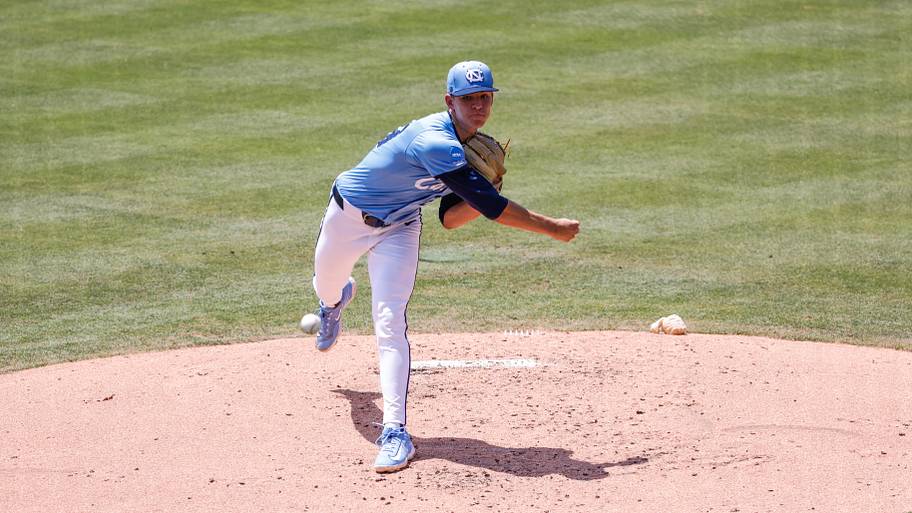
That’s the combined record of Tar Heels pitchers Jason DeCaro and Caden Glauber, the most formidable pitching duo in the country. Their paths to sub-2.50 ERAs in 80-plus innings pitched have been vastly different: DeCaro has started 17 games and struck out 84 batters, while Glauber has started just three games as the platonic ideal of a Jamesian relief ace. One such start came against USC in the deciding game of their super regional, and lasted 7 1/3 innings as Glauber limited the Trojans’ offense to three runs in his team’s eventual 4–3 win.
Oklahoma: 14–16
That was the Sooners’ record in SEC play this season, good for a tie for 11th in the conference with Vanderbilt (who missed the tournament altogether). There are two lessons here: first and foremost, the SEC is stronger than ever in one of its signature sports. Second, the Sooners are peaking at the right time—having lost just once, to the No. 2 national seed Yellow Jackets, since the start of the NCAA tournament.
Ole Miss: 688
That’s how many batters the Rebels have struck out this season, second in the country to only Oregon State. From a raw ERA standpoint, striking out a lot of batters hasn’t jelled one-to-one with limiting runs this season—Ole Miss had a 4.35 ERA, for instance, against its brutal SEC schedule. The fact that the Rebels are missing so many bats, though, shows they’re controlling what they can control effectively—a durable predictor of success.
Texas: 2
That’s how many Longhorns were named to the National Collegiate Baseball Writers Association’s freshman All-America first team Monday, the only squad in college baseball so honored. Texas’s fantastic first-years are pitcher Sam Cozart (6–0 with a 1.72 ERA in a Swiss army knife relief role similar to Glauber’s) and outfielder Anthony Pack (.359/.485/.597 with 11 home runs and 52 RBIs). Both have showed up for the tournament: Cozart blanked Oregon in two innings of work Sunday, and Pack went 2-for-4 with three runs against the Ducks the day before that.
Troy: 5
That’s how many teams from the Trojans’ conference, the Sun Belt, made the NCAA tournament. For casual fans, remember: the geography of college baseball, which has a season that begins while temperatures are still frigid in the Northern United States, is quite different from more popular sports. Thus, the Sun Belt putting one more team in the field than the Big Ten makes complete sense, and no one in their right mind should write off a Troy team with two regional wins over No. 8 national seed Florida in its back pocket.
West Virginia: 2.10
That’s the ERA of Mountaineers pitcher Maxx Yehl, fifth in the country. Of the four finalists for the National Pitcher of the Year award, Yehl—the owner of a 9–2 record and 105 strikeouts in 90 innings—is one of two standing along with the Longhorns’ terrific Dylan Volantis. Yehl and catcher Gavin Kelly may be the sport’s most formidable battery, and if West Virginia gives Yehl the run support it gave him in his last start against Cal Poly (a 17–1 win), look out.